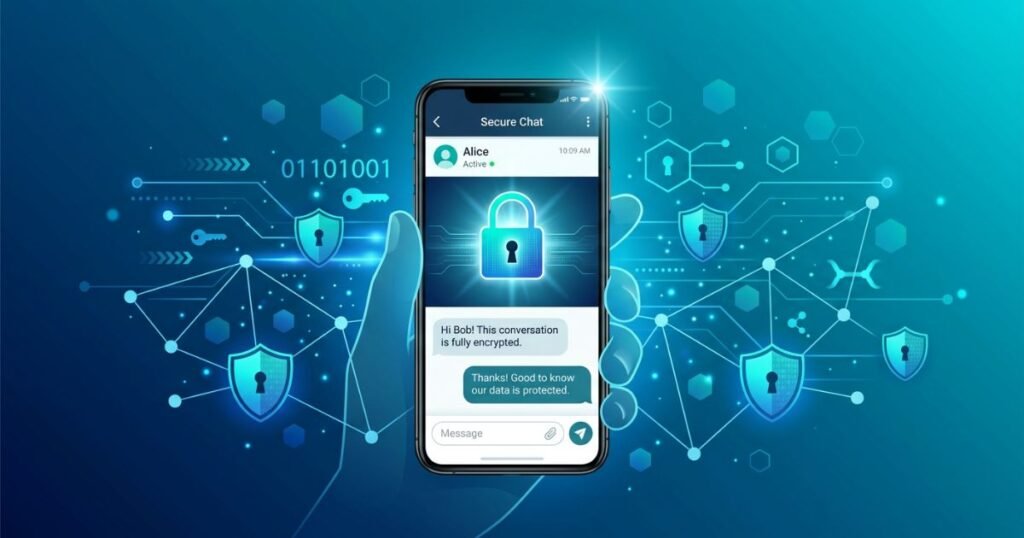
The way people communicate has changed drastically over the past decade. Text messages, voice calls, video chats, and file sharing now happen primarily through messaging applications on smartphones and computers. While this convenience is remarkable, it also introduces serious risks. Every message sent through an unprotected channel can potentially be intercepted, read, stored, or exploited by hackers, corporations, or even government agencies.
This reality has pushed millions of individuals and organizations toward secure messaging apps that prioritize privacy and data protection. Whether the goal is to protect personal conversations from surveillance, safeguard business secrets from competitors, or simply maintain a basic right to privacy, the demand for encrypted communication has never been higher.
This article provides a thorough overview of the secure messaging landscape. It covers what makes a messaging app truly secure, which platforms offer the strongest protection, and how different users ranging from individuals to enterprises can choose the right solution for their needs. By the end, readers will have a clear understanding of the most secure messaging apps for privacy and how to implement them effectively.
What Are Secure Messaging Apps?
Secure messaging apps are communication platforms designed to protect message content from unauthorized access. Unlike standard SMS or conventional chat applications, these platforms use advanced cryptographic protocols to ensure that only the sender and the intended recipient can read the messages exchanged between them.
The primary technology behind most secure chat apps for android and ios is end-to-end encryption. This means that a message is encrypted on the sender’s device and only decrypted on the recipient’s device. No server, internet service provider, or even the app developer can access the content during transit. This level of protection makes these platforms fundamentally different from regular messaging services that may store messages in plaintext on centralized servers.
Beyond encryption, many privacy focused messaging apps also offer features such as self-destructing messages, anonymous sign-up options, open-source code for public auditing, and minimal data collection policies. Together, these characteristics create a communication environment where users can converse freely without worrying about eavesdropping or data harvesting.
Why Privacy in Messaging Matters More Than Ever
The argument that privacy does not matter because one has nothing to hide has been thoroughly debunked by privacy advocates and security experts worldwide. Privacy is a fundamental human right, and protecting digital communication is an extension of that right.
Several factors have elevated the importance of secure communication apps for remote teams, businesses, and everyday users alike.
Data Breaches and Cyberattacks
Major data breaches have exposed billions of user records over the past several years. Messaging platforms that store unencrypted data on servers present attractive targets for cybercriminals. Once breached, private conversations, photos, documents, and personal details can be leaked or sold on the dark web.
Corporate Surveillance and Data Harvesting
Many popular messaging apps are owned by companies whose primary revenue model is advertising. These companies often collect metadata, contact lists, usage patterns, and sometimes even message content to build advertising profiles. For users who value privacy, this model is unacceptable.
Government Surveillance
Governments around the world have implemented surveillance programs that monitor digital communications. While national security is a valid concern, mass surveillance programs often sweep up the private conversations of ordinary citizens. End to end encrypted messaging apps provide a layer of protection against such overreach.
Professional and Business Confidentiality
For businesses, the stakes are even higher. Leaked client information, trade secrets, financial data, or strategic plans can result in catastrophic losses. Encrypted messaging apps for businesses have become essential tools for maintaining confidentiality and regulatory compliance.
How End-to-End Encryption Works
Understanding how encryption functions helps users make informed decisions about which platforms to trust. End-to-end encryption operates on a relatively straightforward principle, even though the underlying mathematics is complex.
When a user sends a message through an end to end encrypted messaging app, the message is converted into an unreadable string of characters using a cryptographic key. This encrypted message travels across the internet and through the app’s servers in its encrypted form. Only the recipient’s device holds the corresponding decryption key needed to convert the message back into readable text.
The most widely used encryption protocol among private messaging apps with encryption is the Signal Protocol, developed by Open Whisper Systems. This protocol provides forward secrecy, meaning that even if an encryption key is compromised at some point, it cannot be used to decrypt past messages. Each message uses a unique key, adding an additional layer of security.
Other protocols, such as MTProto, used by Telegram for its secret chats, also offer strong encryption but have faced more scrutiny from the cryptographic community because they are proprietary rather than open-source.
The key takeaway is that not all encryption is created equal. Users should look for apps that implement proven, independently audited encryption protocols and that apply encryption by default to all communications rather than requiring users to opt in.
Key Features to Look for in a Secure Messaging App
Choosing among the many available options requires understanding which features genuinely contribute to security and which are merely marketing claims. The following features are essential when evaluating the safest messaging apps for personal communication or professional use.
Default End-to-End Encryption
Encryption should be enabled by default for all messages, calls, and file transfers. Apps that require users to manually enable encryption for each conversation leave room for human error and reduce overall security.
Open-Source Code
Open-source applications allow independent security researchers to review the code for vulnerabilities, backdoors, or implementation flaws. This transparency builds trust and ensures accountability.
Minimal Data Collection
A truly secure app should collect as little user data as possible. This includes metadata such as who communicated with whom, when, and for how long. Some apps collect no metadata at all, while others store varying amounts.
Disappearing Messages
Secure messaging apps with disappearing messages allow users to set timers on their communications. Once the timer expires, the message is automatically deleted from both the sender’s and recipient’s devices. This feature is invaluable for confidential conversations.
Anonymous Registration
Some anonymous messaging apps with encryption allow users to sign up without providing a phone number or email address. This prevents the app from linking a user’s real identity to their account.
Secure File Sharing
For professionals and teams, secure messaging apps with file-sharing encryption ensure that documents, images, and other files shared on the platform are protected with the same level of encryption as text messages.
Multi-Platform Support
The app should work across multiple devices and operating systems, including Android, iOS, Windows, macOS, and Linux, without compromising security.
Independent Security Audits
Regular third-party security audits verify that the app’s encryption implementation is correct and that no vulnerabilities exist. Apps that publish audit results demonstrate a commitment to transparency.
Best Secure Messaging Apps for Personal Use
Several platforms stand out as the most secure messaging apps for privacy in personal communication. Each has distinct strengths and trade-offs.
Signal
Signal is widely regarded as the gold standard among privacy first messaging apps. Developed by the Signal Foundation, a nonprofit organization, this app uses the Signal Protocol to provide end-to-end encryption for all messages, voice calls, and video calls by default.
Signal collects virtually no user data. It does not store message content, contact lists, or metadata on its servers. The app is fully open-source, and its code has been independently audited multiple times. Features include disappearing messages, screen security to prevent screenshots, and sealed sender technology that hides metadata even from Signal’s own servers.
The app is available on Android, iOS, Windows, macOS, and Linux, making it one of the most accessible secure instant messaging platforms on the market. For anyone seeking a secure messaging apps alternative to whatsapp, Signal is frequently the first recommendation from security professionals.
Threema
Threema is a Swiss-based messaging app that takes privacy to the next level by allowing users to sign up without a phone number or email address. This makes it one of the best secure texting apps without phone number requirements.
Threema generates a random ID for each user, ensuring complete anonymity. All messages, calls, and files are end-to-end encrypted. The app’s servers are located in Switzerland, which has some of the strongest data protection laws in the world. Threema is open-source and has undergone independent security audits.
The trade-off is that Threema is a paid app, which may deter some users. However, the one-time purchase price is modest, and it eliminates the need for an advertising-based revenue model.
Session
Session is a decentralized messaging app that routes messages through an onion routing network, similar to Tor. It requires no phone number or email for registration, making it a standout among anonymous messaging apps with encryption.
Session does not collect any metadata, and its decentralized architecture means there is no central server that could be compromised or subpoenaed. The app supports text messaging, voice messages, file attachments, and group chats.
As a lightweight encrypted messaging app, Session is designed to be simple and efficient while providing maximum privacy. It is available on Android, iOS, Windows, macOS, and Linux.
Encrypted Messaging Apps for Businesses and Teams
Business communication presents unique challenges. Teams need to collaborate efficiently while maintaining strict confidentiality. Several encrypted team chat apps for work have been designed specifically for this purpose.
Wire
Wire is a secure collaboration chat app for teams that offers end-to-end encryption for messages, calls, file sharing, and screen sharing. Headquartered in Switzerland, Wire complies with European data protection regulations, including GDPR.
Wire provides features tailored to business use, including team management tools, guest rooms for external collaborators, and integration with other enterprise tools. The app is open-source and has been independently audited. Wire’s business tier makes it one of the best encrypted messenger apps for business communication, offering administrative controls, compliance features, and dedicated support.
Wickr
Wickr, now owned by Amazon Web Services, offers enterprise-grade encrypted messaging with a focus on compliance and security. Every message, file, and call is end-to-end encrypted, and the platform provides granular administrative controls for organizations.
Wickr supports features such as message expiration, secure file sharing, and message recall. These capabilities make it a strong choice among encrypted messaging apps for businesses that operate in regulated industries such as healthcare, finance, and government.
The platform offers different tiers for individuals, small teams, and large enterprises, making it scalable for organizations of any size.
Element (Matrix)
Element is built on the Matrix open standard for decentralized communication. It provides end-to-end encryption, self-hosting options, and bridges to other communication platforms. For organizations seeking complete control over their communication infrastructure, Element is an excellent secure messaging platform for remote work.
The self-hosting capability means that all data stays on the organization’s own servers, eliminating reliance on third-party infrastructure. This makes Element particularly attractive to government agencies, defense contractors, and other entities with stringent security requirements.
Element also supports integrations with project management tools, bots, and other collaboration features, making it a versatile option among secure collaboration chat apps for teams.
Secure Messaging Apps for Small Businesses and Startups
Small businesses and startups often have limited budgets but still need robust communication security. Several platforms cater specifically to this market segment.
Rocket.Chat
Rocket.Chat is an open-source team communication platform that offers end-to-end encryption, self-hosting options, and extensive customization capabilities. For startups and small businesses that want full control over their data without paying enterprise-level prices, Rocket.Chat is an excellent choice among secure messaging apps for small businesses.
The platform supports text chat, video conferencing, file sharing, and integrations with hundreds of third-party tools. Its open-source nature means that organizations can modify the platform to meet their specific needs.
Keybase
Keybase combines encrypted messaging with identity verification, team collaboration, and encrypted file storage. Each user’s identity is cryptographically verified through their social media accounts, websites, or other public keys, creating a trusted communication environment.
For encrypted messaging apps for startups, Keybase offers a compelling combination of security and collaboration features at no cost. The platform supports encrypted team channels, direct messaging, and file sharing with built-in encryption.
Secure Messaging for Digital Marketers and Professionals
Professionals who handle sensitive client data, proprietary strategies, or confidential projects need communication tools that protect their information. Secure messaging apps for digital marketers and other professionals have become essential for maintaining client trust and protecting competitive advantages.
Telegram (Secret Chats)
Telegram is one of the most popular messaging apps globally, with over 800 million monthly active users. While its standard chats use server-client encryption rather than end-to-end encryption, Telegram’s secret chat feature provides full end-to-end encryption with self-destructing messages.
Telegram’s channels and groups make it a valuable tool for digital marketers who need to communicate with large audiences. However, professionals should use the secret chat feature for confidential conversations and understand that standard chats are not end-to-end encrypted.
For professional private messenger apps, Telegram strikes a balance between functionality and security, though it may not satisfy those who require end-to-end encryption by default.
Dust
Dust is designed specifically for private, ephemeral communication. All messages are encrypted and automatically deleted within 24 hours or immediately after being read, depending on the user’s settings. The app also detects and alerts users if someone takes a screenshot of a conversation.
For secure messaging apps for confidential conversations, Dust offers a unique value proposition. Its ephemeral nature ensures that no permanent record of the conversation exists, reducing the risk of data exposure.
Secure Group Messaging Apps with Encryption
Group communication adds complexity to security because encryption must protect messages across multiple recipients simultaneously. Several platforms excel at providing secure group messaging apps with encryption.
Signal supports encrypted group chats with up to 1,000 members, with full end-to-end encryption applied to all messages within the group. Group calls with up to 40 participants are also encrypted.
Wire supports encrypted group conversations with features like group video calls, screen sharing, and collaborative file editing, all protected by end-to-end encryption.
Element offers encrypted rooms that can host thousands of participants, making it suitable for large organizations and communities that need secure group communication.
For teams that need modern secure messaging tools for online privacy, these platforms provide the necessary security without sacrificing the collaborative features that make group communication effective.
Secure Messaging Apps with Disappearing Messages
The ability to send messages that automatically delete after a set period adds an important layer of security to digital communication. Secure messaging apps with disappearing messages ensure that sensitive information does not persist on devices indefinitely.
Signal allows users to set timers for disappearing messages ranging from 30 seconds to 4 weeks. Once the timer expires, the message is deleted from both devices.
Wickr has built its entire platform around ephemeral messaging. Every message has an expiration timer, and the app uses a secure file shredder to ensure that deleted data cannot be recovered.
Telegram’s secret chats include a self-destruct timer that can be set for individual messages, providing granular control over message lifespan.
Session also supports disappearing messages with customizable timers, adding to its already strong privacy credentials.
For users who need secure messaging tools for online communication that leave no trace, these platforms offer practical and effective solutions.
Secure Texting Apps Without Phone Number
Traditional messaging apps require a phone number for registration, which links the user’s identity to their account. Secure texting apps that do not require a phone number remove this link, providing a higher level of anonymity.
Threema assigns each user a random eight-character ID, and no personal information is required to create an account. Users can optionally link a phone number or email for contact discovery, but it is not required.
Session generates a Session ID without requiring any personal information. The app’s decentralized architecture ensures that no central authority can link a Session ID to a real-world identity.
Briar, another noteworthy app, does not require any personal information and can even function without an internet connection by using Bluetooth or Wi-Fi to communicate directly between devices.
These options are particularly valuable for journalists, activists, whistleblowers, and anyone who needs to communicate without revealing their identity.
Secure Messaging Apps as Alternatives to WhatsApp
WhatsApp, despite implementing end-to-end encryption using the Signal Protocol, has faced criticism for its data-sharing practices with its parent company, Meta. The platform collects extensive metadata, including contact lists, usage frequency, device information, and location data. This has driven many users to seek a secure messaging apps alternative to whatsapp.
Signal offers the most direct alternative, providing the same encryption protocol without the data collection. The user interface is similar to WhatsApp, making the transition relatively smooth.
Threema offers a paid alternative that eliminates all data collection concerns and does not require a phone number for registration.
Telegram offers a feature-rich alternative with a large user base, though users should note that only secret chats are end-to-end encrypted.
Element offers a decentralized alternative that gives users complete control over their data, though its interface is more complex and may require a learning curve.
For users who value both functionality and privacy, these alternatives provide varying levels of security and features to match different needs and preferences.
Comparing the Most Secure Messaging Apps
A side-by-side comparison helps clarify the strengths and limitations of each platform.
Signal offers the strongest overall privacy protection with default end-to-end encryption, minimal data collection, and open-source code. It is free and available on all major platforms. Its limitations include a relatively basic feature set compared to apps like Telegram.
Threema provides excellent privacy with anonymous registration and Swiss jurisdiction. Its paid model eliminates advertising incentives. The limitation is a smaller user base compared to free alternatives.
Session offers the highest level of anonymity through decentralized architecture and onion routing. It requires no personal information for registration. The trade-off is slower message delivery due to the onion routing network.
Wire provides the best balance of security and business features, with end-to-end encryption, team management tools, and compliance features. The limitation is that the free tier is limited, and business features require a paid subscription.
Element offers the most flexibility through self-hosting and federation. Organizations can run their own servers and maintain complete control over their data. The limitation is complexity, as setup and maintenance require technical expertise.
Telegram offers the largest feature set and user base but only provides end-to-end encryption in secret chats. Standard chats are encrypted in transit but not end-to-end encrypted.
How to Choose the Right Secure Messaging App
Selecting the right platform depends on specific needs, threat models, and use cases. The following framework can help guide the decision.
For Personal Privacy
Individuals who want to protect their personal conversations should prioritize apps that use default end-to-end encryption, collect minimal data, and have open-source code. Signal is the recommended choice for most personal users, offering the strongest privacy protections with the simplest user experience among the safest messaging apps for personal communication.
For Business Communication
Organizations should look for encrypted messaging apps for businesses that offer administrative controls, compliance features, audit logs, and integration with existing enterprise tools. Wire and Wickr are strong choices for businesses that need to balance security with functionality.
For Remote Teams
Distributed teams need secure messaging platforms for remote work that support group messaging, file sharing, video calls, and integration with project management tools. Element and Rocket.Chat offer self-hosted solutions that give organizations complete control over their communication infrastructure.
For Maximum Anonymity
Users who need to communicate without revealing their identity should choose anonymous messaging apps with encryption that do not require personal information for registration. Session and Threema are the leading options in this category.
For Small Businesses and Startups
Budget-conscious organizations should look for secure messaging apps for small businesses that offer strong security without enterprise-level pricing. Rocket.Chat’s open-source model and Signal’s free tier provide cost-effective solutions.
Best Practices for Secure Messaging
Using a secure messaging app is an important first step, but it is not sufficient on its own. Users should follow additional best practices to maximize their security.
Verify Contacts
Most secure messaging apps provide mechanisms to verify contacts’ identities using safety numbers, QR codes, or key fingerprints. Taking the time to verify contacts ensures that conversations are not being intercepted through a man-in-the-middle attack.
Keep Apps Updated
Security vulnerabilities are discovered and patched regularly. Keeping messaging apps up to date ensures that known vulnerabilities are addressed promptly.
Enable Screen Lock
Enabling a screen lock or biometric authentication on the messaging app prevents unauthorized access to conversations if a device is lost or stolen.
Use Disappearing Messages
For sensitive conversations, enabling disappearing messages reduces the risk of information exposure if a device is compromised later.
Be Cautious with Backups
Cloud backups of messaging apps may not be encrypted, creating a potential vulnerability. Users should verify that backups are encrypted or disable them entirely for maximum security.
Limit Permissions
Messaging apps often request access to contacts, camera, microphone, and storage. Granting only the necessary permissions reduces the app’s access to personal data.
The Future of Secure Messaging
The secure messaging landscape continues to evolve rapidly. Several trends are shaping the future of private communication.
Decentralization
Centralized messaging platforms create single points of failure and require users to trust a single organization with their data. Decentralized protocols like Matrix, which powers Element, distribute communication across multiple servers, reducing risk and increasing resilience.
Post-Quantum Cryptography
The development of quantum computers poses a theoretical threat to current encryption algorithms. Leading secure messaging platforms are already exploring post-quantum cryptographic algorithms to future-proof their encryption against quantum attacks. Signal has already implemented a post-quantum key exchange mechanism, demonstrating forward-thinking security leadership.
Interoperability
Regulatory initiatives, particularly in the European Union, are pushing for interoperability between messaging platforms. This would allow users across different apps to communicate while maintaining end-to-end encryption. The technical challenges are significant, but progress is being made.
Integration with Broader Security Ecosystems
For business users, secure messaging is increasingly being integrated with broader security tools, including identity management systems, data loss prevention solutions, and compliance monitoring platforms. This integration makes encrypted messaging apps for businesses more practical for organizations with complex security requirements.
Common Misconceptions About Secure Messaging
Several misconceptions about secure messaging persist, leading users to make poor choices or develop a false sense of security.
All Encryption Is the Same
Not all encryption implementations are equal. Some apps encrypt messages in transit but not at rest. Others use proprietary algorithms that have not been independently audited. The strength of encryption depends on the protocol used, its implementation, and whether it has been verified by independent experts.
Secure Messaging Makes You Completely Anonymous
While some apps provide strong anonymity features, no technology can guarantee complete anonymity. Users must consider their entire digital footprint, including IP addresses, device identifiers, and behavioral patterns, when assessing their privacy.
Deleted Messages Are Gone Forever
Even with disappearing messages, there is no guarantee that a message has been permanently erased. Recipients can take screenshots, photographs, or use modified apps to capture messages before they disappear. Disappearing messages reduce risk but do not eliminate it entirely.
Open-Source Means Perfectly Secure
While open-source code allows for independent review, it does not guarantee that every line of code has been thoroughly examined. Open-source is a necessary condition for trust but not a sufficient one. Independent security audits and active community review are equally important.
Conclusion
The importance of secure communication cannot be overstated. Whether protecting personal conversations from surveillance, safeguarding business secrets from cyber threats, or maintaining the fundamental right to privacy, the choice of messaging platform has significant implications.
The best secure messaging apps combine proven encryption protocols, minimal data collection, transparent open-source code, and practical features that make secure communication accessible to everyone. Signal remains the gold standard for personal privacy, while platforms like Wire, Element, and Wickr cater to the specific needs of businesses and teams.
Choosing the right secure messaging app requires honest assessment of individual needs, threat models, and technical capabilities. No single app is perfect for every situation, but the available options provide robust protection across a wide range of use cases.
By adopting modern secure messaging tools for online privacy and following best practices for digital hygiene, individuals and organizations can communicate with confidence, knowing that their conversations remain private and protected.
Frequently Asked Questions
What is the most secure messaging app available right now?
Signal is widely considered the most secure messaging app for general use. It provides default end-to-end encryption, collects virtually no user data, is fully open-source, and has been independently audited multiple times. For users with specialized needs, apps like Threema and Session offer additional anonymity features.
Can encrypted messaging apps be hacked?
While the encryption itself is extremely difficult to break, no technology is completely immune to attack. Vulnerabilities can exist in the app’s code, the operating system, or the device itself. However, using a well-maintained encrypted messaging app significantly reduces the risk of interception compared to unencrypted communication.
Are secure messaging apps legal to use?
Secure messaging apps are legal to use in most countries. However, some governments have attempted to restrict or ban encrypted communication tools. Users should be aware of the laws in their jurisdiction regarding encryption and digital privacy.
Do secure messaging apps work without an internet connection?
Most secure messaging apps require an internet connection to send and receive messages. However, some apps, like Briar, can communicate over Bluetooth or Wi-Fi without internet access. Messages sent while offline are typically queued and delivered when a connection is restored.
Can businesses use free secure messaging apps?
Yes, many businesses use free secure messaging apps like Signal for basic encrypted communication. However, organizations with more complex needs may benefit from paid platforms such as Wire or Wickr, which offer administrative controls, compliance features, and dedicated support tailored to professional environments.
What makes a messaging app truly private?
A truly private messaging app uses end-to-end encryption by default, collects minimal or no metadata, allows anonymous registration, publishes open-source code for independent review, and undergoes regular third-party security audits. The combination of these features ensures that user communications remain confidential and protected from unauthorized access.