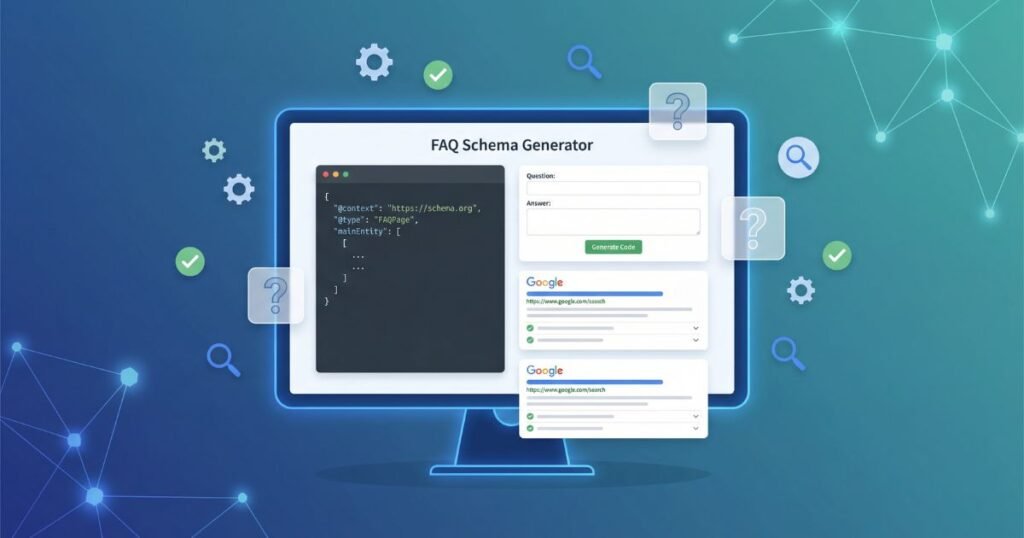
Search engine optimization continues to evolve, and structured data has become a critical component of any successful SEO strategy. Among the many types of structured data available to website owners, FAQ schema stands out as one of the most practical and impactful. It helps search engines understand questions and answers on your pages, which can lead to enhanced visibility in search results through rich snippets.
A faq schema generator simplifies the process of creating this structured data. Instead of writing JSON-LD code manually, website owners and marketers can use a dedicated faq schema generator tool to produce clean, error-free markup in seconds. Whether you run a blog, an e-commerce store, or a local business website, implementing FAQ schema can deliver meaningful benefits for your organic search performance.
This article provides a thorough FAQ-structured data SEO guide that covers everything you need to know about FAQ schema, why it matters, and which tools are best for generating it. Every section is written to help you understand the concept clearly and take action on your own website.
What Is FAQ Schema and Why Does It Matter
FAQ schema is a specific type of structured data markup defined by Schema.org. It tells search engines that a page contains a list of frequently asked questions along with their corresponding answers. When properly implemented, this markup enables Google and other search engines to display your questions and answers directly in search results as expandable rich snippets.
The significance of faq schema for seo cannot be overstated. Pages with FAQ rich results take up more space on the search engine results page, pushing competitor listings further down. This increased real estate naturally draws more clicks and improves your click-through rate. For businesses of all sizes, this is an efficient way to gain visibility without spending money on paid advertising.
Understanding how to create faq schema is essential for anyone serious about search engine optimization. The markup follows Google’s preferred JSON-LD format and must adhere to strict guidelines to be eligible for rich results. Fortunately, the tools covered in this guide make the entire process straightforward, even for those with no coding experience.
How FAQ Schema Works: The Technical Foundation
FAQ schema uses JSON-LD, which stands for JavaScript Object Notation for Linked Data. This is the format Google recommends for implementing structured data. The code is placed within a script tag in the HTML of your page, and it provides a machine-readable version of the questions and answers that appear on the page.
A typical faq schema code example json ld includes the context declaration from Schema.org, the type declaration as FAQPage, and an array of Question entities. Each Question entity contains the question text and an accepted answer with its own text content.
Here is a simplified faq schema markup example to illustrate the structure:
A FAQPage type contains mainEntity items. Each mainEntity is a Question type with a name property for the question text and an acceptedAnswer property of type Answer with a text property for the answer content.
This structure is what every faq schema json ld generator produces automatically. The advantage of using a generator rather than writing this code by hand is that it eliminates the risk of syntax errors that could prevent Google from correctly parsing the markup.
Benefits of Using FAQ Schema for SEO
The FAQ schema markup benefits for SEO are both direct and indirect. Understanding these benefits helps justify the time investment required to implement this structured data across your website.
Enhanced Search Visibility
The most immediate benefit is the appearance of FAQ schema-rich results, as SEO professionals seek. When Google displays your FAQ content as expandable dropdowns in search results, your listing becomes significantly more prominent. This visual distinction helps your page stand out among standard blue-link results.
Higher Click-Through Rates
Pages that display rich results consistently earn higher click-through rates compared to standard listings. The additional information visible in the search results gives users a reason to click through to your page, especially when the displayed answers partially address their query and create curiosity for more detailed information.
Improved Voice Search Performance
The role of faq schema for voice search seo is growing rapidly. Voice assistants like Google Assistant often pull answers from FAQ structured data when responding to spoken queries. By implementing FAQ schema, you increase the likelihood that your content will be selected as the spoken answer for relevant voice searches.
Support for Featured Snippets
Using faq schema for featured snippets can amplify your presence at the very top of search results. While FAQ schema and featured snippets are technically different features, the structured format of your FAQ content makes it easier for Google to extract and display your answers in the coveted position zero.
Competitive Advantage for Small Businesses
A faq schema seo strategy small business owners adopt can level the playing field against larger competitors. Rich results make smaller websites appear more authoritative and trustworthy, which is particularly valuable in competitive local markets.
Best FAQ Schema Generator Tools
Choosing the right faq schema generator tool depends on your specific needs, technical skill level, and the platform your website runs on. Below is a comprehensive review of the best FAQ schema generator tools, including both free and premium options.
1. Merkle Schema Markup Generator
The Merkle Schema Markup Generator, hosted on TechnicalSEO.com, is widely regarded as one of the most reliable seo tools for faq schema. This free faq schema generator online tool allows you to select the FAQPage schema type and add as many question-and-answer pairs as needed. The output is clean JSON-LD code that can be copied and pasted directly into your website.
What makes this tool particularly useful is its simplicity. There are no unnecessary features or complicated interfaces. You select the schema type, enter your content, and the tool generates the code instantly. This makes it an ideal faq schema tool for marketers who need quick results without a steep learning curve.
The Merkle generator also supports other schema types, making it a versatile option for webmasters who want to implement multiple types of structured data across their sites. As a faq schema code generator, it consistently produces valid markup that passes Google’s testing tools without issues.
2. Rank Math SEO Plugin
For WordPress users, Rank Math is one of the most powerful solutions for FAQ schema for WordPress SEO. This plugin includes a built-in FAQ block that automatically generates FAQ schema markup when you add questions and answers to your posts or pages. The structured data is embedded seamlessly into your page without requiring any manual code editing.
Rank Math is an excellent FAQ schema plugin alternative for those who previously relied on standalone schema plugins. Its integrated approach means you do not need to install a separate plugin just for FAQ markup. The FAQ block works within the WordPress block editor and generates properly formatted JSON-LD code in the background.
Beyond FAQ schema, Rank Math offers comprehensive SEO features including keyword tracking, sitemap generation, and rich snippet previews. This makes it a complete seo faq schema tool rather than a single-purpose utility. The free version includes FAQ schema functionality, making it accessible to website owners on any budget.
3. Schema Pro
Schema Pro is a premium WordPress plugin that offers automated schema markup generation for various content types, including FAQ pages. As an automated FAQ schema generator, it can detect FAQ content on your pages and automatically apply the appropriate structured data based on rules you define.
This tool is particularly valuable for websites with extensive FAQ content spread across multiple pages. Instead of manually adding schema to each page, Schema Pro can apply the markup site-wide based on your configuration. This saves significant time and ensures consistency across your entire website.
Schema Pro also functions as a faq schema generator with preview capabilities. You can see how your structured data will appear before publishing, which helps you verify that the markup is correct and complete. This preview feature reduces the need for repeated testing and corrections.
4. Google Structured Data Markup Helper
The Google Structured Data Markup Helper is an official tool from Google that helps webmasters create structured data. While it does not have a dedicated FAQ schema type in its standard interface, it remains a valuable resource for understanding how Google expects structured data to be formatted.
As a Google FAQ schema generator, this tool is best used in combination with other generators. It provides a solid foundation for learning about structured data and helps ensure that your implementation aligns with Google’s guidelines. The tool is entirely free and accessible to anyone with a Google account.
The primary advantage of using Google’s own tool is the confidence that comes from working with an official resource. The guidelines and examples provided are always up to date with Google’s latest requirements for rich results eligibility.
5. Hall Analysis JSON-LD Schema Generator
The Hall Analysis JSON-LD Schema Generator is a straightforward faq schema generator free tool that focuses specifically on producing JSON-LD code. It includes a FAQPage option that lets you enter multiple questions and answers, generating the corresponding structured data code instantly.
This tool is well-suited for anyone who wants to generate faq schema without coding knowledge. The interface is intuitive, and the generated code is ready to be added to any website regardless of the platform. Whether you run a WordPress site, a Shopify store, or a custom-built website, the output works universally.
The Hall Analysis generator is also useful as a faq rich snippet generator because it produces markup that is optimized for rich result eligibility. The code follows Google’s current specifications and includes all required properties for FAQPage structured data.
6. Yoast SEO Plugin
Yoast SEO is another prominent WordPress plugin that includes FAQ schema functionality. Similar to Rank Math, Yoast provides a FAQ block within the WordPress editor that generates structured data automatically. This makes it a practical choice for faq schema for blog posts and other content types within WordPress.
The Yoast FAQ block lets you add questions and answers in a structured format, and the plugin handles JSON-LD generation behind the scenes. For WordPress users who already have Yoast installed, this built-in feature eliminates the need for additional tools or plugins.
Yoast SEO is particularly popular among bloggers and content creators who want an all-in-one SEO solution. Its FAQ schema feature is part of the free version, making it an accessible option for those seeking a free faq schema generator online within their existing WordPress setup.
7. Schema App
Schema App is an enterprise-grade structured data solution that offers comprehensive schema markup generation and management. It supports FAQ schema along with dozens of other schema types, making it suitable for large organizations with complex structured data needs.
As a faq structured data generator, Schema App goes beyond simple code generation. It provides ongoing monitoring, validation, and optimization of your structured data. This means you can identify and fix issues before they affect your search performance.
Schema App is a premium tool, so it is best suited for businesses that are serious about structured data as a core part of their SEO strategy. For agencies and large websites, the investment is justified by the time savings and improved accuracy it delivers.
8. Jeac FAQ Schema Generator
The Jeac FAQ Schema Generator is a simple, browser-based tool designed specifically for creating FAQ structured data. It provides a clean interface for entering your questions and answers, and it generates the JSON-LD code you need to add the FAQ schema to website pages.
This tool is ideal for small business owners and individual website operators who need a quick and reliable solution. The interface includes a live preview of the generated code, making it a faq schema generator with preview functionality that helps you verify your markup before implementation.
The Jeac generator is completely free and does not require registration or account creation. This makes it one of the most accessible options for anyone who needs to create FAQ schema quickly.
9. Shopify SEO Schema Apps
For Shopify store owners, several apps within the Shopify App Store provide FAQ schema functionality. These apps are designed specifically for the faq schema for Shopify SEO and integrate directly with the Shopify platform, making implementation seamless.
An e-commerce FAQ schema generator for Shopify can add structured data to product pages, collection pages, and dedicated FAQ pages within your store. This is particularly valuable for online retailers who want to enhance their product listings with rich results in Google search.
Popular Shopify schema apps include JSON-LD for SEO and Smart SEO, both of which support FAQ schema and other ecommerce-specific schema types, such as Product and Review schema.
How to Create FAQ Schema Step by Step
Understanding how to create faq schema involves a series of straightforward steps. This section walks you through the process from start to finish.
Step 1: Identify Relevant Questions
Start by identifying the questions your audience frequently asks about your products, services, or content topic. These should be genuine questions that provide value to your visitors. Review customer inquiries, support tickets, and keyword research data to compile a comprehensive list.
Step 2: Write Clear and Concise Answers
Each answer should be direct, informative, and relevant to the question. Avoid overly long answers that dilute the value of the content. Google recommends that FAQ schema answers should be complete and self-contained, meaning each answer should make sense on its own.
Step 3: Choose a FAQ Schema Generator
Select one of the faq schema generator tools described in this article. Your choice should depend on your website platform, technical comfort level, and whether you need free or premium features. For most users, a free faq schema generator online tool will be sufficient.
Step 4: Generate the JSON-LD Code
Enter your questions and answers into your chosen faq schema markup generator. The tool will produce the JSON-LD code that you need to add to your webpage. Review the generated code to ensure all questions and answers are accurately represented.
Step 5: Add the Code to Your Website
Place the generated JSON-LD code within the head section or body of the relevant webpage. If you use WordPress, plugins like Rank Math and Yoast handle this automatically. For faq schema for custom websites, you will need to paste the code directly into your HTML template or use a tag manager.
Step 6: Validate the Markup
Use a faq schema validator tool such as Google’s Rich Results Test or the Schema Markup Validator to confirm that your markup is error-free and eligible for rich results. This step is essential for catching any issues before Google indexes your page.
FAQ Schema for Different Website Types
Different types of websites have unique requirements and opportunities for implementing FAQ schema. This section addresses several common scenarios.
FAQ Schema for Small Business Websites
A faq schema for small business website can significantly improve local search visibility. Small businesses often compete against larger companies with bigger marketing budgets, and FAQ rich results provide a way to stand out without additional advertising spend. Common FAQ topics for small businesses include service details, pricing information, business hours, and location-specific questions.
Implementing a local seo faq schema generator for your business can help you appear in local search results with enhanced listings. When potential customers search for services in their area, FAQ rich results can make your business listing more informative and appealing.
FAQ Schema for Ecommerce Websites
Using an ecommerce faq schema generator is valuable for online stores that want to address common customer questions directly in search results. Product-related FAQs such as shipping policies, return procedures, sizing guides, and material specifications can be marked up with FAQ schema.
Adding faq schema for product pages helps potential buyers get answers to their questions before they even visit your store. This pre-qualification of visitors often leads to higher conversion rates because users arrive at your site already informed about key details.
FAQ Schema for Service Pages
Businesses that offer services can benefit from faq schema for service pages by addressing common questions about their service offerings. Questions about pricing, timelines, qualifications, and service areas are all excellent candidates for FAQ schema.
Service page FAQ schema helps establish expertise and trustworthiness, which are important factors in Google’s evaluation of page quality. When users see comprehensive answers to their questions directly in search results, they are more likely to view your business as credible and professional.
FAQ Schema for Landing Pages
Implementing faq schema for landing pages can improve both SEO performance and conversion rates. Landing pages often target specific keywords and user intents, and FAQ schema allows you to address potential objections or questions that might prevent a visitor from converting.
The FAQ content on landing pages should be closely aligned with the page’s primary purpose. Each question and answer should support the landing page’s goal, whether that is lead generation, product promotion, or event registration.
FAQ Schema for Blog Posts
Adding faq schema for blog posts is a straightforward way to enhance the search visibility of your content. Blog posts naturally lend themselves to FAQ content because they often address specific topics in depth. A summary FAQ section at the end of a blog post can capture additional search queries while providing value to readers.
Content creators and bloggers can use FAQ schema to target long-tail keywords that appear as questions in search results. This strategy helps capture traffic from informational queries that might not be addressed by the main body of the article.
FAQ Schema Optimization Tips
Implementing FAQ schema is just the first step. Optimizing your implementation ensures maximum impact on your search performance. These faq schema optimization tips will help you get the most out of your structured data.
Align FAQs with User Intent
Every question in your FAQ schema should reflect a genuine query that your target audience is likely to search for. Use keyword research tools and Google’s People Also Ask feature to identify the most relevant questions for your topic or industry.
Keep Answers Comprehensive but Concise
Google rewards answers that fully address the question without unnecessary filler. Aim for answers that are between 50 and 300 words. Shorter answers may not provide enough value, while excessively long answers may be truncated in rich results.
Update FAQ Content Regularly
Search behavior changes over time, and your FAQ content should evolve accordingly. Regularly review and update your FAQ schema to reflect current questions and accurate answers. Outdated information can harm both user experience and search rankings.
Avoid Duplicate FAQ Content
Do not use the same FAQ schema on multiple pages of your website. Each page should include unique FAQ content relevant to its topic. Duplicate FAQ schema can confuse search engines and reduce the effectiveness of your structured data.
Follow Google’s Content Guidelines
Google has specific guidelines for FAQ schema eligibility. The content must be visible on the page, meaning it cannot be hidden behind tabs or accordions that are not accessible without user interaction. The questions and answers in your schema must match the content that users can see on the page.
FAQ Schema Best Practices for the Future
As search engines continue to evolve, staying ahead of changes in structured data requirements is important. Following faq schema best practices 2026 and beyond will ensure that your implementation remains effective.
Prioritize Quality Over Quantity
Adding dozens of low-quality FAQ items to a single page is less effective than including a smaller number of well-crafted, highly relevant questions and answers. Focus on quality content that genuinely serves your audience.
Integrate FAQ Schema into Your Overall SEO Strategy
FAQ schema should not exist in isolation. It should be part of a broader structured data strategy that includes other relevant schema types such as Organization, LocalBusiness, Product, and Article schema. This comprehensive approach sends stronger signals to search engines about your content and business.
Monitor Rich Results Performance
Use Google Search Console to track the performance of your FAQ rich results. Monitor impressions, clicks, and click-through rates for pages with FAQ schema. This data helps you understand which FAQ content resonates with users and which may need improvement.
Test Before Publishing
Always use a faq schema testing tool before publishing new or updated FAQ schema. The Google Rich Results Test and the Schema Markup Validator are both free tools that check your markup for errors and confirm rich results eligibility.
FAQ Schema for Ranking in Google
Using faq schema for ranking in google requires more than just adding the markup to your pages. The content quality, relevance, and overall page authority all play a role in determining whether your FAQ rich results appear in search results.
Pages that already rank on the first page of Google for their target keywords are more likely to display FAQ rich results. This means that FAQ schema works best as a complement to existing SEO efforts rather than a replacement for fundamental optimization practices.
The combination of strong on-page SEO, quality backlinks, and well-implemented FAQ schema creates a powerful formula for improved search visibility. Website owners who treat FAQ schema as one component of a comprehensive SEO strategy will see the best results.
Generating FAQ Schema Without Coding
One of the most common concerns among website owners is the technical complexity of implementing structured data. The good news is that you can generate faq schema without coding experience of any kind. The tools listed in this article handle all of the technical work for you.
Free browser-based generators like the Merkle Schema Markup Generator and the Hall Analysis JSON-LD Schema Generator produce ready-to-use code that can be pasted directly into your website. WordPress plugins like Rank Math and Yoast SEO eliminate even the need for code pasting by generating and embedding the markup automatically.
For those using website builders or content management systems that support custom code injection, adding FAQ schema is as simple as pasting the generated code into a designated field. Many modern website platforms include specific areas for adding scripts to the head or body of individual pages.
Choosing the Right Tool for Your Needs
The best faq schema generator tools for your situation depend on several factors. Consider the following when making your decision.
If you operate a WordPress website, a plugin like Rank Math or Yoast SEO provides the most seamless experience. The built-in FAQ blocks eliminate the need for external tools and keep your workflow entirely within the WordPress dashboard.
If you run a Shopify store, dedicated Shopify apps designed for faq schema for shopify seo will integrate most naturally with your existing setup. These apps are designed to work within the Shopify ecosystem and often support other ecommerce schema types as well.
For faq schema for custom websites or other platforms, browser-based generators like the Merkle or Hall Analysis tools offer the most flexibility. They produce universal JSON-LD code that works on any website regardless of the underlying technology.
Marketers and agencies who manage multiple websites may benefit from enterprise solutions like Schema App, which offers centralized management and monitoring of structured data across many properties. This type of faq schema tool for marketers scales efficiently and reduces the risk of errors across large portfolios.
Automated FAQ Schema Generation
An automated faq schema generator can save significant time for websites that publish FAQ content frequently. Automation tools and plugins can detect FAQ content on your pages and apply the appropriate structured data without manual intervention.
WordPress plugins with automation capabilities can be configured to add FAQ schema to all pages that contain specific content structures. This means that once you set up the rules, every new FAQ section you create will automatically receive the proper markup.
For larger websites, this automation is essential for maintaining consistent structured data implementation. Manual processes are prone to human error and are simply not scalable for sites with hundreds or thousands of pages.
Conclusion
FAQ schema is a powerful and accessible SEO tool that every website owner should consider implementing. The tools discussed in this article make the process straightforward, whether you prefer browser-based generators, WordPress plugins, or enterprise solutions. By choosing the right faq schema generator for your needs and following the optimization tips and best practices outlined here, you can enhance your search visibility, improve click-through rates, and provide a better experience for your audience.
The key to success with FAQ schema is consistency and quality. Implement it thoughtfully, keep your content updated, validate your markup regularly, and integrate FAQ schema into a broader SEO strategy. These actions will position your website for stronger performance in organic search results and help you maintain a competitive edge in your industry.
Frequently Asked Questions
What is a FAQ schema generator?
A FAQ schema generator is a tool that generates structured data markup for your website’s FAQ content. It produces JSON-LD code that tells search engines about the questions and answers on your page, which can lead to rich snippet displays in Google search results. These tools eliminate the need for manual coding and make structured data implementation accessible to anyone.
Can I use FAQ schema on any type of website?
Yes, FAQ schema can be used on virtually any type of website, including blogs, ecommerce stores, service business sites, and landing pages. The JSON-LD code generated by FAQ schema generators is universal and works across all website platforms. Whether your site is built on WordPress, Shopify, Wix, or custom code, you can implement FAQ structured data.
Is FAQ schema still effective for SEO?
FAQ schema remains an effective SEO strategy for improving search visibility and click-through rates. While Google periodically adjusts how it displays rich results, FAQ schema continues to be supported and can provide meaningful advantages. Staying current with Google’s guidelines ensures that your FAQ markup remains eligible for rich results.
How many questions should I include in my FAQ schema?
There is no strict limit on the number of questions you can include, but quality should always take priority over quantity. Most SEO professionals recommend including between three and ten well-crafted questions per page. Each question should be relevant to the page content and provide genuine value to the reader.
Do I need coding skills to add FAQ schema to my website?
No coding skills are required to add FAQ schema to your website. Browser-based generators produce ready-to-use code that can be pasted into your site, and WordPress plugins like Rank Math and Yoast SEO handle the entire process automatically. These tools are designed to make structured data implementation accessible to users of all technical skill levels.
How can I verify that my FAQ schema is working correctly?
You can verify your FAQ schema using Google’s Rich Results Test or the Schema Markup Validator. These free tools analyze your page and confirm whether your structured data is valid and eligible for rich results. Regular testing after any changes to your FAQ content or website structure is recommended to ensure ongoing accuracy.