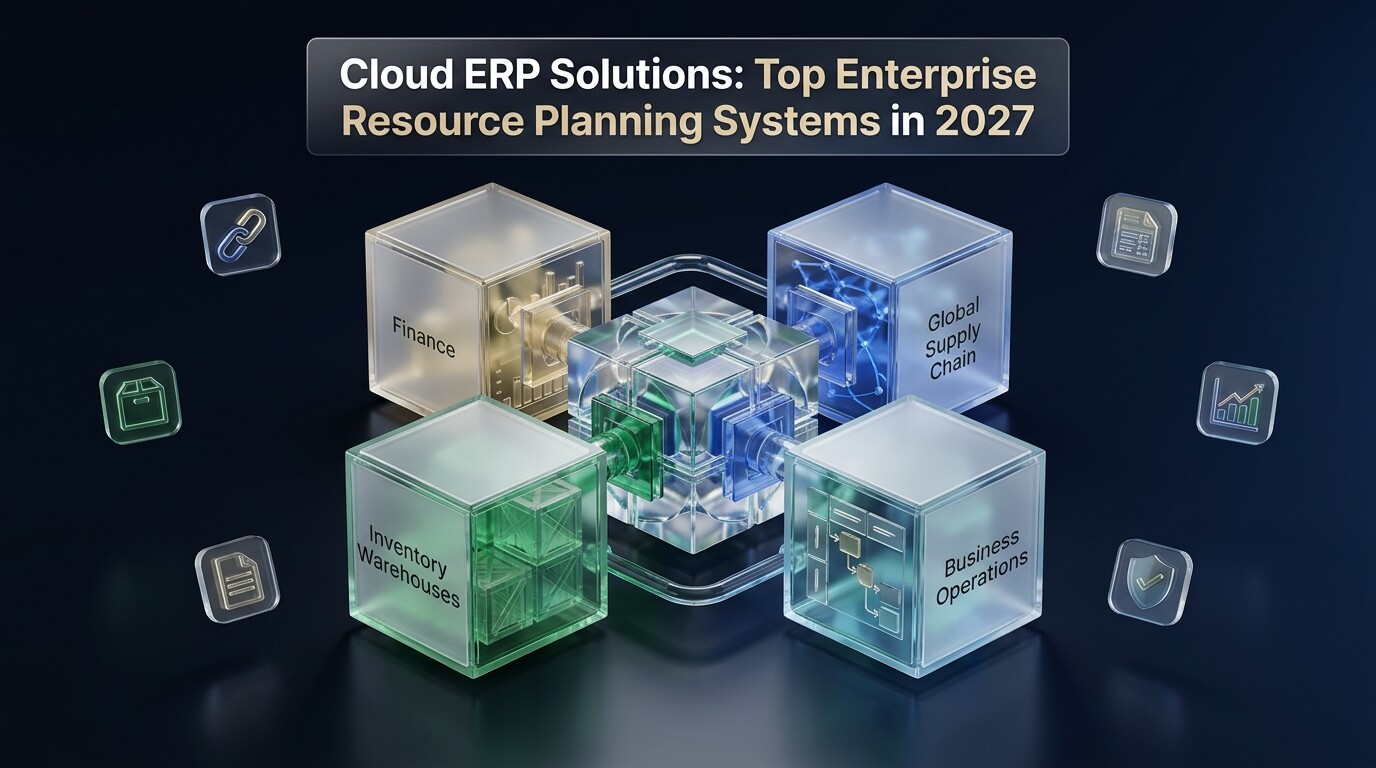
Modern enterprises face growing pressure to unify scattered operational data across finance, supply chains, and commerce. Adopting modern cloud erp solutions eliminates disconnected legacy spreadsheets and accelerates commercial decision-making. In fact, leading organizations deploy erp cloud solutions to gain immediate real-time visibility across all global operational entities.
Every progressive organization requires integrated cloud solutions erp frameworks that scale effortlessly alongside customer demand. Enterprise leaders frequently compare oracle erp cloud solutions with advanced sap cloud solutions to determine optimal transactional throughput. Simultaneously, organizations evaluate microsoft dynamics cloud solutions and agile netsuite cloud solutions to harmonize financial accounting with customer operations.
Implementing targeted erp cloud solutions for business replaces cumbersome on-premises servers with resilient, automated digital workflows. Modern cloud erp software coordinates procurement, inventory replenishment, and payroll calculations within a single unified database. Whether your organization deploys sophisticated cloud enterprise solutions or broader enterprise cloud solutions, selecting effective cloud erp for small business allows smaller teams to compete against massive corporations. Working alongside experienced erp cloud solutions providers ensures your digital transformation delivers measurable financial returns.
Key Takeaways for Enterprise ERP Modernization
- Cloud ERP architectures eliminate expensive on-premises hardware maintenance, cooling, and manual database patching.
- Unified general ledgers accelerate month-end financial reconciliations by up to eighty percent across multi-currency subsidiaries.
- Embedded artificial intelligence automates invoice matching, anomaly detection, and predictive demand planning.
- Modular cloud subscriptions convert massive upfront capital costs into predictable, tax-efficient operating expenses.
Understanding Cloud Enterprise Resource Planning Systems
Traditional enterprise software required massive server rooms, proprietary database administrators, and complex local network cabling. Upgrading legacy on-premises ERP systems frequently demanded multi-year consulting projects that disrupted everyday commercial operations. Contemporary cloud ERP platforms replace physical server closets with secure, high-availability remote hyperscale data centers.
Cloud ERP consolidates disparate organizational functions into a single immutable transactional ledger. When a sales representative finalizes a customer purchase order, inventory records decrease, accounting ledgers credit accounts receivable, and shipping warehouses receive fulfillment tasks instantly. This real-time automation eliminates communication delays between isolated departmental teams.
Modern platforms also introduce continuous automated updates that deliver new functional capabilities without manual intervention. Security teams receive automated security patches that protect corporate financial data against evolving ransomware threats. Cloud architecture ensures your enterprise software remains continuously up to date without costly modernization projects.
Pro-Tip on ERP Customization
Avoid heavy custom code alterations inside core ERP database tables whenever possible. Use modern cloud APIs and low-code extension platforms to build customizations that survive future automated software upgrades.
Core Functional Modules of Modern Cloud ERP Platforms
Financial management forms the central core of every modern enterprise resource planning platform. The general ledger consolidates accounts payable, accounts receivable, fixed asset depreciation, and bank reconciliations into a compliant audit trail. Multi-currency and multi-entity support allows multinational enterprises to generate consolidated balance sheets within minutes of period closes.
Supply chain and inventory management modules track raw materials, work-in-progress inventory, and finished goods across distributed global warehouses. Automated replenishment algorithms calculate safety stock thresholds based on historical lead times and incoming seasonal demand forecasts. Real-time lot tracking and serial number tracing ensure rapid recall management and strict quality control compliance.
Procurement automation streamlines purchasing workflows from initial requisition through vendor payment settlement. Automated three-way matching compares purchase orders, receiving dock receipts, and supplier invoices to prevent fraudulent or mistaken disbursements. Centralized supplier portals allow external vendors to upload invoices, update delivery timelines, and verify payment schedules independently.
Human capital management and payroll modules coordinate workforce scheduling, tax withholdings, and employee benefits administration. Linking labor hours directly to manufacturing job orders provides precise visibility into true product production costs. Integrated performance management tools help human resources teams track employee retention, commission plans, and internal leadership succession.
Top 8 Cloud ERP Solutions for Modern Enterprises
We evaluated dozens of industry-leading enterprise resource planning platforms across financial scalability, supply chain breadth, ease of deployment, and total cost of ownership. The following eight platforms lead the global enterprise software market.
1. Oracle Fusion Cloud ERP
Oracle Fusion Cloud ERP provides an expansive suite of financial management, procurement, and risk compliance applications designed for multinational corporations. The platform operates on Oracle Cloud Infrastructure, utilizing autonomous database technology to process millions of transactions per second. Global banks, healthcare networks, and telecommunications providers rely heavily on Oracle for mission-critical accounting.
Embedded artificial intelligence automates routine financial reconciliation tasks, flagging anomalous transactions before journals post. Advanced scenario modeling tools allow financial planning executives to simulate economic downturns and currency fluctuations dynamically. Built-in compliance dashboards help organizations satisfy strict global reporting mandates like SOX and IFRS.
Oracle Fusion Cloud ERP also features integrated project portfolio management for professional services firms. Automated expense tracking and revenue recognition rules ensure projects bill clients accurately according to contract milestones. For large enterprises seeking institutional-grade scalability, Oracle Fusion Cloud ERP represents an industry benchmark.
2. SAP S/4HANA Cloud
SAP S/4HANA Cloud is the premier intelligent enterprise resource planning platform for global manufacturing, logistics, and industrial enterprises. The system runs on SAP HANA in-memory database architecture, eliminating disk input-output bottlenecks to deliver real-time operational analytics. Complex supply chain networks utilize SAP to coordinate global shipping routes and plant production schedules.
Advanced material requirements planning algorithms calculate production capacity and inventory requirements across multiple factory floors simultaneously. Real-time predictive maintenance sensors connect via Industrial IoT interfaces to trigger replacement part orders before assembly lines break down. SAP S/4HANA Cloud provides unmatched depth for complex discrete manufacturing workflows.
The platform supports modular public and private cloud deployment options to accommodate diverse sovereign data privacy laws. Comprehensive localization packages ensure immediate tax and legal compliance across more than one hundred countries. SAP S/4HANA Cloud remains the gold standard for high-throughput global industrial corporations.
3. Microsoft Dynamics 365
Microsoft Dynamics 365 unites traditional ERP capabilities with customer relationship management into a flexible, modular business application suite. Organizations can deploy Finance and Supply Chain Management alongside Dynamics 365 Sales and Customer Service. Deep native integration with Microsoft 365, Teams, and Power BI creates a familiar, intuitive operational environment.
Microsoft Copilot provides conversational generative AI assistance directly inside everyday ERP workflows. Financial analysts can ask conversational questions to summarize quarterly expense variances or draft supplier follow-up emails automatically. Power Platform integration allows non-technical business users to build custom approval workflows and mobile apps without writing code.
Flexible licensing allows organizations to activate specific functional modules gradually as commercial operations expand. Global Azure data center regions guarantee exceptional application availability and low network latency for distributed hybrid workforces. Microsoft Dynamics 365 delivers exceptional agility for mid-market and enterprise organizations alike.
4. Oracle NetSuite
Oracle NetSuite pioneered cloud-native enterprise resource planning and remains the dominant platform for high-growth mid-market businesses and modern startups. The platform provides a complete business management suite spanning financials, order management, inventory, and omnichannel commerce. Built-in multi-subsidiary management through OneWorld allows companies to manage dozens of international legal entities effortlessly.
NetSuite offers pre-configured industry editions tailored specifically for software, wholesale distribution, retail, and manufacturing sectors. Real-time role-based dashboards deliver immediate visibility into key performance indicators, cash flow trends, and sales pipeline metrics. Automated revenue recognition rules simplify compliance with ASC 606 and IFRS 15 for subscription software firms.
The SuiteCloud platform provides powerful customization tools, scheduled scripts, and REST web services to integrate with third-party logistics and e-commerce portals. NetSuite scales smoothly from early-stage venture-backed startups through initial public offerings and multi-billion-dollar global operations. It represents the quintessential cloud ERP solution for fast-moving growing teams.
5. Workday Enterprise Management Cloud
Workday Enterprise Management Cloud delivers a unified financial management, human capital management, and planning platform built specifically for service-oriented enterprises. Rather than relying on separate databases for HR and finance, Workday operates on a single unified in-memory data architecture. This unified foundation eliminates data synchronization discrepancies between payroll records and general ledgers.
Continuous financial audit capabilities inspect one hundred percent of commercial transactions in real time, replacing outdated sample-based audit methodologies. Workday Adaptive Planning provides collaborative forecasting tools that allow cross-departmental teams to model headcount expenses and capital investments cooperatively. The intuitive consumer-grade user interface drives rapid employee adoption across mobile and desktop devices.
Workday incorporates ethical artificial intelligence governance to support skill-based talent mobility and automated invoice ingestion. Financial teams benefit from automated journal entries and streamlined multi-currency reconciliations during month-end closing periods. Workday represents the premier enterprise management suite for technology, financial services, and healthcare institutions.
6. Acumatica Cloud ERP
Acumatica Cloud ERP provides an adaptable, mobile-ready business management suite engineered specifically for growing small and medium-sized enterprises. The platform distinguishes itself through a unique resource-based pricing model that charges for compute consumption rather than individual user seat licenses. This licensing model allows companies to grant system access to every employee and external contractor without incurring ballooning license fees.
The platform features specialized industry editions for manufacturing, distribution, construction, and retail commerce. Open APIs and standard web technologies allow development teams to customize screen layouts and integrate third-party applications with minimal effort. Acumatica native mobile apps allow field technicians and warehouse workers to scan barcodes, capture receipts, and approve orders on the go.
Acumatica provides customers with total deployment freedom, allowing operations in public clouds or private hosted environments. Built-in customer relationship management ensures sales and support teams access real-time order history and inventory availability. For mid-market companies seeking predictable pricing and flexible customization, Acumatica offers remarkable value.
7. Infor CloudSuite
Infor CloudSuite delivers highly specialized industry-specific ERP capabilities hosted on Amazon Web Services infrastructure. Unlike generic ERP suites that require extensive third-party modifications, Infor builds deep vertical functionality directly into its core software packages. Manufacturing, food and beverage, distribution, and aerospace defense firms choose Infor for its ready-to-run industry micro-verticals.
The platform utilizes Infor OS as an underlying digital integration layer, providing enterprise integration, document management, and automated workflow routing. Infor Coleman AI delivers automated voice assistance, chat automation, and predictive machine learning recommendations for complex industrial operations. Real-time visual scheduling boards help production supervisors balance machine workloads and optimize factory floor throughput.
Infor CloudSuite leverages AWS multi-region security and automated elasticity to deliver ninety-nine point nine percent uptime availability. Birst analytics delivers enterprise business intelligence dashboards that combine operational ERP data with external market trends. Infor represents an outstanding option for industrial enterprises seeking specialized out-of-the-box vertical capabilities.
8. Odoo Cloud ERP
Odoo Cloud ERP provides an intuitive, modular open-source business management suite suitable for small businesses, startups, and expanding enterprises. The platform consists of dozens of integrated applications covering accounting, point-of-sale, inventory, manufacturing, and marketing automation. Companies can start with a single application like invoicing and activate additional modules as organizational complexity increases.
Odoo features an exceptionally clean, modern user interface that minimizes employee training time and administrative resistance. Transparent, cost-effective pricing structures make enterprise-grade resource planning accessible to budget-conscious commercial firms. An extensive global community marketplace offers thousands of community-built extensions and localization packages.
Developers can customize Odoo modules easily using standard Python and PostgreSQL database technologies. The cloud-hosted Odoo.sh platform provides automated testing, continuous integration, and staging environments for custom software enhancements. Odoo stands out as the ultimate modular, low-friction ERP platform for modern entrepreneurs and nimble small businesses.
| ERP Platform | Primary Target Market | Key Differentiator | Deployment Model | Ideal Industry |
|---|---|---|---|---|
| Oracle Fusion Cloud | Global enterprise & multinational | Autonomous database & AI finance | Public SaaS on OCI | Financial services & telecom |
| SAP S/4HANA Cloud | Large industrial & manufacturing | In-memory HANA & supply chain | Public / Private Multi-cloud | Automotive & discrete manufacturing |
| Microsoft Dynamics 365 | Mid-market to large enterprise | Microsoft 365 & Copilot ecosystem | Azure Cloud SaaS | Distribution & retail commerce |
| Oracle NetSuite | Fast-growing SMBs & mid-market | Native cloud & OneWorld multi-entity | Cloud-native SaaS | Tech SaaS & wholesale goods |
| Workday Management | Service-centric enterprises | Unified HR & finance data core | Enterprise Cloud SaaS | Healthcare & higher education |
| Acumatica | Growing mid-market companies | Consumption pricing (unlimited users) | Public or Hosted Private Cloud | Construction & warehousing |
| Infor CloudSuite | Specialized industrial sectors | Deep industry micro-verticals | AWS Powered SaaS | Aerospace, defense & chemical |
| Odoo Cloud | Small businesses & startups | Modular open-source architecture | Odoo Cloud & On-Premises | Boutique retail & small business |
Step-by-Step Cloud ERP Implementation Methodology
Implementing an enterprise resource planning system touches every core operational department within a commercial organization. Unplanned implementations often encounter data migration errors, employee pushback, and operational slowdowns. Following a structured phase-by-phase implementation framework ensures smooth operational transitions.
Actionable Cloud ERP Implementation Checklist
- Phase 1: Process Discovery: Map existing business workflows, identify operational bottlenecks, and define key requirements.
- Phase 2: Data Cleansing: Audit historical customer records, de-duplicate inventory items, and purge obsolete vendor files.
- Phase 3: System Configuration: Configure general ledger accounts, chart of accounts hierarchies, and approval workflows.
- Phase 4: Conference Room Pilot: Run simulated commercial transactions across finance, sales, and logistics teams.
- Phase 5: User Acceptance Testing: Validate end-to-end purchasing, invoicing, and reporting accuracy under realistic loads.
- Phase 6: Cutover & Go-Live: Freeze legacy systems, execute final opening balance migrations, and initiate live processing.
Data cleansing represents the single most critical predictor of ERP implementation success. Migrating dirty historical data into a clean cloud ERP system replicates legacy inefficiencies on day one. Establish rigorous data validation rules to standardize customer addresses, tax identification numbers, and unit-of-measure definitions prior to data migration.
Conducting conference room pilots allows cross-functional teams to test real-world scenarios collaboratively. Operations managers, accountants, and warehouse supervisors execute simulated customer orders from initial quote through bank deposit. Identifying procedural gaps during pilot testing prevents customer shipping disruptions during official system cutovers.
Executive leadership sponsorship and comprehensive change management ensure lasting employee adoption. Staff members often resist unfamiliar software interfaces if they feel excluded from the selection process. Providing role-specific training sessions and celebrating early process milestones builds organizational momentum and user enthusiasm.
Total Cost of Ownership: On-Premises ERP vs. Cloud ERP
Evaluating long-term enterprise software costs requires analyzing all indirect and direct operational expenses over a five-year lifecycle. Traditional on-premises ERP systems conceal substantial hidden costs beneath initial software license fees. Organizations must purchase enterprise database servers, high-speed storage arrays, backup appliances, and redundant cooling equipment.
In addition, on-premises systems demand dedicated database administrators and system engineers to execute routine maintenance and security updates. When hardware nears obsolescence every four to five years, companies face expensive hardware refresh cycles and complex database upgrades. In contrast, cloud ERP consolidates compute hosting, disaster recovery, and automated feature enhancements into a transparent annual subscription fee.
Cloud resource planning transforms large capital asset purchases into predictable, tax-efficient operational expenditures. Internal technical teams can shift attention from hardware troubleshooting to high-value strategic data analytics and process automation. Over a five-year operational horizon, cloud ERP platforms typically deliver twenty to forty percent total cost savings compared to legacy on-premises deployments.
Security, Governance, and Data Compliance in Cloud ERP
Corporate financial records, employee salaries, and customer contracts represent high-value targets for malicious cyber actors. Leading cloud ERP vendors operate multi-layered defense perimeters that exceed the physical and digital security capabilities of typical enterprise data centers. Providers maintain global security operations centers that monitor network traffic twenty-four hours a day.
Role-based access control policies enforce segregation of duties automatically across all operational workflows. An employee who creates a vendor record cannot approve purchase orders or issue check disbursements to that same vendor. Automated segregation of duties enforcement prevents internal financial fraud and simplifies annual external financial audits.
Data encryption applies continuously both in transit across internet backbones and at rest within cloud database storage. Cloud providers maintain certified compliance with international standards such as SOC 1 Type II, SOC 2 Type II, ISO 27001, and GDPR. Storing records with compliant cloud providers ensures your enterprise satisfies strict regulatory audits effortlessly.
AI and Automation Trends Reshaping Cloud ERP
Artificial intelligence is transforming cloud enterprise resource planning from passive recording systems into proactive decision engines. Machine learning algorithms analyze historical shipping patterns and global weather data to predict supply chain bottlenecks weeks before delays occur. Automated systems can reroute replenishment orders to alternative regional distribution centers autonomously.
Generative artificial intelligence and natural language assistants allow commercial managers to query complex databases using conversational language. An operations director can ask conversational questions to identify underperforming retail branches or summarize unexpected freight cost increases. Automated bots extract line-item details from scanned PDF receipts and populate accounting journals without manual data entry.
Continuous predictive accounting will gradually replace traditional month-end financial close cycles. Autonomous algorithms reconcile intercompany transactions, evaluate currency hedging, and calculate revenue recognition in real time. Businesses will operate with a perpetual, up-to-the-minute balance sheet that empowers agile executive decisions.
Selecting Between Multi-Tenant SaaS and Single-Tenant Private Cloud ERP
Enterprise technology leaders must decide between multi-tenant public cloud software and dedicated single-tenant private cloud deployments. Multi-tenant public software shares underlying server compute hardware across thousands of isolated commercial customers. This shared architecture keeps recurring subscription prices low and guarantees that all customers receive automated software updates simultaneously.
Single-tenant private cloud environments allocate dedicated virtual hardware and isolated database instances exclusively to a single enterprise client. Organizations operating in heavily regulated defense industries or healthcare systems often mandate dedicated infrastructure to satisfy sovereign compliance laws. While private cloud hosting provides total control over software update schedules, it requires higher subscription fees and dedicated administrative oversight.
For the vast majority of mid-market and enterprise commercial firms, multi-tenant public cloud software delivers the optimal balance of agility, security, and low total cost. Multi-tenant vendors maintain rigorous logical isolation between tenant databases using cryptographically verified tenant identifiers. This logical boundary ensures that neighboring tenant workloads can never inspect or corrupt your proprietary financial records.
ERP Integration Strategies: Building a Connected Enterprise Ecosystem
A cloud enterprise resource planning system cannot operate in isolation from adjacent corporate software platforms. Modern organizations maintain dozens of specialized business tools, including customer relationship management, warehouse management, and third-party logistics networks. Establishing reliable integration pipelines connects disparate data streams into a harmonious operational ecosystem.
Integration Platform as a Service, commonly known as iPaaS, provides pre-built connector libraries and visual mapping interfaces to link cloud ERP databases with external platforms. Instead of writing custom point-to-point scripts, engineers build standardized API integrations that handle automated retries, error logging, and data transformations. Standardized integration layers prevent brittle custom connections from breaking during scheduled ERP system upgrades.
Event-driven architectures utilizing message streaming tools like Apache Kafka or AWS EventBridge allow systems to respond to commercial events in real time. When an e-commerce customer places an order, an event publishes to the message broker instantly. The ERP system consumes the message, reserves inventory stock, and notifies third-party logistics fulfillment centers within milliseconds.
Change Management and Organizational Alignment During ERP Cutover
Technological execution accounts for only half of the challenge in any enterprise software implementation. Managing human behavioral adjustments and organizational workflows often represents the deciding factor between project triumph and operational failure. Employees who are comfortable with legacy spreadsheets often resist unfamiliar cloud interfaces unless leadership communicates the vision clearly.
Establish a dedicated network of departmental super-users representing accounting, warehouse logistics, purchasing, and sales operations. Involve these influential team members directly in conference room pilots and workflow design sessions from the earliest phases. Super-users provide immediate peer-level support and champion the new cloud platform during everyday department meetings.
Structure incentive programs and milestone celebrations to reward teams as they master new operational procedures. Provide comprehensive, role-specific documentation and short recorded video tutorials demonstrating everyday tasks like processing invoices and printing bills of lading. Investing in patient human change management ensures your workforce embraces digital transformation with enthusiasm.
Real-World Industry Case Studies: Lessons from Cloud ERP Migrations
Examining real-world transformations demonstrates how diverse commercial organizations capitalize on cloud ERP modernization. A nationwide plumbing supply distributor with twenty regional warehouses previously relied on an aging on-premises server system. Server crashes during peak morning ordering hours frequently stalled warehouse shipments and caused costly inventory discrepancies.
After migrating to a modern cloud ERP suite, the distributor achieved real-time inventory visibility across all twenty regional branches. Automated reorder point calculations cut safety stock carrying costs by twenty-two percent while improving order fulfillment rates to ninety-nine point four percent. During regional weather emergencies, warehouse staff accessed the cloud system from home laptops and rerouted deliveries smoothly.
Similarly, an expanding software-as-a-service provider with corporate subsidiaries in three countries struggled with complex multi-currency financial consolidation. Manual currency conversions and revenue recognition calculations delayed monthly financial closings by two weeks. Transitioning to a unified cloud ERP platform automated ASC 606 revenue recognition and reduced month-end closing times from fourteen business days to three.
Post-Go-Live Optimization and Continuous Operational Governance
The successful launch of a cloud ERP platform marks the starting point of continuous operational refinement. The initial thirty-day hypercare period requires daily standup meetings between business leads and technical consultants. Addressing minor user confusion and adjusting report layouts quickly builds team confidence and preserves workplace productivity.
Establish a formal change review board to evaluate user enhancement requests systematically. While business departments will request custom fields, reports, and workflow tweaks, excessive customization can reintroduce operational complexity. The change board evaluates each proposed modification against core commercial objectives, approving only changes that deliver measurable productivity gains.
Cloud vendors deliver automated feature updates and performance improvements on a regular quarterly schedule. Establish a dedicated staging sandbox environment where system administrators test upcoming software releases against existing integrations. Verifying automated updates before they reach production instances ensures business operations run smoothly without unexpected disruptions.
Vendor Selection Framework: 8 Criteria for Evaluating ERP Providers
Choosing an enterprise resource planning provider represents a ten-year strategic partnership for most commercial firms. Rushing the selection process or focusing strictly on initial software pricing frequently results in buyer remorse and costly re-implementations. Utilizing a structured evaluation rubric helps leadership teams choose the platform that best matches their strategic vision.
Evaluate industry vertical depth and pre-built operational best practices before reviewing general accounting features. An ERP system engineered specifically for food processing or discrete manufacturing includes lot traceability and quality inspection modules out of the box. Avoiding custom software development for core industry workflows saves hundreds of thousands of dollars in consulting fees.
Inspect the size and technical reputation of the vendor implementation partner ecosystem. Even the most capable cloud software will fail if implemented by inexperienced consultants who misunderstand your industry processes. Interview prospective certified implementation partners, contact client references in your sector, and verify guaranteed support response times before signing binding contracts.
Disaster Recovery and SLA Guarantees for Mission-Critical ERP
Unexpected hardware failures or localized network outages must never halt commercial order processing or shipping docks. Leading enterprise resource planning platforms enforce strict service level agreements guaranteeing ninety-nine point nine nine percent monthly uptime. Contractual availability guarantees protect your business against costly operational downtime.
Automated database replication synchronizes transactional data across geographically separated cloud availability zones in real time. If a severe environmental disaster impacts a primary regional facility, automated failover mechanisms redirect corporate users to secondary standby databases instantly. Organizations achieve recovery point objectives under five minutes and recovery time objectives under one hour.
Continuous immutable snapshots protect financial ledgers against malicious ransomware encryption or accidental database corruptions. Routine annual disaster recovery simulations verify that system recovery procedures execute calmly and reliably during real operational emergencies. Robust cloud disaster recovery guarantees uninterrupted commercial continuity for modern global enterprises.
Frequently Asked Questions About Cloud ERP Solutions
What is the primary difference between cloud ERP and traditional on-premises ERP?
Cloud ERP is hosted in secure vendor data centers and accessed through web browsers on subscription pricing. On-premises ERP requires companies to purchase, maintain, and secure their own physical servers, databases, and backup hardware.
How long does a typical cloud ERP implementation take for a mid-market company?
Mid-market cloud ERP implementations typically take between four and nine months depending on data complexity and process customization. Agile cloud platforms like NetSuite and Acumatica can deploy in as little as ninety days using standardized industry templates.
Can small businesses afford enterprise-grade cloud ERP systems?
Yes, modular platforms like Odoo and Acumatica offer budget-friendly entry points that scale with business growth. Cloud subscriptions eliminate the massive upfront hardware purchases that previously locked small businesses out of enterprise software.
How do cloud ERP platforms protect sensitive financial records from cyberattacks?
Cloud ERP vendors utilize end-to-end encryption, multi-factor authentication, automated vulnerability patching, and continuous threat monitoring. Their dedicated security engineering teams provide enterprise defense capabilities that far exceed typical internal office setups.
What is two-tier ERP and when should a multinational business adopt it?
Two-tier ERP runs a large legacy system like SAP S/4HANA at corporate headquarters while deploying an agile cloud ERP like NetSuite in regional subsidiaries. This hybrid strategy preserves centralized corporate reporting while giving local business units agile operational flexibility.
What role does artificial intelligence play in modern cloud ERP platforms?
Artificial intelligence automates manual routine tasks such as invoice data extraction, payment reconciliation, and anomaly detection. Predictive machine learning models forecast inventory demand trends and suggest optimal replenishment schedules to prevent stockouts.
How does cloud ERP simplify regulatory compliance and financial audits?
Cloud ERP maintains an immutable, timestamped audit log of every transaction, user approval, and ledger modification. External financial auditors can access dedicated read-only portals to inspect balance sheets and inventory valuations without requesting paper binders.
Can cloud ERP integrate with third-party CRM, e-commerce, and logistics tools?
Yes, modern cloud ERP platforms provide robust RESTful APIs, webhooks, and pre-built integration connectors. Systems connect smoothly with e-commerce platforms like Shopify, shipping carriers like FedEx, and CRM systems like Salesforce.
What happens to company data if an internet service disruption occurs?
Because corporate data lives securely in redundant cloud data centers, records remain completely safe and uncorrupted. Employees can switch to mobile hotspots or work from alternate locations to resume commercial operations without interruption.
How do companies avoid unexpected subscription price increases from ERP vendors?
Negotiate multi-year renewal price protection caps into your initial software agreement before signing contracts. Review active user licenses quarterly to cancel dormant seats and maintain strict cost governance across all departments.
How does cloud ERP handle complex multi-jurisdiction taxation rules?
Cloud ERP platforms integrate automated tax compliance engines like Avalara and Vertex to calculate sales tax, value-added tax, and customs duties automatically. The system updates tax rate tables in real time across thousands of geographic jurisdictions, eliminating manual calculation errors.
Can field technicians and mobile employees access cloud ERP on smartphones?
Yes, leading cloud ERP platforms offer dedicated native mobile applications for iOS and Android devices. Field service agents and mobile sales representatives can scan barcodes, generate price quotes, and capture customer signatures directly on their mobile phones.
Final Verdict: Selecting Your Enterprise Cloud ERP Foundation
Migrating to a modern cloud enterprise resource planning platform is one of the most transformative investments an organization can undertake. Unifying financial ledgers, procurement channels, and inventory logistics into a single digital core eliminates operational friction and drives commercial agility. The right platform positions your business to capitalize on emerging market opportunities with speed and precision.
Large multinational manufacturing and industrial enterprises naturally gravitate toward SAP S/4HANA Cloud and Oracle Fusion Cloud ERP for their unmatched global scale. In contrast, fast-growing mid-market companies and modern digital startups achieve exceptional speed and value with Oracle NetSuite, Microsoft Dynamics 365, or Acumatica. Assess your unique business processes, audit data readiness, and partner with certified implementation specialists to ensure long-term digital success.