Many teams spend cash on web ads each month. They send new guests to a homepage. Yet most of those guests leave right away. They do not buy anything. They do not leave an email. This happens when a site lacks a clear path to buy.
A digital marketing funnel fixes this issue. It acts like a clear guide for your site. It leads readers from their first click to a sale. Step by step, it builds trust. It turns cold traffic into happy buyers.
Web selling works best when you guide folks with care. Do not ask strangers to buy on day one. Share helpful tips first. Solve small problems for free. This simple shift makes selling feel easy.
In this guide, you will learn how to build your own funnel. We cover each core stage, lead tools, and top apps. You will see real company examples to copy. You can run a smooth system that brings in steady sales.
Key Takeaways
- A sales funnel guides buyers through awareness, choice, and purchase.
- Simple lead magnets turn casual readers into active email subscribers.
- Helpful follow-up emails build lasting trust and answer buyer worries.
- Testing your headlines, buttons, and pages lowers customer costs over time.
- Modern software tools make tracking your sales path easy for any team.
What Is a Digital Marketing Funnel?
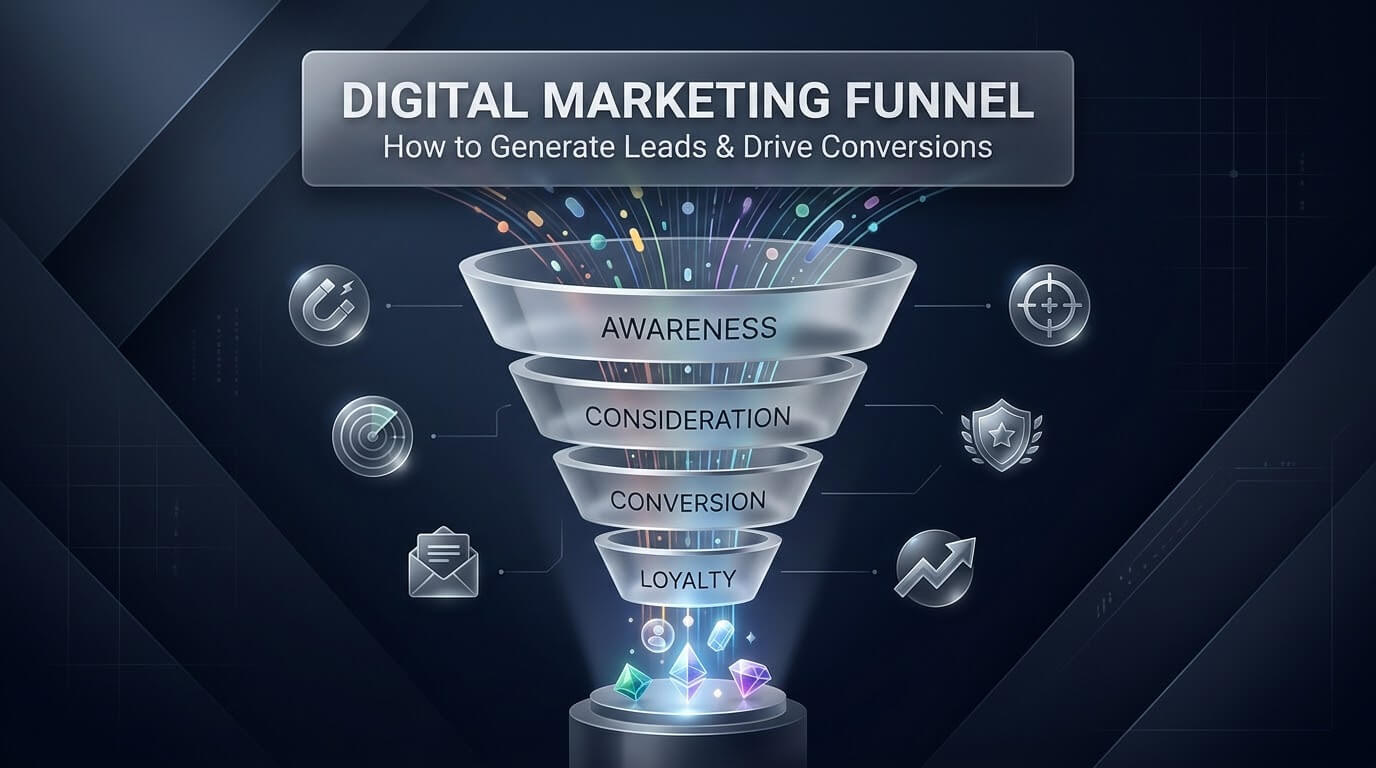
A marketing funnel is the path a person takes to buy from you. At the top, many people learn of your brand. As they move down, some people drop out. Serious buyers keep moving forward. The shape looks wide at the top and thin at the base.
The digital marketing conversion funnel matches how people shop on the web today. Buyers rarely make quick choices for big items. They search on Google. They read reviews on social apps. They check prices on a few sites before they pay.
A strong funnel meets buyers at each step of this path. It gives them the right facts at the right time. If you pitch too soon, people leave. If you wait too long, they buy from a rival. Good timing makes all the difference.
Years ago, sales teams used the AIDA model. That stood for Attention, Interest, Desire, and Action. That basic rule still works today. Today, the web makes this journey much faster. Buyers jump across apps in seconds.
When you map this path, you gain full control of your sales. You see where people stop reading. You see what makes them take action. This clear data helps you grow your business with less stress.
How Modern Funnels Differ from Old Sales Models
Old sales models were straight lines. A sales rep called a lead. They gave a pitch and asked for a check. The buyer had few ways to check facts on their own. They had to trust the sales rep.
Today, the digital marketing customer journey is fluid and self-guided. Buyers do most of their research in private. They read blog posts on their phones. They watch product clips on YouTube. They ask friends in online chat groups.
By the time a buyer talks to your team, they know a lot. They already know their options. They know the going rates in your field. Your funnel must support this self-guided study. It must teach rather than push.
A modern funnel also loops back on itself. A happy buyer does not just walk away. They buy again next month. They tell their coworkers and friends. This loop brings new people back to the top for free.
The Core Stages of the Conversion Funnel
Most online funnels break down into three primary stages. These are Top of Funnel, Middle of Funnel, and Bottom of Funnel. Marketers call them TOFU, MOFU, and BOFU for short. Each stage serves a unique role in your sales path.
1. Top of Funnel (TOFU): Awareness and Discovery
At the top stage, people face a new problem. They want to find clear answers fast. They do not know your brand name yet. They use search tools and social feeds to learn. They look for simple tips and free guides.
Your job here is to help them learn. You can share how-to articles, short clips, and tips. Do not pitch your paid items at this stage. Keep your focus on answering their questions. Teaching builds real trust early.
When you help people for free, they remember your name. They save your site for later. They begin to see you as a trusted guide. This warm feeling sets up the next stage of the funnel.
2. Middle of Funnel (MOFU): Consideration and Lead Capture
In the middle stage, prospects know who you are. They know what kind of fix they need. Now they want to see if your approach fits their goals. They compare different ways to fix their problem.
This is where you capture a digital marketing lead. You offer a free tool, checklist, or template. In return, the guest gives you their email address. Both sides get clear value from the trade.
Once you have their email, you can stay in touch. You send helpful emails every few days. You share client stories and practical advice. You answer common worries before they come up. This keeps your brand at the front of their mind.
3. Bottom of Funnel (BOFU): Decision and Purchase
At the bottom stage, the buyer is ready to make a choice. They are picking between you and two other choices. They want proof that your offer will work for them. They want to know the exact price and terms.
Here, your digital marketing sales funnel needs to make buying easy. Share customer reviews and simple case stories. Show clear pricing tables with no hidden fees. Offer a solid money-back promise to lower their risk. Make checkout fast on both phone and laptop.
Fast answers help close sales at this point. Add a live chat box to your checkout page. Let buyers book a quick call if they need help. A quick, friendly answer turns a browser into a paid client.
4. Post-Purchase: Care, Upselling, and Advocacy
The sales path does not end at checkout. Keeping a current client costs five times less than finding a new one. Happy clients also spend more cash over time. They stay with you for years if you treat them right.
Send a warm welcome email right after they buy. Share quick tips on how to use their new item. Check in after two weeks to see how they are doing. Ask if they have any questions or need extra help.
Happy clients naturally tell their friends. Give them an easy referral link to share. Offer a small discount when their friends sign up. This simple habit brings fresh buyers into your funnel daily.
Proven Methods for Lead Generation
A funnel cannot work without a steady stream of new guests. Effective digital marketing lead generation brings interested people to your site each week. You do not need massive ad budgets to make this work. You just need a clear offer and a simple plan.
Most people guard their email inboxes with care. They will not sign up for a generic weekly newsletter. You must offer something useful in exchange. Let us look at the best ways to bring in steady leads.
Create Simple and Actionable Lead Magnets
A lead magnet is a free gift you trade for an email address. The best gifts solve one acute problem fast. People should be able to read and use them in ten minutes. Short checklists and cheat sheets work best.
Long eighty-page ebooks often sit unread on computer drives. They feel like hard work to read. A one-page audit sheet or budget template gets used right away. Immediate value builds immediate trust.
Make sure your free gift links to your main paid offer. If you sell lawn care, give away a spring grass care checklist. If you sell tax software, give away a deduction sheet. The next natural step is to buy your paid service.
Separate Warm Leads from Ready Buyers
Not all digital marketing leads are ready to buy today. Some people are just starting their research. Others need help this afternoon and have cash ready. Treating every lead the same wastes time and money.
Smart teams split their contacts into two groups. The first group is marketing leads. These people read your blog and download free guides. They are learning about their problem. Keep sending them helpful emails and guides.
The second group is sales-ready leads. These people checked your pricing page three times. They asked for a custom quote or booked a call. Your sales team should call them right away. Focus your live sales time on people who want to buy now.
Respond Fast to Inbound Inquiries
Speed is vital when a new lead asks for help. Calling a lead within five minutes makes you twenty times more likely to win the job. Waiting just one hour causes leads to cool off fast. They move on to the next site on Google.
Use smart tools to send an instant reply text or email. Include a simple link where they can pick a call time. Let them book right onto your calendar. A tight digital marketing lead generation strategy never lets good leads slip away.
Real-World Conversion Funnel Examples
Looking at real digital marketing funnel examples helps you see how the pieces fit. Different types of companies use different funnels. Here are three proven setups you can learn from today.
1. The B2B and Professional Services Funnel
Business services and software tools have longer buying cycles. Multiple leads often review the budget before signing. This funnel uses education to build trust over time.
A team lead searches for tips on cutting cloud storage bills. They read an in-depth guide on your blog. Inside the post, they download a free cost calculator sheet. This signs them up for your email list.
Over the next two weeks, you send three short case stories. Each email shows how a similar firm saved thirty percent on bills. The final email invites them to a fifteen-minute live demo. After the demo, you send a clear quote for their team to review.
2. The Local Service Business Funnel
Local shops like roofers, clinics, and plumbers need fast funnels. When a pipe bursts, the owner needs help in an hour. They do not want to read long case studies. They want to know who can show up fast and do good work.
The owner searches on Google for a plumber nearby. They click a local ad that leads to a simple mobile page. The page shows five-star client reviews, a license badge, and a phone button. A simple form lets them request a price in under one minute.
Submitting the form alerts the local dispatch team by phone. A staff member calls the owner back in three minutes. They confirm the job and dispatch a truck. Simple, fast, and local always wins in service trades.
3. The Online Retail and E-Commerce Funnel
Online stores focus on visual appeal and fast checkout. The buying path often takes only a few minutes from start to finish. Clear product photos and customer reviews do the heavy lifting.
A shopper sees a short video ad on social media. They tap the ad and land on a clean product page. A polite pop-up offers ten percent off their first order for an email. The shopper enters their email and adds an item to their cart.
If they close the tab, an automated reminder goes out an hour later. It includes a one-click button to finish the purchase. This simple follow-up recovers dozens of sales every week. After delivery, an email shares care tips and suggests matching items.
How to Optimize Your Funnel for Higher Conversions
Bringing traffic to your site is only the first step. Regular digital marketing conversion optimization helps you earn more sales from existing visits. You do not need to buy more ads to grow revenue. You just need to remove stumbling blocks on your pages.
Keep Signup Forms Short and Painless
Every extra box on a form cuts down completions. Do not ask for a phone number or address on a simple checklist form. Ask only for a first name and an email address. Keep the entry bar as low as possible.
Save longer questions for demo requests and custom quote forms. At that stage, the buyer is ready to share details. When forms feel short, visitors fill them out without pause. This single change often doubles opt-in numbers overnight.
Multi-step forms also perform very well. Show two simple questions on the first screen. Show the final two questions on the second screen. People like taking small steps that feel quick and easy.
Use Visual Heatmaps to Watch Visitor Actions
Basic analytics tools show you visitor counts. Visual heatmaps show you what people do on your pages. You see where they move their mouse. You see where they click and where they stop scrolling.
If visitors never scroll past the top section, move key reviews higher up. If people keep tapping an image that is not clickable, turn it into a link. Watch for spots where users get confused and leave. Fixing these tiny bugs creates an instant lift in sales.
Run Simple A/B Split Tests
Never guess which headline will convert best. Test two versions against each other in real time. Send half your visitors to page A and half to page B. Let real visitor actions pick the winner.
Test your main promise, your button colors, and your hero photos. Test only one item at a time so you know what worked. A small five percent gain on your page adds up to big gains across the year. Keep testing one new idea each month.
Make Your Pages Load in Under Two Seconds
Most web visitors browse on mobile phones today. If your landing page takes four seconds to open, people leave. They hit the back button and visit a competitor. Fast pages keep visitors on your site.
Compress every image before you upload it to your site. Turn off plugins you no longer need. Use a clean, lightweight theme that loads fast. Fast page speed boosts both your search ranks and your sales.
Funnel Launch Checklist
- Identify your dream client and write down their primary daily worry.
- Build a one-page checklist or tool that solves that worry fast.
- Create a clean landing page with a clear headline and one action button.
- Link your form to an automated welcome series of four friendly emails.
- Test the full purchase or call booking path on your own mobile phone.
- Set up analytics tags to record every click, signup, and purchase.
Building an End-to-End Funnel Strategy
A sound digital marketing funnel strategy connects all your tools into one cohesive machine. Your ads, web copy, and emails must share the same clear message. When your tone is consistent, buyers feel secure. They know what to expect at each step.
Map out every touchpoint before you spend on ads. Write out the path on paper or a whiteboard first. Where will people come from? What will they see on the page? What will the first email say after they join?
Having a clear map prevents wasted work. You know exactly what to build next. You can spot missing steps before launch day. This disciplined plan saves time and protects your budget.
Top 8 Platforms for Building and Managing Funnels
You do not have to code a sales funnel from scratch. Modern software platforms handle the technical work for you. Below are eight reliable tools that top marketing teams use every day. Each tool excels at a specific part of the conversion journey.
1. HubSpot
HubSpot is an all-in-one platform for customer tracking, email, and landing pages. It keeps all your prospect data in one synchronized place. You do not have to glue five separate tools together with messy code. Everything talks to each other out of the box.
You can build custom forms and score leads based on their actions. Its visual workflow tool makes email automation easy to set up. HubSpot also tracks which blog posts drive the most sales. Free basic tools let new teams get started without risk.
2. ClickFunnels
ClickFunnels is built to build focused, step-by-step sales paths. It removes header menus and distractions so visitors stay on task. The platform guides buyers smoothly from one page to the next. It is built to turn web visitors into buyers fast.
You can choose from hundreds of ready-to-use templates. Add one-click upsells and order bumps right on the checkout page. This helps raise your average order value on every sale. It works well for course creators, coaches, and digital product shops.
3. Unbounce
Unbounce is a top landing page builder that uses smart tools to boost sales. Its drag-and-drop editor gives you complete visual control. You do not need a web developer to publish clean mobile pages. You can launch a new campaign page in less than an hour.
Its Smart Traffic feature tests multiple page versions on autopilot. It routes each visitor to the version they are most likely to buy from. It also swaps page headlines to match search terms from Google Ads. This tool helps paid ad managers get more sales from every click.
4. ActiveCampaign
ActiveCampaign is a leading email marketing and customer automation tool. It lets you build detailed nurture sequences with visual flowcharts. You can send custom messages based on what contacts do on your site. This personal touch helps turn cold leads into loyal fans.
If a contact visits your pricing page, you can trigger a check-in note. Its smart send feature delivers emails when each person is most active. It links smoothly with WordPress, Shopify, and payment processors. It gives growing brands enterprise-grade email power at fair prices.
5. Hotjar
Hotjar gives you direct insight into how real people use your site. It records anonymous visitor sessions for your team to watch. You see where people scroll, where they click, and where they stop. This visual data removes all guesswork from page design.
Color heatmaps show which page sections get the most attention. You can also run quick on-page micro-polls to ask visitors for feedback. Finding and fixing confusing spots on your page boosts sales fast. Hotjar offers a free starter plan for small sites.
6. Typeform
Typeform turns dull web forms into friendly, one-on-one conversations. It shows one question at a time on the screen. This clean layout keeps visitors focused and cuts down form abandonment. People enjoy the smooth, mobile-friendly feel.
It supports smart logic jumps that adapt to each user. If a visitor picks option A, they see question two. If they pick option B, they see question three. This makes Typeform ideal for quote calculators and lead quizzes.
7. Zapier
Zapier links your favorite web apps so they share data on autopilot. It acts like the glue that holds your whole funnel stack together. You do not need to write custom code or hire an engineer. You can build powerful connections in just a few clicks.
When a new lead signs up, Zapier sends their details to your CRM. It can alert your sales team in Slack and send a welcome text. Automating routine data tasks saves hours of manual work every week. It ensures no new lead ever gets lost in the shuffle.
8. Google Analytics
Google Analytics 4 gives you complete visibility into your site traffic. It tracks the full journey from initial click to completed order. You can see which channels bring your best paying clients. This helps you spend your marketing budget where it counts.
Its funnel exploration reports show exact drop-off points in your path. You see how many people reach the cart, and how many finish paying. It connects natively with Google Ads for automated remarketing. Google Analytics is free to use for any website.
Comparison of Top Funnel Platforms
Picking the right platform depends on your team size, budget, and goals. Below is a clear side-by-side view of the eight tools reviewed above. Use this guide to pick the best fit for your current stage.
| Platform | Main Role | Best Feature | Ideal For |
|---|---|---|---|
| HubSpot | All-in-one CRM and marketing | Lead scoring and multi-touch tracking | Growing B2B firms and agencies |
| ClickFunnels | Dedicated sales page sequences | One-click upsells and fast templates | Course creators and direct sellers |
| Unbounce | High-converting landing pages | AI smart routing and dynamic text | Paid media teams and ad managers |
| ActiveCampaign | Email automation and nurture flows | Visual automation rules and timing | Ecommerce and lifecycle marketing |
| Hotjar | Behavioral analytics and recordings | Click heatmaps and video sessions | Page designers and conversion testers |
| Typeform | Interactive forms and surveys | One-question view with custom logic | Lead quizzes and intake assessments |
| Zapier | App connections and workflow links | Instant data transfer without code | Operations leads and busy founders |
| Google Analytics | Traffic and conversion tracking | Free multi-step funnel reports | Every business with a website |
Four Costly Funnel Mistakes to Avoid
Building a funnel takes patience and testing. Many companies make simple mistakes that hurt their sales. Watch out for these four common traps as you build.
1. Pitching Big Items to Cold Visitors
You cannot ask for a big sale on the first visit. Cold visitors do not trust your brand yet. Sending paid ad clicks straight to a high-ticket checkout rarely works. Most people leave without buying.
Offer helpful advice and small free resources first. Let prospects see the quality of your work. When trust is high, asking for the sale feels natural and easy. Patience pays off in higher close rates.
2. Forgetting to Send Follow-Up Emails
Getting an email address is only the first step. If you do not follow up, leads forget who you are within days. Then they view your future sales notes as spam. Consistent contact builds real familiarity.
Set up a simple welcome series right away. Send three to five emails over your lead’s first two weeks. Share helpful tips, answer common worries, and tell your story. Stay top of mind until they are ready to buy.
3. Ignoring the Mobile Screen Experience
More than half of your traffic views your pages on a phone. If your text is small or buttons are hard to tap, people leave. They will not zoom in or struggle with bad layouts. They just tap the back button.
Always test your pages on a real phone before you launch. Make buttons big enough to tap easily with a thumb. Keep paragraphs short and clean. A great mobile layout keeps sales flowing smoothly.
4. Guessing Instead of Checking Real Data
Never guess why a page is not converting. Look at your analytics numbers. See where people drop off in the path. Real data shows you the truth every time.
If visitors read your page but do not opt in, test a better headline. If people open emails but do not click links, improve your offer. Let real visitor actions guide your edits. Small, data-backed fixes create huge lifts in total profit.
Frequently Asked Questions
What is a digital marketing funnel in simple terms?
It is the step-by-step path a person takes from discovering your brand to buying your product. It starts wide with lots of casual visitors. It ends with happy, paying customers. The funnel helps you share the right message at each step of the journey.
How long does it take to build a working funnel?
A simple lead funnel can be built in two or three days. You need a landing page, a free guide, and four automated emails. Larger funnels with webinars and complex tracking take two to three weeks. Starting with a simple setup is always best.
What is a good conversion rate for a landing page?
Strong lead magnet pages convert between twenty and thirty percent of visitors into email leads. If your page converts under ten percent, test a clearer headline. Make sure your form is short and loads fast on mobile phones.
How many emails should be in a welcome series?
A series of four to five emails over ten days works very well. The first email gives them the free download. The next two share helpful advice and real customer stories. The final emails explain your paid offer and invite them to take action.
Can a small local shop use a digital marketing funnel?
Yes, local businesses benefit greatly from simple funnels. Roofers, dental clinics, and repair shops can send local ad clicks to a mobile estimate page. A fast call button lets people reach out right away. This simple setup wins more local jobs every single week.
Final Thoughts and Next Steps
Building a clear marketing funnel gives your business steady, reliable sales. It replaces guesswork with a proven, step-by-step system. You guide your visitors with patience and care. They reward you with their trust and repeat business.
Start small today. Pick one acute problem your ideal client faces. Create a short checklist that helps solve that problem. Build a clean page, write three friendly follow-up emails, and watch the results. With steady testing, your funnel will grow into your most valuable business asset.