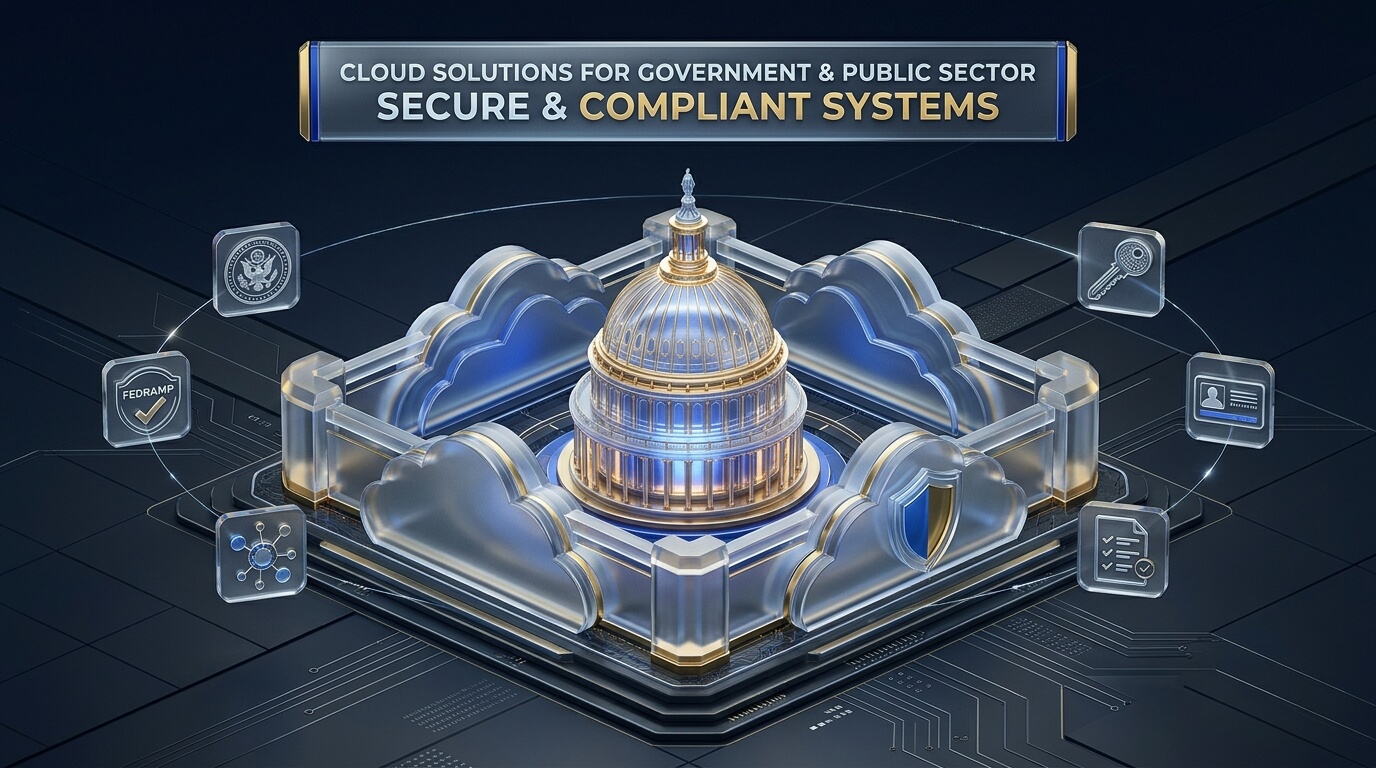
Public Sector Modernization and Sovereign Cloud Architecture
Government agencies face growing pressure to modernize legacy computer systems. Outdated mainframes and slow on-premise servers struggle to handle heavy citizen demands. In response, public leaders are adopting modern cloud solutions for government to improve operational speed.
Modern public sector agencies require rock-solid security, strict compliance, and high uptime. Cloud platforms provide sovereign infrastructure tailored for sensitive civic workloads. Moving digital operations away from physical data closets lowers long-term capital maintenance expenses.
Adopting government cloud solutions helps civil servants process public records and issue permits rapidly. Citizens now expect fast digital experiences similar to modern online banking. Resilient cloud hosting ensures public portals remain accessible during natural emergencies and peak tax seasons.
- Sovereign government cloud enclaves enforce strict FedRAMP High and DoD Impact Level authorizations.
- Citizen service delivery accelerates through modern API portals, low-code forms, and automated case tracking.
- Zero-trust security models safeguard sensitive taxpayer records, public health data, and defense plans.
- Consolidated multi-tenant platforms lower operating costs across federal, state, and local administrative offices.
Why Agencies Are Transitioning to Public Sector Cloud Solutions
Public administration requires continuous uptime and absolute privacy safeguards. Traditional physical data centers create operational silos that trap critical civic records. Adopting public sector cloud solutions breaks down administrative walls between departments.
Modern digital platforms allow social workers, transit planners, and court clerks to share verified records quickly. Staff no longer waste hours retyping paper forms into disconnected databases. Faster workflows translate directly into shorter wait times for everyday residents.
Cyber threats against municipal servers and federal targets continue to grow each year. Ransomware attacks frequently freeze unprotected city networks and compromise confidential resident profiles. Purpose-built cloud solutions for public sector operations provide automated intrusion detection that small IT teams cannot build alone.
Automate your security audit logging with continuous configuration monitoring tools rather than manual annual spreadsheets. Connecting cloud infrastructure drift sensors directly to compliance reporting dashboards cuts audit prep times by over sixty percent.
Government Security Mandates: FedRAMP, DoD SRG, and CJIS
Civic infrastructure must satisfy demanding legal mandates before storing public data. The Federal Risk and Authorization Management Program sets strict baseline controls for cloud software. Choosing certified platforms eliminates guesswork during comprehensive federal security reviews.
FedRAMP categorizes service offerings into Low, Moderate, and High impact baselines. Moderate systems protect sensitive personal identification numbers and operational files. High baseline environments protect emergency response coordination, healthcare histories, and law enforcement files.
Defense agencies follow the Department of Defense Cloud Computing Security Requirements Guide. This structure ranks data environments from Impact Level 2 up to Impact Level 6. Impact Level 5 and 6 handle unclassified defense information and secret national security missions.
State and city police departments require Criminal Justice Information Services verification. CJIS policies require strict background screenings for cloud personnel and end-to-end data encryption. Strong audit trails guarantee that only authorized investigators access criminal records.
Comparing Commercial Clouds and Isolated Sovereign Enclaves
Standard commercial public clouds serve millions of consumer applications and private retailers. These public clusters share physical hardware across diverse international users. While commercial data centers use strict software isolation, government regulations often demand complete physical separation.
Sovereign government clouds run inside dedicated, physically isolated data centers. Facilities are operated exclusively by screened domestic citizens holding required security clearances. This strict boundary prevents unauthorized foreign personnel from managing critical server racks.
Dedicated fiber lines connect government data hubs directly to civic administration buildings. Traffic bypasses the open public internet to shield sensitive communications from interception. Agencies maintain total oversight over cryptographic key storage and data backup locations.
Top 8 Cloud Solutions for Government and Civic Modernization
Public agency buyers evaluate cloud providers based on security certs, regional availability, and tool ecosystems. Below are detailed evaluations of the top platforms supporting modern public operations.
1. AWS GovCloud (US)
AWS GovCloud provides isolated cloud regions engineered specifically for sensitive government workloads. The platform allows civilian agencies, defense organizations, and government contractors to run mission workloads in the cloud. Physical facilities reside exclusively on domestic territory and are managed solely by screened domestic personnel.
The platform supports FedRAMP High baseline requirements across its core service catalog. In addition, it carries Department of Defense Impact Level 4 and 5 provisional authorizations. It also satisfies International Traffic in Arms Regulations and Export Administration Regulations compliance rules.
Agencies use AWS GovCloud for high-performance computing, planetary radar processing, and disaster response coordination. The extensive server network provides deep machine learning APIs and serverless container hosting. Organizations benefit from consumption-based billing models that scale compute resources down during low-demand nighttime periods.
2. Microsoft Azure Government
Microsoft Azure Government delivers dedicated cloud infrastructure for federal, state, and local agencies. The system provides physically isolated data centers with deep integration into familiar productivity tools like Microsoft 365. Screened domestic staff manage the infrastructure to maintain continuous sovereignty.
Azure Government holds FedRAMP High provisional authorization and DoD Impact Level 5 clearance. It also offers specialized Azure Government Secret regions for classified national defense networks. Strong compliance tooling simplifies identity management through automated Entra ID conditional access policies.
Civilian administrations rely on Azure Government to power statewide tax portals and court scheduling platforms. The platform supports hybrid cloud architectures through Azure Arc management agents. Enterprise license agreements often provide volume discounts for sprawling state agency teams.
3. Google Cloud Public Sector
Google Cloud Public Sector emphasizes open data analytics, collaborative research, and secure container operations. The company operates dedicated cloud regions that satisfy strict federal security guidelines. Agencies leverage Google infrastructure to modernize public health tracking and traffic flow coordination.
The platform maintains extensive FedRAMP High authorizations across its BigQuery and Kubernetes services. It also supports DoD Impact Level 4 authorization for defense contractors and academic partners. Automated data loss prevention engines scan public uploads to block accidental exposure of personal records.
State agencies select Google Cloud to process complex geographic surveys and environmental sensor streams. Clean data visualization tools help public officials build public dashboards for civic transparency. Transparent pricing calculators and sustained-use discounts help public finance teams keep spending under control.
4. IBM Cloud for Government
IBM Cloud for Government focuses on regulated enterprise workloads, legacy mainframe integration, and hybrid clouds. The platform provides isolated multi-tenant and single-tenant computing clusters. It assists federal departments that run heritage databases that cannot easily be rebuilt from scratch.
The platform provides FedRAMP High authorization backed by built-in confidential computing enclaves. Hardware-level memory encryption protects sensitive civic records even while data is actively being processed. It complies with NIST SP 800-53 controls and federal financial management regulations.
Agencies choose IBM Cloud to modernize retirement pension systems and veteran benefit registries. The Red Hat OpenShift container engine allows teams to run workloads smoothly across private and public servers. Predictable monthly enterprise contracts align neatly with annual municipal fiscal cycles.
5. Oracle Cloud for Government
Oracle Cloud for Government delivers high-performance database infrastructure for critical public sector systems. Dedicated government regions run isolated cloud hardware with autonomous database capabilities. These systems automatically patch vulnerabilities without requiring service interruptions or administrative downtime.
The platform holds FedRAMP High authorization and DoD Impact Level 5 compliance approvals. It also maintains dedicated defense regions supporting classified national intelligence data sets. Granular network security groups and compartment hierarchies isolate agency departments securely.
Public sector finance directors use Oracle Cloud to host statewide enterprise resource planning systems. Automated database tuning reduces manual maintenance tasks for understaffed municipal IT groups. Oracle offers predictable flat pricing structures across all government regions without geographic surcharges.
6. Salesforce Government Cloud
Salesforce Government Cloud provides specialized customer relationship software designed for civic case management. The software-as-a-service platform centralizes citizen inquiries, permit filings, and grant requests into a single screen. Agency staff can resolve resident issues much faster without digging through paper files.
The system operates in FedRAMP High and DoD Impact Level 4 environments. Dedicated sovereign hosting partitions prevent public agency records from mingling with commercial marketing data. Out-of-the-box accessibility tools ensure all public forms comply with ADA Section 508 guidelines.
City halls use Salesforce to manage non-emergency resident service hotlines and business license renewals. Pre-built workflow automations route citizen requests directly to appropriate maintenance crews. Tiered user licensing lets agencies scale access based on seasonal staffing demands.
7. ServiceNow Public Sector Digital Services
ServiceNow Public Sector Digital Services digitizes complex civic administrative workflows across municipal departments. The platform replaces paper-based routing sheets with automated digital approval paths. Clerks and department directors can track document status in real time from mobile devices.
The platform meets FedRAMP High baseline requirements and DoD Impact Level 4 standards. Built-in security incident response modules help public agencies identify and contain cyber attacks promptly. Role-based access controls ensure that agency staff only view records relevant to their assigned cases.
Agencies deploy ServiceNow to streamline public records requests, employee onboarding, and municipal asset tracking. Digital self-service portals let residents monitor zoning permits and street repair tickets online. Annual subscription agreements scale smoothly based on active employee seat counts.
8. Cisco for Government & Education
Cisco for Government delivers secure networking, zero-trust endpoint protection, and unified cloud communications. The platform connects city halls, public schools, and emergency dispatch centers into a unified network. Strong hardware defenses prevent malicious actors from infiltrating public utility systems.
Cisco cloud platforms carry FedRAMP Moderate and High authorizations for federal communication tools. Webex for Government provides encrypted video conferencing certified for public legislative meetings and hearings. Integrated threat defense software automatically isolates infected field devices before viruses spread.
Municipalities deploy Cisco to link police vehicles, traffic lights, and public school networks securely. Centralized cloud management dashboards allow small administrative teams to oversee hundreds of remote locations. Enterprise purchasing agreements offer flexible financing tailored for grant-funded civic programs.
Government Cloud Platforms Detailed Comparison
Evaluating public sector cloud platforms requires comparing compliance certifications, hosting architectures, and primary use cases. The table below outlines critical operational factors across all eight leading providers.
| Platform Name | FedRAMP / DoD Level | Target Public Sector Niche | Core Security Feature | Pricing Architecture |
|---|---|---|---|---|
| AWS GovCloud (US) | FedRAMP High, DoD IL4/5 | Federal, Defense, Research | Domestic Personnel Only | Pay-As-You-Go Metering |
| Microsoft Azure Gov | FedRAMP High, DoD IL5/6 | State, Local, Defense | Isolated Sovereign Regions | Enterprise Volume Agreements |
| Google Cloud Public Sector | FedRAMP High, DoD IL4 | Analytics, Health, Education | Automated Data Loss Shield | Sustained-Use Discounts |
| IBM Cloud for Gov | FedRAMP High, NIST SP 800-53 | Heritage Systems, Pensions | Hardware Memory Enclaves | Predictable Term Contracts |
| Oracle Cloud for Gov | FedRAMP High, DoD IL5 | Civic ERP, Relational Data | Autonomous Auto-Patching | Flat Regional Pricing |
| Salesforce Gov Cloud | FedRAMP High, DoD IL4 | Resident Portals, Casework | ADA 508 Compliant Forms | Per-Seat Monthly Tiers |
| ServiceNow Public Sector | FedRAMP High, DoD IL4 | Workflow Routing, Asset Mgmt | Incident Containment Bots | Annual Agency Subscriptions |
| Cisco Gov & Education | FedRAMP Mod/High, FIPS 140-3 | Networking, Transit, Schools | Hardware Zero-Trust Bounds | Enterprise Purchasing Plans |
Federal Government Agencies and National Operations
Federal departments manage gigantic datasets that impact national infrastructure and economic stability. Implementing cloud solutions for federal government requires strict alignment with White House executive orders on cybersecurity. Agency heads must enforce zero-trust identity architectures across every user account and server cluster.
Modern federal cloud architectures split compute workloads across multiple availability regions to prevent total system blackouts. When severe hurricanes or grid failures strike one coast, traffic routes automatically to inland facilities. This high resilience safeguards critical social benefit distributions and federal emergency dispatches.
Federal procurement teams use streamlined contract vehicles to purchase certified cloud capacity quickly. Standardized acquisition paths eliminate lengthy bidding rounds that previously delayed civic technology upgrades for years. Centralized agency dashboards help financial controllers monitor infrastructure utilization in real time.
State Government Digital Transformation
State administrations handle complex citizen programs including vehicle registration, unemployment assistance, and professional licensing. Deploying state government cloud solutions enables agencies to combine dozens of disparate county databases into modern web portals. Residents can update driver licenses or submit tax returns securely from their smartphones.
Consolidating state IT infrastructure cuts down duplicate software licensing across state cabinets. Rather than having each department buy individual database servers, a unified state cloud pool shares computing resources dynamically. This smart resource sharing saves millions of taxpayer dollars every year.
State agencies frequently share criminal justice and public safety data with federal law enforcement partners. Compliant state clouds maintain rigorous CJIS protocols to safeguard sensitive biometric files and case evidence. Strict encryption standards ensure records remain unreadable to outside intruders.
Municipal and Local Government Implementations
Townships and county offices frequently operate with small technical teams and limited annual budgets. Adopting local government cloud solutions allows small towns to enjoy the same enterprise security protections as giant federal agencies. Outsourcing server maintenance to managed cloud providers frees local staff to assist residents directly.
City halls use cloud systems to digitize paper building permits and property zoning petitions. Property developers and homeowners can upload blueprints and pay inspection fees online without visiting the clerk office. Shorter permit processing cycles speed up neighborhood housing developments and boost local business investments.
Local emergency services rely on cloud platforms for continuous 911 dispatch operations. Cloud-hosted dispatch databases synchronize location coordinates with ambulance and fire engine tablets instantly. Resilient field connections improve emergency response speeds during severe storms and civic emergencies.
County public works departments track street paving and utility repairs through mobile cloud dashboards. Work crews update road maintenance statuses on portable tablets directly from construction sites. Instant communication eliminates administrative delays and keeps public transportation corridors running smoothly across municipal districts.
Defense and National Security Systems
Military commands and defense intelligence bureaus operate in contested digital spaces. These critical organizations require secure cloud solutions government platforms engineered to resist state-sponsored cyber warfare. Sovereign defense enclaves provide dedicated processing units completely segregated from public networks.
Tactical edge computing units deploy hardened cloud server racks directly into remote operating bases. Forward-deployed military personnel can run computer vision models and analyze aerial drone feeds without waiting for distant satellite downlinks. Real-time local processing saves lives during fast-moving military missions.
Defense cloud systems enforce multi-layered cryptographic boundaries and continuous biometric user validation. Hardware security modules protect master encryption keys inside tamper-proof physical vaults. Automated vulnerability scanners patch zero-day exploits before adversaries can exploit software flaws.
Public Education and K-12 School Districts
School districts and state university systems manage student transcripts, financial aid records, and online learning portals. Choosing cloud solutions for education safeguards student privacy under the Family Educational Rights and Privacy Act. Scalable cloud architectures prevent school registration portals from crashing on the first day of classes.
Virtual classroom software lets teachers deliver personalized learning materials to diverse student bodies. Remote learning tools ensure academic progress continues uninterrupted during regional snowstorms or public health emergencies. Centralized student information systems help academic counselors identify struggling students early.
Campus security departments connect video cameras and digital door locks to central cloud controllers. Automated emergency alert broadcasts notify parents and emergency personnel within seconds during on-campus incidents. Education discounts and grant funding programs keep enterprise cloud tools affordable for public school districts.
Charitable Foundations and Non-Profit Organizations
Community charities, disaster relief funds, and civil rights organizations operate on slim operating margins. Adopting cloud solutions for non-profits allows humanitarian groups to coordinate volunteers and accept charitable donations securely. Cloud platforms protect donor payment details while lowering administrative overhead expenses.
Relief organizations use cloud mapping applications to organize emergency food supplies after catastrophic natural disasters. Field workers can record survivor needs on mobile devices even when local cell towers are knocked offline. Data synchronizes back to headquarters as soon as mobile connectivity returns.
Major cloud providers offer generous technology grants and discounted software packages to verified charities. Non-profits can deploy enterprise-grade donor databases without spending donor funds on expensive software packages. Saved money goes directly toward funding essential community missions.
- Catalog all departmental datasets and classify them according to FedRAMP impact levels (Low, Moderate, High).
- Establish identity-first zero-trust boundaries with multi-factor authentication for every civic employee account.
- Select approved government cloud providers holding active authorizations for your specific regulatory needs.
- Implement continuous configuration drift tracking and automated security patch deployment pipelines.
- Conduct tabletop continuity simulations to verify automated regional failovers during civic emergencies.
- Train non-technical administrative staff on digital case management dashboards and secure citizen data handling.
Navigating Public Sector Procurement and Multi-Year Budgets
Public agency procurement rules differ significantly from private corporate purchasing processes. Government agencies must comply with open bidding mandates, anti-deficiency acts, and strict fiscal budget appropriations. Understanding these statutory constraints helps IT directors plan successful multi-year migrations.
Traditionally, government technology spending focused on heavy capital investments in physical hardware. Purchasing servers required massive upfront budgets that needed special legislative funding approvals. Cloud computing shifts technology expenses into predictable operational subscriptions that agency leaders can fund through routine operating budgets.
Cooperative purchasing contracts allow municipal and state agencies to adopt pre-negotiated cloud rates. Joining collective purchasing agreements saves small town clerks from running expensive solo bidding competitions. Standardized contract language guarantees that vendors meet all mandatory civic compliance clauses.
Cultural change management plays an equally vital role in civic technology modernization. Longtime civil servants often feel comfortable with decades-old paper forms and green-screen terminal databases. Providing comprehensive employee training programs eases administrative anxiety and builds enthusiasm for modern digital tools.
The Future of Sovereign Civic Tech: AI and Post-Quantum Security
Emerging technology trends are reshaping how government agencies serve the public. Artificial intelligence models running inside sovereign cloud environments help civil servants draft policy summaries and summarize lengthy public hearing transcripts. Private civic AI clusters ensure that confidential public data is never leaked to public commercial models.
Edge computing devices deployed across smart cities collect real-time data from traffic signals, air quality sensors, and water treatment plants. Local cloud gateways analyze sensor readings locally to optimize public transit schedules and detect water pipe leaks immediately. Connected civic sensors make municipal infrastructure more resilient against extreme climate events.
Preparing for quantum computing threats represents another vital priority for national security planners. Future quantum computers will have the potential to break conventional RSA encryption algorithms. Leading government cloud platforms are already rolling out post-quantum cryptographic keys to shield national defense records against future decryption risks.
Public Sector FinOps and Cloud Cost Governance
Public sector financial controllers must justify every dollar of technology spending to elected legislative committees. Moving away from fixed hardware purchases introduces variable monthly cloud consumption bills that require continuous oversight. Without proactive governance, unmonitored test databases and idle compute clusters can quickly lead to painful budget surprises.
Implementing structured cloud financial operations, known as FinOps, establishes clear spending accountability across public agencies. Financial teams establish departmental tag policies that label every virtual server with a project code and cabinet name. This automated tracking allows agency directors to see exactly how much each municipal program spends on database compute and network data transfer.
Civic finance officers make strategic use of multi-year reserved instance commitments and savings plans to slash computing bills. Providers offer major price reductions when public agencies commit to predictable baseline infrastructure usage for one to three years. Pairing reserved instances for core databases with auto-scaling compute pools for fluctuating web traffic optimizes spending without risking application slowdowns during tax deadlines.
Automated budget guardrails play a crucial role in preventing unintended cloud overspending across decentralized agency teams. Administrators configure automated alerts that notify managers when monthly spending reaches seventy-five percent of approved appropriations. In extreme situations, automated policy scripts can freeze non-essential staging clusters before budgets are exhausted.
Continuity of Operations (COOP) and Disaster Recovery Resilience
Government agencies cannot afford extended downtime during catastrophic natural events or targeted cyber incursions. Vital public safety communications, water treatment monitoring, and emergency dispatch systems must function without disruption. Sovereign cloud infrastructure provides the geographic redundancy necessary to maintain continuous operations during regional disasters.
Traditional municipal disaster recovery required maintaining expensive duplicate hardware in secondary physical buildings. Many municipalities lacked the budget to build off-site data centers, leaving public records vulnerable to localized floods and fires. Modern cloud architectures allow public agencies to replicate database transactions synchronously across distant geographic regions with minimal latency.
Immutable cloud storage vaults safeguard civic records against destructive ransomware infections. Backup snapshots written to isolated storage tiers cannot be altered or deleted by unauthorized intruders, even if primary administrative credentials are breached. When cyber emergencies occur, engineers can restore clean virtual systems in minutes without losing historical property records or court archives.
Public safety directors regularly conduct realistic tabletop disaster simulations to validate automated failover routines. Testing failover scripts under simulated crisis conditions ensures emergency call centers transition smoothly to alternate cloud zones without dropped calls. Continual resilience verification builds confidence among civic leaders and the communities they protect.
High-Assurance Civic Identity and Verifiable Citizen Credentials
Securing citizen access to online public portals requires balancing robust fraud prevention with universal accessibility. Fraudulent unemployment filings and stolen benefit claims cost public agencies billions of dollars during national emergencies. Modern cloud identity solutions provide privacy-preserving verification engines that block automated bot attacks while welcoming legitimate residents.
Agencies integrate standardized federal identity services such as Login.gov alongside state single sign-on systems. Single sign-on architectures allow residents to access park reservations, business permits, and tax portals using a single verified identity. Eliminating multiple passwords reduces administrative reset requests and protects users from credential stuffing attacks.
Verifiable digital credentials running on mobile devices are replacing fragile plastic identity cards. Citizens can store cryptographic driver licenses and professional trade certificates inside secure smartphone wallet applications. State verification systems confirm the authenticity of mobile credentials instantly without exposing unnecessary personal information.
Role-based access management enforces strict separation of duties among civic staff handling confidential records. Case workers only view the specific case files assigned to their daily queue, while background auditing tools record every record lookup. Strong access barriers protect vulnerable residents from unwarranted data exposure and uphold public trust in digital governance.
Inter-Agency Data Sharing and Cross-Jurisdictional Interoperability
Modern civic challenges rarely stay confined within single municipal borders or departmental boundaries. Homelessness response, watershed protection, and disaster evacuation require close coordination across neighboring jurisdictions. Historically, incompatible computer systems prevented county welfare workers and city housing authorities from sharing vital information.
Sovereign public cloud platforms provide standardized application programming interfaces that bridge communication gaps between separate governmental bodies. Secure data exchange protocols allow regional transit agencies and emergency dispatchers to share traffic sensor feeds in real time. Automated record translation engines convert disparate data formats without requiring manual technical intervention.
Privacy-preserving record linkage algorithms enable agencies to identify shared community needs while safeguarding individual identities. For instance, public health researchers can analyze regional disease trends across hospital networks without viewing patient names or home addresses. Differential privacy controls ensure that sensitive demographic data remains completely anonymous during academic research studies.
Federated civic data lakes give governors, county commissioners, and municipal mayors unified visibility into public infrastructure health. Executive dashboards aggregate data from road maintenance crews, water quality monitors, and school attendance systems into intuitive geographic maps. Real-time civic insights empower elected officials to allocate taxpayer resources effectively where community needs are greatest.
Frequently Asked Questions About Government Cloud Solutions
Public sector leaders and IT administrators frequently ask the following questions when planning cloud modernization initiatives.
What makes government cloud platforms different from commercial public clouds?
Government clouds reside in physically segregated, sovereign data centers restricted to domestic territory. They are managed solely by screened domestic personnel holding required government security clearances. These platforms enforce strict regulatory controls including FedRAMP High, DoD Impact Levels, and CJIS requirements.
What is FedRAMP and why is it mandatory for federal agencies?
FedRAMP is the Federal Risk and Authorization Management Program established by the US government. It creates a standardized approach to security assessment, authorization, and continuous monitoring for cloud products. Federal law mandates that federal agencies only use FedRAMP-authorized cloud systems to ensure consistent cybersecurity standards.
Can state and local municipal governments use federal cloud enclaves?
Yes, major providers allow state and local government agencies to run workloads in their sovereign clouds. Municipalities often choose government regions to satisfy CJIS mandates for local police departments or HIPAA rules for county hospitals. Using established government regions provides small towns with enterprise-grade defense protections.
How does cloud adoption improve everyday citizen services?
Cloud systems replace paper forms and physical office visits with intuitive online portals. Residents can renew vehicle licenses, submit construction plans, and apply for social benefits around the clock. Automated workflow routing speeds up application processing times from weeks to minutes.
What is the difference between DoD Impact Level 4, 5, and 6?
Impact Level 4 accommodates controlled unclassified information and non-critical defense missions. Impact Level 5 protects higher-sensitivity unclassified information and mission-critical national defense applications. Impact Level 6 provides physically isolated, classified cloud environments for secret national defense systems.
How do public sector organizations handle cloud budget approvals?
Agencies purchase cloud services through established state master contracts and cooperative purchasing schedules. Shifting from physical hardware purchases to operational cloud billing allows managers to budget incrementally. Cost monitoring tools help department heads track resource consumption and prevent unexpected budget overruns.
How does zero-trust security function within government cloud architectures?
Zero trust operates on the principle of never trusting any user or device by default, even inside agency perimeters. Every access request requires multi-factor authentication, device compliance checks, and just-in-time permissions. This containment strategy prevents attackers from moving laterally across internal networks if a password is stolen.
Can public education institutions qualify for government cloud discounts?
Yes, all major cloud platforms offer dedicated public sector pricing programs for K-12 school districts and public universities. Educational institutions receive substantial discounts on computing hours, data storage, and video collaboration suites. These discounts help schools preserve instructional funding for classroom teaching.
What is the best migration strategy for legacy mainframe applications?
Agencies usually start by connecting heritage mainframes to modern cloud platforms using hybrid cloud management tools. Over time, development teams break monolithic database applications into modular containers and microservices. This gradual approach minimizes operational disruptions to essential citizen payment programs.
How do sovereign clouds protect personal health records for public clinics?
Government clouds enforce end-to-end encryption for electronic medical files stored by public health departments. Cryptographic keys are managed within dedicated hardware security modules under sole agency control. Automated audit trails log every file view to comply with HIPAA security mandates.
What role do non-profit organizations play in civic cloud ecosystems?
Non-profits frequently collaborate with government agencies to distribute food assistance, shelter unhoused residents, and coordinate disaster relief. Cloud software allows charities to share anonymized case files with county social workers securely. Standardized APIs eliminate duplicative paperwork between government offices and community foundations.
How quickly can a public agency recover from ransomware using cloud backups?
Cloud systems maintain immutable, write-once backup snapshots stored in geographically distant regions. If local municipal workstations are encrypted by malware, administrators can restore clean virtual desktop images within hours. Having isolated offline backups prevents cities from ever needing to pay ransom demands.
Empowering Public Servants Through Secure Cloud Infrastructure
Transitioning to modern cloud architectures enables public sector organizations to build reliable, citizen-centered digital services. Embracing sovereign enclaves gives civil servants the tools they need to protect sensitive taxpayer data while accelerating routine administrative approvals. Modern digital systems foster greater public transparency and rebuild community trust in civic institutions.
Agency leadership must prioritize compliance certifications, zero-trust architectures, and comprehensive staff training during every phase of migration. With the right technology partners and disciplined execution, public institutions can deliver efficient, secure, and resilient public services that benefit communities for decades to come.