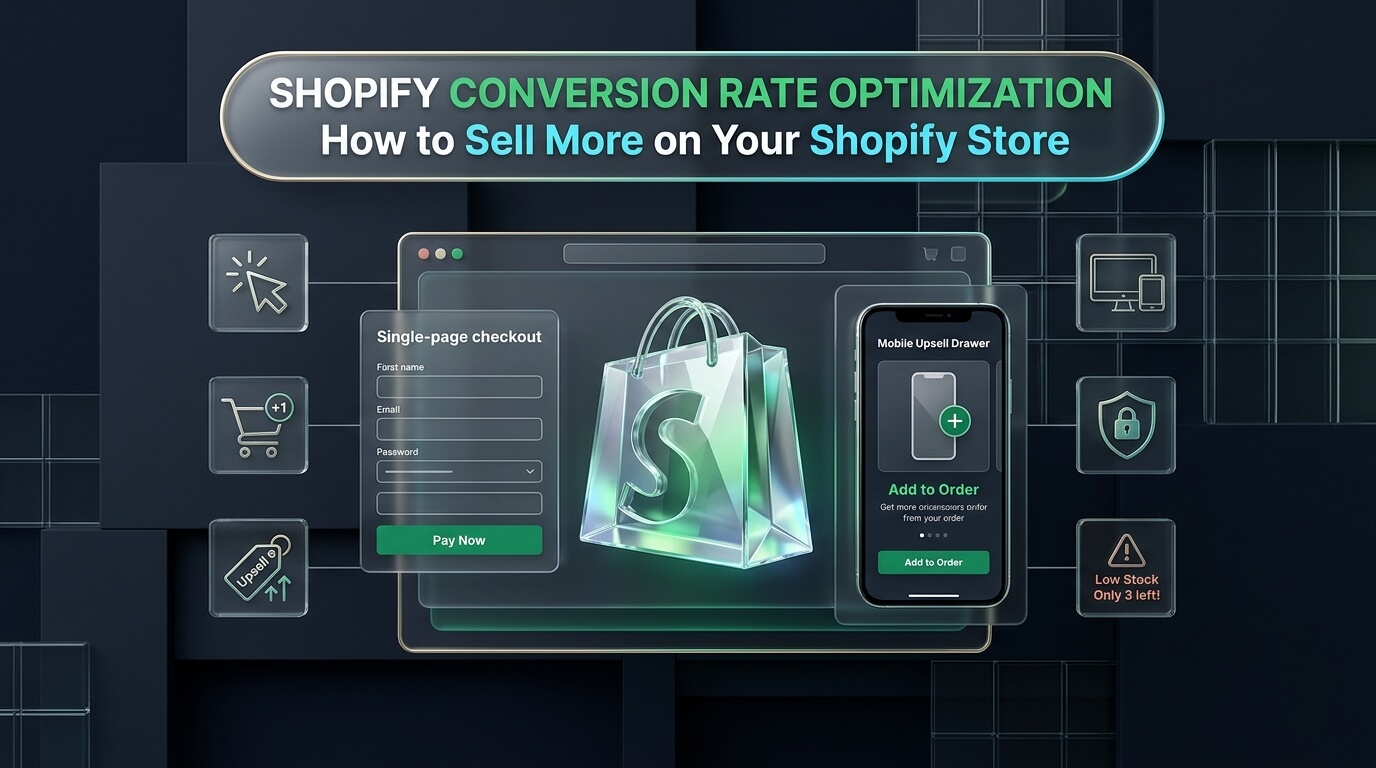
Running a profitable Shopify store requires far more than launching paid ad campaigns and sourcing great products. In digital retail, the average ecommerce store converts between one and two percent of visitors into paying customers. This means that out of every one hundred shoppers who visit your catalog, ninety-eight leave without completing a purchase.
Executing focused conversion rate optimization shopify strategies turns this dynamic around. Rather than pouring ever-increasing budgets into rising digital ad auctions, optimization extracts maximum revenue from the traffic you already acquire. Mastering conversion rate optimization for shopify transforms passive product browsers into enthusiastic repeat buyers.
Whether you manage a fast-growing direct-to-consumer brand or an enterprise catalog on Shopify Plus, structured testing delivers compounding financial returns. This comprehensive guide outlines the operational frameworks, architectural tactics, and UX enhancements necessary for successful conversion rate optimization with shopify.
Key Shopify CRO Takeaways:
- Eliminating unneeded third-party apps frequently cuts mobile page load times by two to three seconds.
- Modern product detail pages require visual variant swatches and sticky add-to-cart buttons.
- Enabling Shop Pay and digital wallets bypasses manual typing and lifts mobile checkout rates significantly.
- Slide-out cart drawers with tiered free-shipping progress bars consistently expand average order value.
- Luxury Shopify brands must replace tacky urgency countdowns with subtle craftsmanship storytelling.
- Partnering with certified Shopify Plus agencies ensures custom checkout code complies with modern APIs.
The Economics of Shopify Conversion: Why Small Lifts Yield Huge Gains
Many merchants assume that growing online revenue requires doubling traffic volume. However, doubling paid traffic doubles your media acquisition expenses. In contrast, improving your baseline store conversion rate produces pure incremental gross profit without increasing ad costs.
Consider an established Shopify brand attracting 80,000 monthly visitors with an average order value (AOV) of $85. At a 1.8% baseline conversion rate, the store generates 1,440 monthly orders and $122,400 in gross revenue. If practical shopify store conversion rate optimization tips lift that conversion rate to 2.4%, monthly orders increase to 1,920, producing $163,200 in monthly revenue.
That modest 0.6% absolute conversion lift delivers $40,800 in additional revenue every single month. Over a full twelve-month period, the brand captures nearly half a million dollars in incremental revenue from its existing customer traffic.
Customer Acquisition Costs Versus Lifetime Customer Value
Customer acquisition costs on major digital ad platforms continue to climb each quarter. When ad costs rise while conversion rates remain flat, net profit margins shrink rapidly. Raising your conversion rate acts as an immediate efficiency multiplier across all marketing channels.
When your site converts traffic more efficiently, your effective cost per acquisition drops. This gives your business the financial leeway to bid more aggressively in competitive ad auctions. High-converting Shopify brands outcompete rivals simply because each visitor yields higher revenue.
Mapping Micro-Conversions Across the Purchase Funnel
Store owners often make the mistake of focusing solely on the final checkout order confirmation. True optimization requires tracking micro-conversions at every stage of the storefront experience. Shoppers complete multiple small actions before deciding to submit payment details.
Key micro-conversions include category filter usage, product page image gallery interactions, and size guide clicks. Analyzing where shoppers abandon the funnel reveals exact points of user hesitation. Fixing friction at early steps naturally leads to higher completion rates at final checkout.
Site Speed and App Architecture: Lessons from Industry Summits
At every major shopify speed and conversion rate optimization summit, performance engineers emphasize a single undeniable truth: mobile latency destroys retail conversion rates. Google research confirms that as page load times increase from one second to three seconds, the probability of mobile bounce increases by thirty-two percent.
The primary culprit behind sluggish Shopify stores is app bloat. Merchants frequently install dozens of specialized shopify conversion rate optimization apps for social proof, sticky bars, and reviews. However, each external app injects external JavaScript files into the `theme.liquid` header, blocking the browser from rendering product images.
Auditing and Streamlining Your App Ecosystem
Open your Shopify storefront in Chrome DevTools and inspect the Network panel. Filter by JavaScript resources to see how many third-party scripts execute before the main content paints on screen. You will often find orphaned scripts from apps uninstalled months ago.
Replace three or four standalone apps with native Liquid code written directly into your theme. For example, simple announcement bars and countdown timers require fewer than fifty lines of clean CSS and HTML. Removing heavy external app scripts dramatically accelerates Core Web Vitals performance.
Theme App Extensions Versus Legacy Script Tags
Modern Shopify themes utilize Theme App Extensions rather than inject raw script tags into theme templates. Theme app extensions load conditionally and unload cleanly whenever you disable an app in admin settings. This architecture keeps your core template codebase clean and maintainable.
Audit your store code to ensure active apps use app blocks rather than legacy theme edits. Legacy scripts often run globally on every page, slowing down critical checkout and cart interactions. Confining scripts to specific pages preserves snappy browsing speeds everywhere else.
Image Optimization and Responsive Media Delivery
High-resolution product photography is essential for selling online, but uncompressed files devastate page speed. Shopify natively serves modern WebP image formats, but theme code must supply proper image dimensions and source sets. Improperly sized banner images cause browser layout shifts that frustrate mobile shoppers.
Ensure your theme templates include explicit width and height attributes on all image containers. Implement lazy loading for images positioned below the initial viewport fold. These technical refinements keep Largest Contentful Paint (LCP) scores firmly in the green zone.
Modern Product Detail Page (PDP) Architecture
The product detail page serves as the commercial focal point of your Shopify store. To establish standards for shopify conversion rate optimization pdp 2027 and beyond, merchants must design mobile-first product templates that resolve buyer hesitations instantly.
Visual Variant Swatches Over Clunky Dropdowns
Traditional dropdown menus conceal available colors and sizing options behind multiple taps. Replace dropdown selectors with visual color swatches and clickable pill buttons. Ensure that selecting a variant updates the primary product photography and pricing instantly without page flickering.
When a size or color sells out, display a clear visual strike-through across the swatch. Offer an immediate back-in-stock notification form rather than an inactive button. This preserves buyer intent and captures high-value email leads for future restocking campaigns.
Sticky Mobile Add-to-Cart Triggers
As smartphone shoppers scroll through lengthy product descriptions and customer reviews, the primary purchase button disappears off-screen. Implement a sticky bottom bar that pins a prominent “Add to Cart” button to the bottom of the viewport. Keeping the conversion action continuously accessible captures impulse buyers effortlessly.
The sticky bar should display the product thumbnail, current selected price, and a direct purchase button. If the product has multiple variants, allow shoppers to confirm their selection with a single tap. Eliminating the need to scroll back to the top of the page reduces checkout abandonment.
Transparent Accordions for Key Product Information
Wall-of-text product descriptions create cognitive fatigue on mobile screens. Organize detailed specifications, shipping timelines, sizing charts, and return policies into clean collapsible accordions. Shoppers find the exact information they need without getting lost in endless scrolling.
Keep the first accordion section open by default to highlight primary product benefits. Place sizing recommendations and material details in secondary tabs. This visual hierarchy guides user attention toward key value propositions while keeping pages uncluttered.
Rich Media Demonstrations and Real-World Scale
Shoppers cannot physically touch or examine products online, making realistic scale depiction vital. Supplement standard catalog photos with short autoplaying silent video loops showing the product in active use. Demonstrating how apparel moves or how accessories fit in daily life builds genuine buyer confidence.
Include comparison photos next to familiar everyday objects to prevent size confusion. Add interactive zoom controls that allow customers to inspect fabric textures and stitch quality. Removing ambiguity about physical dimensions directly reduces post-purchase product returns.
Credible Customer Reviews and Visual Proof
Customer reviews carry immense weight during the final consideration phase. Place aggregate star ratings prominently directly beneath the primary product headline. Clicking the rating should scroll shoppers smoothly down to verified buyer feedback.
Encourage past buyers to upload real-world photos and short videos alongside written reviews. Allow prospective shoppers to filter reviews by customer body size, height, or use case. Seeing authentic feedback from similar buyers removes lingering purchase hesitations.
Luxury Brands on Shopify: Elevating Prestige Without Clutter
High-end retail operates under completely different consumer psychology than discount consumer goods. Executing shopify conversion rate optimization for luxury brands requires restraint, aesthetic elegance, and white-glove reassurance.
Prestige buyers are repelled by cheap marketing gimmicks. Blinking urgency timers, aggressive discount popups, and fake social proof banners undermine brand authority. Instead, luxury brands convert shoppers through high-resolution zoom photography, bespoke packaging videos, and transparent artisan craftsmanship narratives.
Offer discreet concierge assistance through integrated WhatsApp or live chat triggers. Allow clients to book private showroom consultations or schedule phone appointments with personal stylists. Emphasize complimentary insured shipping, signature delivery, and luxury gift-wrapping options at checkout.
Storytelling and Provenance Verification
Affluent consumers purchase luxury items for identity, craftsmanship, and heritage. Dedicate space on luxury product pages to explain material provenance, sustainable sourcing, and handmade assembly methods. Highlighting bespoke details justifies premium price points effortlessly.
Integrate digital certificates of authenticity or limited-edition batch numbers directly into product documentation. Provide transparent care instructions and lifetime repair guarantees. Reassuring clients of enduring product longevity strengthens perceived brand prestige.
Shopify Pro Tip:
Test your slide-out cart drawer on a real smartphone using slow cellular data. If your cart drawer takes more than one second to open after tapping “Add to Cart,” buyers will tap repeatedly and trigger double-add errors.
Cart Drawer Optimization: Boosting Average Order Value
Directing shoppers to a dedicated cart page adds an unnecessary step to the buying journey. In contrast, modern high-converting stores utilize an AJAX slide-out cart drawer that slides in from the right edge of the screen.
Free Shipping Tier Progress Bars
Free shipping is the single most powerful conversion incentive in ecommerce. Display an interactive progress bar inside the cart drawer showing shoppers exactly how much more they need to spend to qualify for free delivery. For example: “Add $14 more to qualify for Free Express Shipping!”
Shoppers actively look for low-cost complementary items to reach the free shipping threshold. This simple visual cue lifts average order values by ten to twenty percent across all categories.
Contextual One-Click Cart Upsells
Feature two or three curated add-on items directly inside the cart drawer. If a customer adds a leather jacket, recommend leather conditioner or protective spray. Enable one-click addition so customers add the accessory to their cart without leaving the drawer.
Ensure these upsell recommendations dynamically exclude items already added to the cart. Keep upsell price points modest relative to the primary item in the cart. Presenting relevant, lower-cost accessories yields the highest conversion acceptance rates.
Eliminating Checkout Friction and Surprise Fees
Unexpected shipping costs and hidden taxes are the leading causes of cart abandonment across the web. Display clear shipping estimates or an express delivery countdown directly inside the cart drawer. Informing shoppers about estimated delivery dates upfront builds lasting trust.
Include an expandable order note field and a coupon code input box within the drawer. Showing applied discount savings in bright green confirms that promotions work properly before proceeding to payment. Clarity at this step prevents hesitation and cart abandonment.
Shopify Plus & Checkout Extensibility
Merchants generating enterprise revenue require dedicated shopify plus conversion rate optimization techniques. Shopify Plus provides access to Checkout Extensibility, replacing legacy `checkout.liquid` templates with modern, secure React-based components.
Checkout Extensibility allows brands to customize every step of the checkout flow natively. Add custom delivery instructions, gift message fields, and dynamic trust badges directly inside the checkout wrapper. Because these components render inside Shopify’s native infrastructure, they remain fully compatible with Shop Pay’s accelerated checkout.
Enterprise brands often engage a specialized shopify plus conversion rate optimization agency to build bespoke checkout customizations. A certified shopify partner conversion rate optimization agency leverages Shopify Functions to deploy complex volume discounts, B2B wholesale pricing rules, and bundle promotions without external apps.
Leveraging Shopify Functions for Performance
Legacy Shopify Script Editor apps ran on external servers, causing slight checkout latency during peak promotional spikes. Modern Shopify Functions execute serverless logic directly on Shopify’s global edge network in under five milliseconds. This ensures high-volume sales events run smoothly without transaction delays.
Agencies utilize Shopify Functions to build tiered volume discounts, customer-segment pricing, and custom payment sorting. Presenting preferred local payment methods first accelerates checkout completion for international customers. Reliability during high-traffic drops protects critical revenue streams.
Accelerated Checkout and Digital Wallets
Shop Pay is proven to lift checkout conversion rates by up to fifty percent compared to guest checkouts. Storing encrypted address and card data across Shopify’s network enables buyers to check out with one tap. Always position Shop Pay, Apple Pay, and Google Pay prominently at the top of checkout screens.
For international buyers, integrate local payment alternatives such as Klarna, iDEAL, and Bancontact. Giving customers their preferred regional payment methods removes a major friction barrier. Smooth payment processing ensures completed orders across every geographic market.
Selecting Professional Assistance: Agencies, Experts & Courses
As digital operations expand, store owners must decide whether to handle optimization in-house or partner with external specialists.
Hiring Independent Specialists
Hiring a qualified shopify conversion rate optimization expert or an experienced shopify conversion rate optimization consultant provides immediate strategic clarity. These professionals conduct heuristic reviews, audit your Google Analytics 4 tracking tags, and identify obvious mobile UX friction.
A dedicated shopify conversion rate optimization specialist writes clean Liquid code that integrates cleanly with your active theme. They build controlled split tests without breaking inventory syncing or fulfillment integrations.
Specialists typically work on flexible monthly consulting retainers or targeted project audits. They examine your existing data funnels, uncover drop-off points, and deliver actionable design recommendations. Their practical guidance helps internal developers implement high-impact fixes rapidly.
Partnering with Full-Service Agencies
Established brands generating over $100,000 in monthly sales typically partner with a dedicated shopify conversion rate optimization agency. When researching a shopify conversion rate optimization agency near me or evaluating national firms, look for teams with deep engineering credentials.
The best shopify conversion rate optimization agency provides an integrated team consisting of conversion copywriters, UI/UX designers, front-end developers, and statistical analysts. Partnering with a proven shopify conversion rate optimization company ensures continuous testing cadence.
Reviewing comprehensive shopify conversion rate optimization services packages helps clarify deliverables. Standard shopify conversion rate optimization services include analytics auditing, user session recording analysis, wireframing, custom Liquid development, and statistical test reporting.
When comparing the best shopify conversion rate optimization companies, prioritize firms that guarantee full development support. Some agencies provide design concepts but expect client developers to code variations. Complete end-to-end management delivers faster results.
Internal Upskilling Through Courses
For internal merchandising teams seeking to master conversion skills, enrolling in a structured shopify conversion rate optimization course accelerates learning. Quality training covers qualitative research, statistical sample size planning, and A/B testing implementation using modern shopify conversion rate optimization software.
Structured courses teach team members how to formulate data-backed hypotheses rather than rely on guesswork. Merchandisers learn how to read behavioral heatmaps and analyze checkout funnels independently. Cultivating in-house experimentation capabilities ensures ongoing storefront refinement.
Top Experimentation & Behavioral Platforms for Shopify
Deploying controlled tests and analyzing visitor friction requires dependable software. The following seven platforms deliver enterprise-grade capabilities for Shopify merchants.
1. VWO
VWO is an all-in-one experimentation suite offering visual A/B testing, multivariate testing, and behavioral heatmaps in a unified platform. Its visual editor enables non-technical marketers to adjust storefront copy, swap images, and hide layout elements effortlessly. The platform includes click heatmaps, session recordings, and checkout form abandonment tracking.
VWO features a native Shopify app that installs with a single click. Its Bayesian statistical engine provides clear probability metrics, helping merchants make confident data-backed decisions. Marketers test homepage banners, product card layouts, and promotional messaging without touching Liquid code.
2. Optimizely
Optimizely is the premier enterprise digital experimentation suite built for high-traffic commerce platforms. It delivers web experimentation, server-side testing, and automated feature flags across complex digital storefronts. Its Stats Engine eliminates false-positive conclusions caused by continuous data peeking.
The platform is widely adopted by enterprise retailers on Shopify Plus. Its advanced audience targeting enables personalized promotions based on real-time browsing history and customer segments. Engineering teams safely test new theme layouts and checkout components across targeted user cohorts.
3. Convert
Convert is a privacy-first A/B testing tool built specifically for optimization agencies and privacy-conscious enterprises. It delivers ultra-fast script execution that prevents visible page flickering during tests. The software complies strictly with GDPR, CCPA, and global privacy mandates by avoiding persistent third-party cookies.
Convert includes an intuitive visual editor, custom JavaScript code editors, and direct Google Analytics 4 integration. Its transparent pricing tiers and agency multi-workspace management make it a favorite among dedicated Shopify specialists. Developers deploy complex custom code variations while preserving lightning-fast load speeds.
4. Rebuy
Rebuy is an AI-powered merchandising and smart cart platform built natively for Shopify and Shopify Plus. It replaces standard cart templates with feature-rich smart cart drawers containing dynamic upsells, free shipping progress bars, and gift-with-purchase incentives.
The platform uses machine learning algorithms to recommend personalized product add-ons at checkout and post-purchase stages. Rebuy delivers immediate increases in average order value and lifetime customer revenue. Store owners configure rule-based recommendations that adapt dynamically to cart contents.
5. Klaviyo
Klaviyo is the premier marketing automation platform built for ecommerce. It provides advanced email and SMS marketing flows integrated directly with Shopify customer data. Klaviyo allows merchants to trigger automated browse abandonment, cart abandonment, and post-purchase win-back sequences.
The platform includes predictive analytics, customer lifetime value modeling, and personalized product recommendation feeds. Klaviyo turns abandoned visitor sessions into completed transactions automatically. Segmented email campaigns deliver tailored promotions to shoppers based on past purchase behavior.
6. Hotjar
Hotjar delivers essential qualitative behavioral intelligence through visual heatmaps and user session recordings. It reveals where shoppers click, scroll, and hesitate when navigating product catalogs or entering payment information. The tool includes on-page survey prompts that capture direct shopper feedback.
Hotjar integrates cleanly across Shopify themes via Google Tag Manager or theme scripts. Its privacy masking features ensure sensitive customer payment details and passwords remain hidden in session replays. Watching real visitor sessions exposes confusing navigation menus and broken buttons rapidly.
7. Microsoft Clarity
Microsoft Clarity is a free behavioral analytics platform provided by Microsoft. It delivers session recordings, click heatmaps, and scroll depth tracking with zero traffic limits or paid upgrade tiers. The platform highlights user frustration signals such as rage clicks, dead clicks, and rapid scroll reversals.
Because it is completely free, Microsoft Clarity delivers immense value for budget-conscious store owners and emerging startups. It installs via Google Tag Manager or native platform apps in minutes. Merchants identify layout bugs and broken mobile links without paying monthly subscription fees.
| Platform Name | Primary Specialty | Key Optimization Advantage | Best Suited For |
|---|---|---|---|
| VWO | Visual A/B Testing & Heatmaps | Native Shopify app with Bayesian statistical reporting | Growing Shopify brands & agencies |
| Optimizely | Enterprise Experimentation & Flags | Advanced server-side testing & sequential stats engine | High-volume Shopify Plus enterprises |
| Convert | Privacy-First Testing & Zero Flicker | Fast script loading & agency multi-workspace management | Agencies & mid-market retailers |
| Rebuy | Smart Cart & AI Merchandising | Dynamic progress tiers & post-purchase checkout upsells | Shopify DTC brands boosting AOV |
| Klaviyo | Lifecycle Email & SMS Automation | Automated cart recovery flows & personalized product feeds | All ecommerce brands recovering revenue |
| Hotjar | Qualitative Heatmaps & Surveys | Session recordings, scroll heatmaps & user surveys | Qualitative customer voice research |
| Microsoft Clarity | Free Behavioral Analytics | 100% free forever with rage click detection | Budget-conscious stores & startups |
Shopify Store CRO Audit Checklist:
Review this operational checklist to inspect your Shopify store conversion mechanics:
- App Stack Audit: Have you uninstalled unused apps and removed leftover script snippets from `theme.liquid`?
- Digital Wallet Setup: Are Shop Pay, Apple Pay, and PayPal enabled as express checkout buttons?
- Mobile Sticky Cart Button: Does a persistent add-to-cart button follow mobile users as they scroll through long descriptions?
- Visual Variant Selectors: Can shoppers tap visual color swatches and sizing buttons rather than dropdowns?
- Cart Drawer Enhancements: Does your cart drawer include a dynamic free shipping progress bar and one-click upsells?
- Core Web Vitals Check: Does your mobile product template load in under two seconds on 4G cellular connections?
- Trust Elements: Are verified customer reviews, clear return windows, and security seals displayed near purchase triggers?
- Checkout Extensibility: If on Shopify Plus, have you transitioned legacy checkout code to Checkout Extensions?
- Behavioral Monitoring: Are session recordings active to monitor where mobile shoppers hesitate or abandon?
Frequently Asked Questions
What is a good conversion rate for a Shopify store?
The average conversion rate for Shopify stores ranges between 1.5% and 2.5%. High-performing stores with optimized mobile product pages, fast loading speeds, and one-tap digital wallets frequently achieve conversion rates between 3.5% and 5%.
How do third-party Shopify apps hurt conversion rates?
Third-party apps inject external JavaScript files into the theme header. Each script adds HTTP requests and page rendering delays, creating layout shifts and slow loading times that cause mobile shoppers to abandon the store.
Why is Shop Pay so effective for mobile conversion optimization?
Shop Pay securely stores customer shipping and payment information across millions of merchant stores. Returning shoppers complete checkout with a single tap and SMS verification code, eliminating tedious typing on mobile keypads.
What is the difference between standard Shopify and Shopify Plus for CRO?
Standard Shopify restricts access to checkout page customization. Shopify Plus provides Checkout Extensibility, allowing brands to customize checkout pages, add post-purchase upsells, and deploy automated discount scripts via Shopify Functions.
How does a slide-out cart drawer improve conversion rates?
A slide-out cart drawer keeps shoppers on the product page rather than sending them to a separate cart page. Including free shipping progress tiers and one-click upsells expands average order value while keeping checkout frictionless.
How do luxury brands optimize conversion rates on Shopify?
Luxury brands optimize by removing aggressive countdown timers and discount popups. They focus on high-resolution zoom photography, storytelling videos, white-glove packaging details, and discreet concierge live chat assistance.
When should a Shopify merchant hire a specialized CRO agency?
Merchants generating over $50,000 in monthly digital revenue benefit most from specialized agencies. At that volume, subtle percentage lifts generate substantial incremental profits that easily exceed agency retainer fees.
How can merchants run A/B tests on Shopify without breaking inventory?
Merchants use dedicated A/B testing platforms like VWO, Optimizely, and Convert. These tools modify page presentation via JavaScript tags or server-side redirects without altering underlying product SKUs or inventory databases.
What is the benefit of a sticky add-to-cart button on mobile?
A sticky add-to-cart button stays visible at the bottom of the mobile screen as shoppers scroll through photos and customer reviews. It ensures the purchase button is always one tap away, capturing impulse buying decisions.
How does free shipping affect average order value?
Displaying an interactive free shipping progress bar motivates shoppers to add complementary items to their cart to avoid shipping fees. This visual incentive consistently lifts average order value by ten to twenty percent.
What is the biggest mistake Shopify store owners make?
The most common mistake is cluttering product pages with dozens of competing apps, popup banners, and badges. Simplifying the layout and focusing on speed, clear photos, and simple variant swatches produces higher sales.
How does Shopify Markets help cross-border conversion rates?
Shopify Markets allows merchants to display local currencies, local languages, and pre-calculated import duties automatically. International shoppers convert at much higher rates when pricing and shipping policies reflect their local market expectations.
How do post-purchase upsells lift revenue without hurting conversions?
Post-purchase upsells appear after the primary transaction is successfully authorized. Because the initial purchase is already complete, recommending an add-on product introduces zero friction to the initial checkout conversion.
What role does website navigation play in Shopify conversion?
Clear collection hierarchies and intuitive search menus help visitors locate desired items in seconds. Implementing visual collection thumbnails and popular search pills guides shoppers directly to relevant catalog categories.
How often should a Shopify store review its conversion funnels?
Stores should review their core conversion metrics monthly and watch twenty to thirty user session recordings. Monitoring mobile checkout completion and cart drop-offs ensures bugs are detected and resolved quickly.
Conclusion: Turn Traffic into Compounding Shopify Sales
Conversion rate optimization is not an administrative chore or a one-time theme tweak. It is an ongoing operational discipline that transforms existing customer traffic into sustainable, compounding commercial growth.
Audit your third-party applications, optimize your mobile product detail pages, and streamline your cart drawer experience. Enable one-tap digital wallets like Shop Pay, and test customer-centric hypotheses systematically.
Take decisive action across your Shopify storefront this week. Remove unnecessary friction, accelerate page loading speeds, and build a high-converting shopping experience that turns casual visitors into lifelong customers.