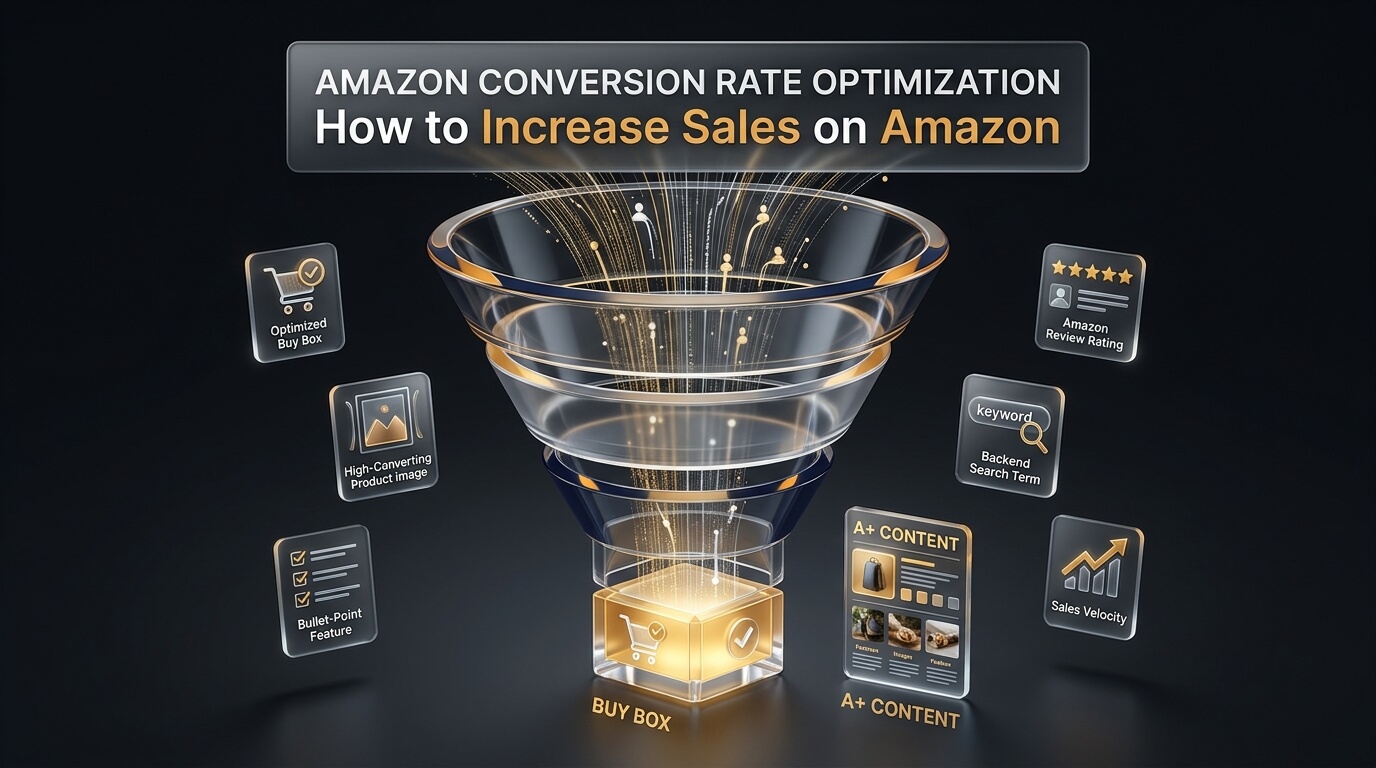
Selling products on Amazon has grown increasingly competitive across every consumer category. Brand owners often spend heavily on sponsored ads to drive shoppers to their listings. However, driving traffic without converting visitors wastes precious marketing capital and harms organic search rankings.
Executing systematic amazon conversion rate optimization transforms your marketplace performance. On Amazon, conversion rate directly influences the search algorithm. Mastering conversion rate optimization amazon helps you capture more sales from every visitor and secure prominent organic placement.
Whether you manage a private label brand or run an enterprise catalog, structured testing is essential. This actionable amazon conversion rate optimization guide covers the foundational techniques, behavioral tactics, and creative assets required for long-term amazon marketplace conversion optimization.
Key Amazon CRO Takeaways:
- Amazon measures conversion rate as Unit Session Percentage inside Seller Central business reports.
- The main product image accounts for over sixty percent of initial mobile click decisions.
- Effective A+ Content comparison tables answer sizing questions and reduce shopper return rates.
- Green coupon badges and strike-through pricing create visual urgency that lifts click-through rates.
- Maintaining customer review ratings above 4.3 stars is critical for sustained sales conversion.
- Modern AI listing tools identify missing customer benefits and predict shopper hesitation patterns.
Amazon SEO vs CRO: Understanding the Marketplace Funnel
Merchants frequently conflate marketplace visibility with customer acquisition. Dissecting amazon seo vs cro reveals how these two disciplines function together. Search engine optimization delivers traffic to the listing, while conversion optimization convinces shoppers to click buy.
Keywords indexed in your title and backend attributes determine whether shoppers find your catalog. However, once a shopper lands on your detail page, keywords no longer guarantee revenue. At that moment, conversion rate optimization takes over to persuade the consumer.
Amazon monitors conversion velocity closely through its ranking algorithm. When a product converts at a higher rate than competing items, the algorithm awards higher organic placement. Investing in conversion optimization actively boosts your organic search reach.
The Unit Session Percentage Metric
Amazon tracks conversion efficiency through a specific metric known as Unit Session Percentage. You can locate this data inside Seller Central under Business Reports. This figure divides total purchased units by the number of unique visitor sessions.
Average conversion rates on Amazon hover around ten to fifteen percent for non-Prime shoppers. For Prime members, conversion rates often exceed twenty to thirty percent. Understanding your category benchmark reveals how much room you have for listing improvements.
Traffic Decay from Weak Conversion
Sending paid advertising traffic to a listing with low conversion creates severe ranking penalties. The algorithm interprets low conversion as a signal of product irrelevance or customer dissatisfaction. Consequently, the marketplace reduces your organic impressions and raises your advertising costs.
Conversely, high-converting listings experience an organic visibility multiplier. Each completed transaction signals product satisfaction to the search system. Improving your conversion rate lowers your advertising spend while elevating your organic rank.
The Power of the Main Hero Image
The main hero image serves as the digital packaging of your Amazon product. It represents the primary visual trigger shoppers evaluate while browsing search results. Optimizing this single asset drives dramatic increases in initial click-through rates.
Amazon enforces strict white background requirements for primary product photography. The product must occupy at least eighty-five percent of the image frame. Mastering lighting, contrast, and angles makes your item stand out among competing options.
Maximizing Frame Fill and Visual Impact
Amateur product images often leave excessive white margins around the primary item. Crop your main photo tightly so the product commands attention on mobile screens. A larger visual presence naturally captures the shopper’s gaze during rapid scrolling.
Use high-resolution 3D renders or professional studio photography with balanced contrast. Avoid harsh artificial glare that conceals product texture. Crisp visual details reassure shoppers of superior build quality before they read a single word.
Highlighting Key Visual Differentiators
Showcase all included parts, accessories, and premium packaging directly within the main frame. If your product comes with a carrying case or bonus tool, display it neatly beside the primary unit. Shoppers perceive greater value when bundle elements are immediately apparent.
Ensure that product colors and physical proportions look accurate and natural. Exaggerated digital coloring creates unrealistic expectations that lead to negative customer reviews. Genuine visual accuracy builds early buyer trust.
Secondary Image Stack Architecture
Once a shopper clicks into your product detail page, secondary images do the heavy lifting. The secondary image stack must answer questions and remove buyer hesitation. A deliberate visual sequence guides shoppers toward confident purchasing decisions.
The Seven-Image Framework
Amazon allows brand owners to display up to seven images before the thumbnail tray collapses. Design each image slot to fulfill a specific commercial objective. This framework systematically addresses customer doubts as they swipe through gallery cards.
Begin with clear dimension infographics that display physical measurements clearly. Follow with lifestyle photography showing the product being used by your target demographic. Conclude with packaging photos and warranty badges that reinforce customer security.
Infographics and Benefit Callouts
Online shoppers rarely read long paragraphs of text on mobile screens. Infographic images communicate critical product benefits in digestible visual snippets. Highlight key technical specifications using clean icons and bold headline callouts.
Feature callouts must focus on customer outcomes rather than dry features. Instead of listing stainless steel grades, explain that the surface resists rust and cleans easily. Translating features into daily benefits accelerates purchase decisions.
Lifestyle Imagery That Tells a Story
Lifestyle photography allows consumers to imagine the product inside their own lives. Capture photos in realistic home, office, or outdoor environments that match your audience. Seeing the item in context establishes an immediate emotional connection.
Use diverse models that represent your actual buyer base. Ensure the lighting feels warm and natural rather than overly staged. Authentic lifestyle imagery makes your brand feel relatable and dependable.
Amazon Product Page Conversion Optimization: Copywriting Tactics
Effective marketplace copywriting requires balancing keyword density with persuasive sales communication. This structured approach to amazon product page conversion optimization ensures your listing appeals to both search algorithms and human buyers.
Crafting Mobile-Optimized Titles
Mobile shoppers see only the first sixty to eighty characters of your product title in search results. Place your primary brand name, core product function, and primary differentiator at the very beginning of the title. Secondary keywords should follow toward the end of the character limit.
Avoid stuffing titles with repetitive keyword variations and cluttered punctuation. Clean, readable titles establish professional brand credibility. Clear titles help shoppers confirm they have found the exact product they need.
Persuasive Bullet Points That Sell
The five feature bullet points provide space to resolve common customer objections. Begin each bullet point with a capitalized benefit summary in brackets or bold text. This structure allows skim-readers to extract key value propositions in seconds.
Dedicate one bullet point to product durability, one to ease of use, and one to compatibility. Use the final bullet point to highlight your money-back guarantee and customer service support. Reassuring buyers about customer service eliminates final purchasing hesitations.
Amazon A+ Content Conversion Optimization
Brand-registered sellers possess access to enhanced visual marketing through A+ Content. Implementing amazon a+ content conversion optimization replaces standard plain text descriptions with rich editorial layouts. High-quality A+ Content regularly lifts conversion rates by five to ten percent.
Comparison Charts for Catalog Cross-Selling
The product comparison chart is the single highest-converting module available within A+ Content. Display your full product line side by side, listing technical specifications, dimensions, and intended use cases. This structure prevents shoppers from leaving your page to research alternatives.
Comparison charts keep revenue within your brand catalog even if the current product does not fit the shopper. Customers easily identify which model suits their budget and requirements. Cross-selling related products within the chart also lifts average order value.
Brand Story Carousels
The Brand Story module appears above the standard A+ Content section across desktop and mobile screens. It provides an interactive horizontal carousel where you can share your brand mission and founder history. Communicating brand values fosters customer loyalty and differentiates your catalog from generic commodity sellers.
Include links to your Amazon Brand Store directly within the Brand Story cards. Shoppers who appreciate your company values will browse your full product catalog. Building authentic brand affinity drives long-term customer repeat purchases.
Amazon Seller Pro Tip:
Audit your listing on the Amazon mobile app under poor lighting. If your infographic text is illegible without pinching to zoom, mobile shoppers will swipe away. Increase typography size on all secondary images to maximize readability.
Pricing Strategies and Conversion Triggers
Pricing strategy influences conversion rates just as much as visual assets. Amazon shoppers are price-conscious consumers who constantly compare value across search results. Applying behavioral pricing triggers captures attention and motivates immediate action.
The Power of Green Coupon Badges
Digital coupons created inside Seller Central display a bright green clip coupon badge in search results. This green badge provides high visual contrast against white search grids. Shoppers instinctively click listings that display noticeable promotional tags.
Offering a five percent coupon often generates higher sales velocity than dropping your price by five percent directly. The act of clicking the coupon box triggers psychological ownership in the buyer’s mind. Consumers feel they are capturing an exclusive discount.
Subscribe & Save and Prime Badges
Carrying the Prime badge is non-negotiable for competitive conversion rates on Amazon. Fulfill orders through Fulfillment by Amazon (FBA) or Seller Fulfilled Prime to ensure fast, free delivery. Shoppers routinely filter search results to exclude non-Prime items entirely.
For consumable products, activate Subscribe & Save discounts to secure predictable recurring revenue. Offering an initial coupon for recurring deliveries encourages long-term subscriptions. Automated repeat purchases dramatically expand customer lifetime value.
Customer Reviews, Ratings, and Social Proof
Customer reviews form the bedrock of consumer trust across the Amazon marketplace. Shoppers rely on peer feedback to validate product claims and identify potential drawbacks. Managing your review profile is essential for maintaining strong conversion rates.
The 4.3 Star Conversion Threshold
Marketplace analytics demonstrate that conversion rates drop significantly when product ratings fall below 4.3 stars. Products with ratings below four stars struggle to compete against top-rated alternatives. Preserving product quality and accurate expectations protects your rating average.
Address recurring customer complaints by modifying your manufacturing processes or updating packaging instructions. If buyers frequently misunderstand sizing, add a dedicated size chart to your image gallery. Proactive listing adjustments prevent avoidable negative feedback.
Leveraging the Amazon Vine Program
Launching a new product listing without social proof creates severe conversion friction. Enroll new product variations in the Amazon Vine program to generate trusted initial reviews. Verified Vine voices receive free samples in exchange for honest, detailed customer assessments.
Vine reviews often include photos and videos that help prospective buyers make decisions. Securing fifteen to thirty honest reviews gives your listing the momentum needed to convert organic visitors. Social proof removes the hesitation associated with unrated products.
AI in Amazon Conversion Rate Optimization
Modern machine learning tools are revolutionizing how sellers audit and refine product pages. Implementing ai amazon conversion rate optimization allows brand managers to analyze millions of customer data points automatically. Artificial intelligence uncovers hidden conversion opportunities in minutes.
AI tools process customer review text to extract sentiment patterns and common complaints. Algorithms identify the exact phrases buyers use when praising the item. Incorporating these natural phrases into your title and bullets creates immediate resonance with future shoppers.
Generative models also draft optimized listing copy tailored to Amazon’s indexing requirements. Machine learning systems analyze top-ranking competitors and recommend missing product attributes. Leveraging automated intelligence accelerates listing production while boosting conversion performance.
Comprehensive Amazon CRO Strategies for Marketplace Growth
Achieving sustained sales growth requires executing an integrated optimization roadmap. Deploying disciplined amazon cro strategies and continuous amazon sales conversion optimization ensures your catalog consistently outperforms category rivals. Follow these operational pillars to maximize commercial performance.
Systematic A/B Testing with Manage Your Experiments
Amazon provides brand-registered sellers with a native split-testing tool called Manage Your Experiments. This feature allows you to test two variations of main images, titles, bullet points, and A+ Content simultaneously. The platform distributes traffic evenly between variations to measure true customer response.
Run tests for at least four to six weeks to gather statistically sound conversion data. Focus on testing one element at a time to isolate which variable created the performance lift. Iterative split testing removes guesswork from listing management.
Auditing Listing Health Regularly
Top sellers perform structured amazon listing conversion rate optimization audits every quarter. Review search terms reports, customer return reasons, and competitor listings continuously. Consumer expectations and marketplace design standards evolve constantly.
Refresh lifestyle photography annually to keep your catalog looking contemporary. Update comparison charts when releasing new product variations. Continuous refinement ensures your listings maintain their competitive edge over emerging rivals.
Selecting Professional Assistance: Agency vs In-House
As catalog complexity increases, brand owners must evaluate their operational capabilities. Deciding whether to engage an amazon conversion rate optimization agency or train internal staff depends on sales volume and available design talent.
A specialized agency provides dedicated 3D designers, conversion copywriters, and marketplace strategists. Agencies understand Amazon’s strict style guides and algorithmic nuances deeply. Their specialized experience accelerates creative production and delivers rapid conversion gains.
Conversely, growing brands can manage listing optimization in-house by investing in specialized software. Equipping team members with behavioral analytics and split-testing tools fosters long-term institutional knowledge. Choose the management model that matches your operational resources and growth ambitions.
Top 7 Amazon CRO & Listing Optimization Tools
Optimizing marketplace listings requires specialized software for keyword research, split testing, and review analysis. The following seven platforms deliver enterprise-grade optimization capabilities for Amazon sellers.
1. Helium 10
Helium 10 is an all-in-one software suite built specifically for Amazon and Walmart sellers. Its Scribbles and Frankenstein tools help merchants optimize listing copy while ensuring full keyword indexing. The platform provides detailed search volume estimates, competitor tracking, and automated refund management.
The software includes visual listing analyzers that evaluate image count, title length, and review velocity against category standards. Helium 10 delivers deep actionable intelligence that helps brand owners craft high-converting product pages effortlessly.
2. Jungle Scout
Jungle Scout provides comprehensive product research, market intelligence, and listing optimization tools for Amazon entrepreneurs. Its AI Assist feature drafts persuasive listing copy, titles, and bullet points based on top-performing search terms. The platform tracks competitor pricing changes and inventory levels in real time.
Jungle Scout includes an intuitive Listing Builder that grades your listing quality score as you edit copy. Merchants see exactly which attributes need improvement before publishing changes to Seller Central.
3. PickFu
PickFu is an off-Amazon consumer polling platform that enables instant split testing for product images, titles, and packaging concepts. You can present two or three image variations to a targeted panel of Prime members and receive written feedback within minutes. This rapid feedback loop identifies winning visual assets before you launch on Amazon.
Testing main images on PickFu eliminates the risk of hurting organic search rankings with unproven creative assets. Sellers determine which photo angle commands the highest click-through rate with statistical confidence.
4. DataHawk
DataHawk is an enterprise ecommerce analytics platform delivering advanced marketplace intelligence for brands and agencies. It monitors organic search rankings, Buy Box win rates, and listing content changes across complex product catalogs. The platform provides automated alerts whenever competitors adjust pricing or listing attributes.
DataHawk integrates directly with major cloud data warehouses, enabling custom business intelligence reporting. Enterprise brands use DataHawk to maintain listing compliance and conversion performance across global marketplaces.
5. SellerApp
SellerApp combines algorithmic advertising management with robust listing optimization capabilities. Its listing analyzer diagnoses product descriptions, backend search terms, and image quality against proven marketplace formulas. The software pinpoints revenue leakage caused by poor keyword indexing or unoptimized bullet points.
The platform offers machine learning recommendations to optimize sponsored ad bids and product pricing dynamically. SellerApp helps merchants streamline catalog management while driving higher sales conversion.
6. FeedbackWhiz
FeedbackWhiz specializes in review automation, customer feedback management, and listing monitoring for Amazon sellers. It allows merchants to create automated, compliant email campaigns requesting reviews and seller feedback. The tool alerts sellers instantly when a negative review or product return occurs.
Monitoring customer sentiment through FeedbackWhiz exposes product defects and packaging issues before they damage listing conversion rates. Protecting your review profile preserves buyer trust and sustains long-term marketplace revenue.
7. Perpetua
Perpetua is an AI-powered retail media advertising optimization platform designed for scale. While primarily focused on sponsored ads, Perpetua connects advertising efficiency directly with listing conversion metrics. Its automated bidding engine shifts ad spend toward high-converting ASINs to maximize return on advertising spend.
The software tracks share of voice, category market share, and conversion velocity across competing brands. Perpetua empowers brand managers to align advertising investments with listing readiness for optimal sales growth.
| Platform Name | Primary Specialty | Key Optimization Advantage | Best Suited For |
|---|---|---|---|
| Helium 10 | All-in-One Seller Suite & Indexing | Scribbles tool ensures complete keyword coverage | Private label sellers & brand managers |
| Jungle Scout | AI Listing Builder & Research | Generative copy assistant and listing quality scoring | Growing Amazon merchants & agencies |
| PickFu | Off-Amazon Consumer Polling | Instant split testing with Prime customer feedback | Validating main images and packaging |
| DataHawk | Enterprise Analytics & Tracking | Automated Buy Box alerts and cloud data sync | Enterprise brands & aggregator portfolios |
| SellerApp | Listing Diagnostics & PPC Sync | Holistic listing audit scores with keyword checks | Performance marketers & Amazon sellers |
| FeedbackWhiz | Review Automation & Monitoring | Compliant review requests and negative feedback alerts | Protecting star ratings and social proof |
| Perpetua | AI Retail Media Optimization | Automated bidding aligned with listing conversion | High-volume advertisers & consumer brands |
Amazon Listing Conversion Audit Checklist:
Review this operational checklist to inspect your Amazon product detail pages:
- Main Hero Image: Does your primary photo fill 85% of the frame with crisp contrast on a pure white background?
- Mobile Title Scannability: Are your brand name and primary product benefits visible within the first 70 characters?
- Benefit-Led Bullet Points: Does each bullet point begin with a bold summary that communicates customer value?
- Infographic Readability: Is your infographic text clearly legible on a smartphone screen without zooming?
- A+ Content Comparison: Have you installed a cross-selling comparison chart showing related catalog items?
- Promotional Badge Setup: Have you clipped a green coupon badge or activated Prime exclusive discounts?
- Review Rating Health: Does your listing maintain an aggregate customer review rating above 4.3 stars?
- Prime Fulfillment: Is the product fulfilled via FBA to guarantee fast, free two-day delivery badges?
- Split Testing Schedule: Are you actively running tests inside Amazon Manage Your Experiments?
Frequently Asked Questions
What is a good conversion rate on Amazon?
A typical conversion rate on Amazon ranges between ten and fifteen percent for standard traffic. For Prime-eligible listings with strong reviews and optimized images, conversion rates frequently exceed twenty to thirty percent.
How does Amazon calculate Unit Session Percentage?
Amazon calculates Unit Session Percentage by dividing total units ordered by total unique visitor sessions. You can find this performance metric inside Seller Central under Business Reports to evaluate your listing efficiency.
Why is the main hero image so important on Amazon?
The main hero image is the primary visual element shoppers see in search results. A clear image that fills the frame captures attention, drives higher click-through rates, and sets initial buyer expectations.
How does A+ Content improve listing conversion rates?
A+ Content replaces standard plain text descriptions with rich visual modules, comparison charts, and lifestyle imagery. It answers common buyer questions, overcomes objections, and routinely lifts sales conversion by five to ten percent.
How do green coupon badges lift click-through rates?
Green coupon badges display bold visual contrast against Amazon’s white search results grid. Shoppers naturally notice the discount badge, creating psychological urgency that motivates them to click and purchase.
What happens when a product rating drops below 4.3 stars?
When a product rating falls below 4.3 stars, conversion rates experience noticeable declines. Shoppers hesitate to buy lower-rated products and actively look for alternative items with better peer reviews.
What is the difference between Amazon SEO and Amazon CRO?
Amazon SEO focuses on keyword indexing and search ranking to bring visitors to your listing. Amazon CRO focuses on persuasive images, pricing, and copywriting to turn those visitors into paying buyers.
How can sellers split test listing assets on Amazon?
Brand-registered sellers can use Amazon Manage Your Experiments to test main images, titles, and A+ Content. Third-party polling tools like PickFu also enable rapid pre-launch testing with targeted consumer panels.
Why are bullet points important for mobile shoppers?
Bullet points provide quick answers to common customer questions. Starting each bullet with a bold capitalized benefit allows mobile shoppers to understand key features without reading dense text paragraphs.
How does AI help with Amazon conversion rate optimization?
AI tools analyze customer review sentiments to reveal why shoppers praise or return products. They also draft optimized copy and suggest missing attributes, accelerating the listing refinement process.
Why is Fulfillment by Amazon (FBA) crucial for conversion?
FBA grants the Prime delivery badge, reassuring shoppers of reliable two-day shipping and hassle-free returns. Prime members convert at significantly higher rates when products feature dependable Prime delivery.
How often should an Amazon seller audit product listings?
Sellers should conduct listing conversion audits every quarter. Reviewing customer return feedback, competitor creative updates, and search query reports ensures your listings remain competitive and profitable.
Conclusion: Turn Amazon Traffic into Sustainable Profit
Mastering marketplace conversion rate optimization is the most dependable path to expanding your Amazon business. Paid advertising drives traffic, but optimized listings convert that attention into compounding revenue.
Audit your main hero image, craft mobile-friendly bullet points, and design compelling A+ Content comparison tables. Clip green coupon badges to capture search clicks and preserve healthy customer review ratings.
Begin evaluating your product listings in Seller Central today. Applying disciplined optimization tactics removes customer friction, lifts your Unit Session Percentage, and establishes enduring marketplace leadership.