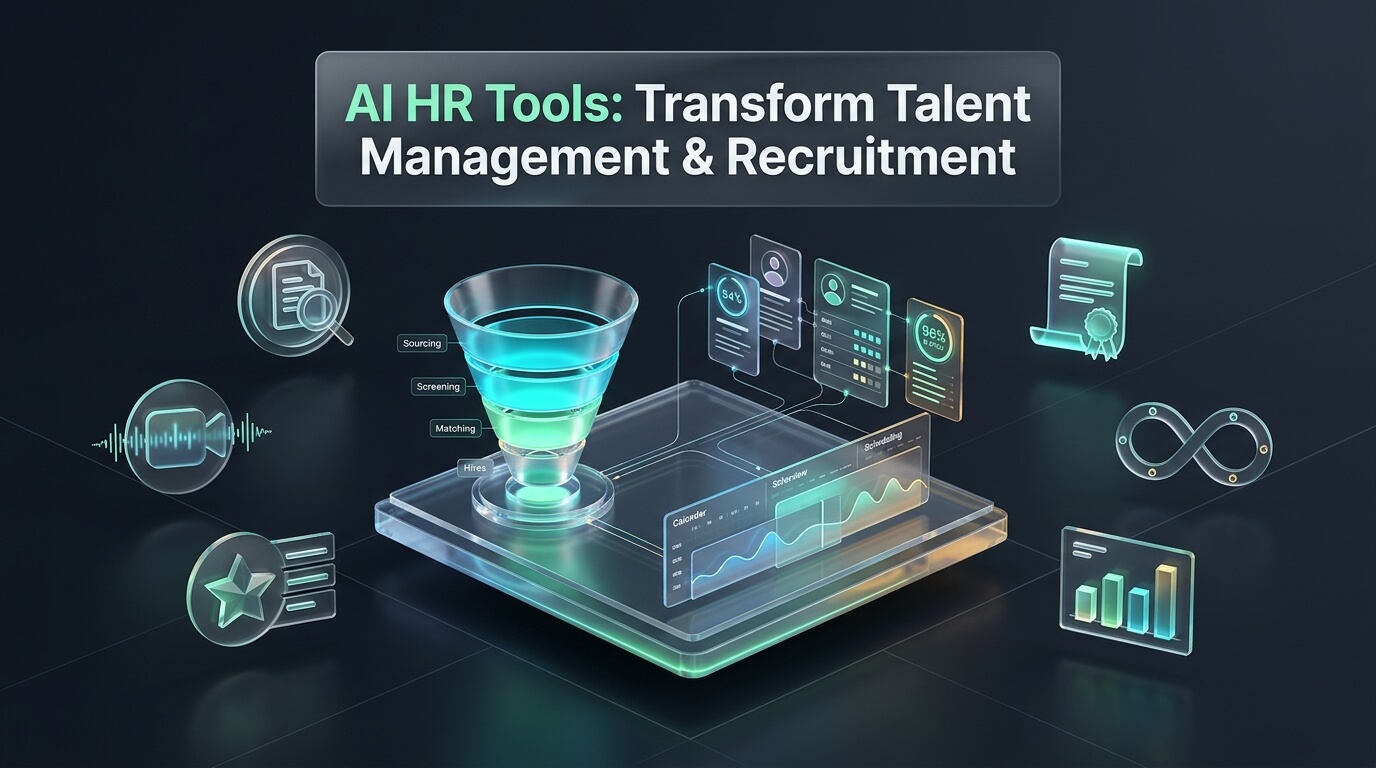
Executive Summary: Key Takeaways for HR Leaders
- Deploying specialized ai tools for hr automates high-volume candidate screening and interview scheduling.
- Talent acquisition teams reduce time-to-hire by over forty percent using automated sourcing assistants.
- The best ai tools for human resources eliminate unconscious bias and optimize inclusive job descriptions.
- Advanced people analytics platforms forecast employee turnover and identify internal promotion candidates proactively.
- Ensuring algorithmic fairness, candidate privacy, and EEOC compliance remains mandatory when selecting HR technology.
Human resources departments face unprecedented operational pressure. People operations teams must manage complex global hiring, hybrid team onboarding, retention analysis, and compliance audits simultaneously. Sifting manually through hundreds of resumes for a single job opening drains valuable staff hours. To solve these intensive workplace challenges, forward-thinking enterprises deploy modern ai tools for hr.
Artificial intelligence functions as an intelligent force multiplier for corporate talent teams. Modern platforms screen candidate qualifications objectively against open role criteria in seconds. They coordinate complex interview schedules across differing time zones automatically. People operations professionals spend less time on manual spreadsheet entry and more time building authentic employee relationships.
Selecting appropriate human resources software requires a disciplined strategic framework. People leaders must distinguish between simple resume scrapers and genuine enterprise talent intelligence systems. Choosing the best ai tools for hr management depends on your organization’s hiring volume, geographic distribution, and employee development goals. High-performing companies select platforms that integrate cleanly with existing applicant tracking systems and payroll software.
In this comprehensive guide, we review leading platforms transforming modern human resources operations. We examine specialized applications for candidate recruiting, inclusive job copywriting, employee sentiment tracking, workforce planning, and people analytics. Whether you manage a fast-growing startup or lead an enterprise HR division, these proven hr ai tools will help your team build a resilient, high-performing workforce.
Modern Human Resources and Talent Acquisition
The human resources profession has shifted dramatically from traditional administrative compliance to strategic workforce leadership. In the past, recruiters spent weeks manually posting job openings, reviewing paper resumes, and coordinating calendar invites via email. Today, candidate expectations for quick communication demand instant digital engagement. Modern recruiting teams must engage qualified job seekers immediately before competitors hire them.
Navigating modern candidate sourcing requires sophisticated technological capabilities. Job postings receive hundreds of unqualified applications, creating painful review backlogs for hiring managers. By introducing specialized ai tools for recruiting, talent teams screen resumes against verified skill sets automatically. Recruiters focus their energy on interviewing high-potential candidates rather than sorting through unvetted applicant pools.
Additionally, modern workforce dynamics require data-driven retention strategies. Replacing a skilled employee costs organizations tens of thousands of dollars in lost productivity and recruiting expenses. By deploying dedicated ai tools for employee engagement, companies monitor workplace satisfaction trends in real time. People managers identify flight risks proactively and address burnout before top talent resigns.
Enterprise organizations also use intelligent systems to optimize internal career mobility. Instead of searching externally for every open vacancy, smart algorithms map internal employee skills against new corporate initiatives. Implementing dedicated human resources ai tools helps companies cultivate internal talent pipelines, boosting institutional knowledge retention and team morale.
Pro-Tip: Audit AI Models for Algorithmic Bias Regularly
Conduct regular third-party audits of candidate screening algorithms to ensure hiring recommendations remain completely fair and non-discriminatory. Transparent demographic parity checks protect your organization against regulatory non-compliance.
Core Criteria for Choosing Enterprise Human Resources AI
Selecting talent management software requires rigorous institutional evaluation. Unlike standard business apps, human resources software handles sensitive personal employee records, compensation figures, and legal hiring decisions. When evaluating the best ai tools for recruitment and workforce planning, corporate leaders must assess four core pillars: ATS integration, bias mitigation, candidate experience, and regulatory compliance.
Applicant Tracking System integration represents the most critical technical requirement. Your recruitment software must connect smoothly with core platforms like Workday, Greenhouse, Lever, and SAP SuccessFactors. Two-way data synchronization ensures candidate notes, interview scores, and application statuses remain uniform across your entire enterprise infrastructure.
Bias mitigation and ethical algorithm design must never be compromised. Automated screening software must evaluate verified skills, educational achievements, and job experience without prejudice. Top platforms mask candidate names, addresses, and graduation years during initial screening stages to eliminate unconscious human bias from the recruitment funnel.
Candidate experience directly impacts employer brand reputation. If an automated chatbot is confusing or impersonal, top-tier talent will abandon the application process. Look for conversational assistants that communicate with warmth, provide immediate answers regarding benefits, and schedule interviews effortlessly on mobile devices.
Finally, consider budget accessibility and implementation timeframes. Many emerging software vendors offer targeted free ai tools for hr trials to help teams test screening accuracy before signing annual contracts. Enterprise platforms should deliver measurable time savings within the first ninety days of deployment.
Enterprise HR AI Evaluation Checklist
- Native two-way integration with major enterprise ATS and HRIS platforms.
- Demonstrated compliance with EEOC, Title VII, and NYC Local Law 144 standards.
- Anonymized candidate screening tools mitigating unconscious hiring bias.
- Conversational mobile candidate communication supporting 24/7 self-scheduling.
- Real-time workforce sentiment tracking and predictive retention analytics.
- Robust enterprise data encryption safeguarding sensitive personal employee records.
Top AI Human Resources and Recruitment Platforms
To help talent leaders select the most reliable solutions, we evaluated leading platforms across varied HR disciplines. We analyzed candidate sourcing, inclusive copywriting, skills intelligence, employee engagement, and workforce analytics. Below are eight top-rated solutions delivering proven organizational results.
1. Paradox (Olivia)
Paradox is a conversational recruiting platform powered by Olivia, an intelligent virtual assistant designed to simplify candidate interactions. In high-volume hiring environments like retail, hospitality, healthcare, and logistics, recruiting teams waste countless hours answering repetitive questions and scheduling screening interviews. Paradox automates these front-line recruitment steps through natural text messaging.
The platform enables candidates to apply for open positions simply by sending a text message or chatting on a mobile career page. Olivia screens applicant qualifications through short conversational prompts, confirms shift availability, and schedules interviews directly onto recruiter calendars in real time. Job seekers complete the entire application and scheduling process in under three minutes.
Paradox also supports multi-location franchise hiring and automated candidate onboarding reminders. By delivering instant, frictionless communication, organizations experience significant reductions in candidate drop-off rates. This high-speed operational efficiency establishes Paradox among the best ai tools for recruiters managing high-volume talent acquisition.
Key recruitment capabilities of Paradox include:
- Conversational mobile job applications completed in minutes via SMS or web chat.
- Automated candidate screening verifying basic qualifications, licensing, and availability.
- Intelligent calendar coordination scheduling interviews across multiple hiring managers.
- Automated interview reminders and location directions reducing candidate no-show rates.
- Enterprise ATS integration synchronizing candidate records with Workday and SAP.
- Multilingual conversational support engaging diverse candidate pools in dozens of languages.
Paradox provides customized enterprise pricing based on organizational hiring volume and active corporate locations. It is the premier conversational solution for high-volume corporate recruitment teams.
2. Textio
Textio is an augmented writing platform engineered to help corporate talent teams write inclusive, highly effective job descriptions and performance evaluations. The language used in job postings directly influences which demographic groups apply for open roles. Textio analyzes recruiting language to eliminate subtle gender bias, corporate jargon, and exclusionary phrasing.
The platform features the Textio Score, an objective rating measuring how fast a job post will fill and how diverse the applicant pool will be. As recruiters draft job specifications, Textio provides real-time guidance, highlighting phrases that inadvertently discourage women, underrepresented minorities, or experienced professionals. Replacing exclusionary words with welcoming alternatives expands candidate pipeline quality dramatically.
Textio also extends its language intelligence into employee performance reviews. The software helps managers write constructive, balanced feedback that avoids unconscious bias regarding age, gender, or personality traits. This dual capability makes Textio one of the essential ai tools for talent acquisition and equitable workforce management.
Core strengths of Textio include:
- Real-time Textio Score forecasting job posting fill rates and candidate diversity.
- Unconscious bias detection highlighting subtle gendered language and exclusionary phrasing.
- Guidance for performance reviews ensuring employee evaluations remain balanced and fair.
- Direct integration with LinkedIn Recruiter, Workday, and standard web browsers.
- Enterprise brand alignment ensuring all external job descriptions reflect company values.
- Continuous language learning incorporating the latest research on hiring inclusion.
Textio offers enterprise subscription plans tailored to organization size and recruiting team seat counts. It is an indispensable asset for corporate teams committed to equitable hiring.
3. Eightfold AI
Eightfold AI is a talent intelligence platform powered by deep learning models trained on billions of global career trajectories. Traditional recruitment relies heavily on matching exact job titles on static resumes, often overlooking capable candidates with transferable skills. Eightfold AI shifts hiring to a skills-based framework that evaluates candidate potential rather than past job titles.
The platform matches incoming applicants to open roles by analyzing foundational skills, adjacent capabilities, and career progression patterns. Candidates who may lack an exact previous title but possess the required technical skills are surfaced to recruiters automatically. This intelligent matching uncovers hidden talent and accelerates the recruitment cycle.
Eightfold AI also powers internal talent marketplaces and workforce planning. Employees create internal skill profiles, and the software recommends internal project assignments, mentorship opportunities, and open career pathways. This internal mobility reduces expensive external recruiting costs, establishing Eightfold AI among the top ai tools for workforce management and retention.
Notable capabilities of Eightfold AI include:
- Skills-based talent matching evaluating adjacent capabilities and career trajectory potential.
- Anonymized candidate screening hiding demographic identifiers to prevent hiring bias.
- Internal talent marketplace connecting current employees to new project opportunities.
- Workforce analytics forecasting future skill gaps and recommending upskilling programs.
- Automated candidate rediscovery surfacing past applicants for newly opened roles.
- Comprehensive diversity analytics tracking recruitment pipeline equity across departments.
Eightfold AI offers custom enterprise licensing based on workforce size and deployed modules. It represents the gold standard for global enterprises transitioning to skills-based talent management.
4. Fetcher
Fetcher automates candidate sourcing and proactive outreach for corporate recruiters and fast-growing startups. Sourcing passive candidates on LinkedIn and professional databases typically requires hours of manual searching, boolean string drafting, and cold messaging. Fetcher combines artificial intelligence with human verification to deliver vetted candidate batches directly to your inbox.
Recruiters create a simple role profile specifying required skills, experience levels, target companies, and diversity goals. Fetcher’s sourcing engine searches professional networks and compiles a customized batch of matching candidates. Recruiters review the candidates, and the platform automatically initiates personalized email outreach sequences from the recruiter’s personal email account.
The platform tracks email open rates, click-through metrics, and candidate response rates automatically. When a passive candidate replies expressing interest, Fetcher alerts the recruiter to schedule an initial consultation call. This automated pipeline building establishes Fetcher among the top recruitment ai tools and recruiting ai tools for proactive talent acquisition.
Key highlights of Fetcher include:
- Automated passive candidate sourcing delivering targeted candidate batches daily.
- Personalized email outreach sequences sent directly from recruiter email accounts.
- Diversity sourcing filters helping teams identify candidates from underrepresented backgrounds.
- Automated follow-up emails re-engaging passive candidates who missed initial messages.
- Real-time campaign analytics tracking response rates, pipeline velocity, and diversity metrics.
- Direct integration with popular ATS platforms including Greenhouse, Lever, and Ashby.
Fetcher offers flexible subscription tiers for growing companies and enterprise recruiting teams, with pricing scaling based on monthly candidate lead volume. It is an exceptional tool for filling specialized technical and executive roles.
Pro-Tip: Personalize Automated Candidate Outreach
When configuring automated recruiting email sequences, reference specific candidate achievements, portfolio projects, or recent open-source contributions. Thoughtful, customized outreach emails generate significantly higher candidate interview response rates.
5. Culture Amp
Culture Amp is an employee experience platform designed to help people leaders understand workplace sentiment, improve employee engagement, and build high-performance corporate cultures. Gathering employee feedback through lengthy annual surveys often results in delayed insights that fail to address emerging workplace issues. Culture Amp modernizes this feedback loop through continuous sentiment analysis.
The platform uses specialized natural language processing models to analyze thousands of open-ended employee survey responses in seconds. The software groups qualitative comments into clear thematic categories, identifies underlying sentiment trends, and highlights specific departmental concerns. HR leaders gain immediate clarity into team morale without reading thousands of survey responses manually.
Culture Amp also provides predictive retention intelligence. The system correlates engagement scores with historical employee turnover data to alert managers to flight risks within specific teams. Leadership receives tailored action recommendations designed to address employee burnout, making Culture Amp one of the best ai tools for employee engagement on the market.
Major strengths of Culture Amp include:
- Automated sentiment analysis distilling open-ended survey text into clear themes.
- Predictive turnover indicators alerting HR leaders to teams with high attrition risks.
- Extensive benchmark data comparing your engagement scores against industry averages.
- Action planning tools guiding managers through structured retention improvements.
- Integrated performance management supporting continuous 360-degree feedback reviews.
- Comprehensive diversity, equity, and inclusion analytics tracking belonging across demographics.
Culture Amp provides tiered annual subscription packages based on total employee headcount. It is an essential platform for companies focused on employee retention and positive workplace culture.
6. Visier
Visier is an enterprise people analytics and workforce planning platform that turns fragmented HR data into actionable business intelligence. Enterprise organizations store employee information across dozens of disconnected systems, including payroll, performance reviews, time tracking, and recruitment databases. Visier unifies these data streams into a single analytical command center.
The platform features an intelligent conversational assistant that answers complex workforce questions in plain language. Executives can ask Visier which departments face the highest retirement risks over the next three years, or how sales compensation compares against market benchmarks. The software generates instant narrative explanations and supporting visual charts.
Visier also excels at predictive workforce modeling. The system simulates the business impact of future reorganizations, wage adjustments, and talent shortages, allowing HR leaders to present data-backed workforce strategies to corporate boards. This analytical depth establishes Visier among the leading ai tools for people analytics available today.
Key capabilities of Visier include:
- Conversational people analytics querying enterprise workforce metrics in plain English.
- Predictive turnover models identifying root causes of voluntary employee attrition.
- Workforce planning simulators modeling the cost and capacity impact of hiring strategies.
- Compensation equity analysis tracking pay parity across gender, ethnicity, and tenure.
- Pre-built analytical questions addressing recruitment velocity, productivity, and retention.
- Direct connectors integrating data from Workday, SAP, ADP, and Oracle systems.
Visier operates on an enterprise annual licensing model customized to total workforce records and deployed analytical modules. It is the premier choice for Chief Human Resources Officers seeking analytical authority.
7. Lattice
Lattice connects performance management, goal tracking, compensation planning, and employee engagement into an intuitive, unified platform. Built for modern hybrid and distributed teams, Lattice helps people operations leaders align individual employee objectives with broad corporate strategic goals.
The platform features built-in AI capabilities that assist managers and employees with routine performance reviews. Lattice AI synthesizes year-long performance notes, peer recognitions, and completed project goals to help managers write balanced, objective reviews in minutes. Employees receive constructive feedback that clearly outlines future professional growth pathways.
Lattice also enhances daily manager-employee communication through intelligent meeting assistants. The software suggests relevant discussion topics for one-on-one meetings based on recent project updates and pulse survey responses. This continuous support makes Lattice one of the top human resources ai tools for fostering manager effectiveness and employee growth.
Notable features of Lattice include:
- AI-assisted performance reviews summarizing employee accomplishments and peer feedback.
- Automated one-on-one meeting agendas pulling relevant discussion topics and goals.
- OKRs and goal tracking connecting daily employee tasks to strategic corporate targets.
- Real-time pulse surveys capturing ongoing employee engagement and team sentiment.
- Compensation planning software modeling merit raises and equity distributions fairly.
- Career tracks outlining clear skills criteria for internal promotions and advancement.
Lattice offers modular pricing starting around eleven dollars per person per month for core performance features, with engagement and compensation add-ons available. It is a favorite among innovative technology companies and mid-sized enterprises.
8. HiBob (Bob)
HiBob, commonly known as Bob, is a modern Human Resources Information System (HRIS) designed to engage employees while streamlining core administrative HR processes. Unlike rigid legacy HR databases, HiBob focuses heavily on employee engagement, visual company culture, and flexible workforce management for global, multi-site companies.
The platform uses intelligent workflow automation to manage the entire employee lifecycle. From generating customized onboarding checklists for remote hires to managing time-off requests and benefits enrollments, Bob eliminates administrative bottlenecks. Its automated notifications ensure cross-departmental teams complete onboarding tasks on schedule.
HiBob also provides visual people analytics that help HR managers track global headcount, pay equity, and turnover trends across international subsidiaries. Its social media-style company feed connects distributed teams, making new employees feel welcome immediately. This blend of operational efficiency and social connection makes HiBob one of the best hr ai tools for modern global organizations.
Core highlights of HiBob include:
- Intelligent onboarding automation creating tailored workflows for global remote employees.
- Visual org charts and social community feeds fostering company-wide connection.
- Time and attendance tracking with automated local holiday calendar adjustments.
- People analytics dashboards tracking compensation, retention, and headcount growth.
- Performance review cycles supporting 360-degree feedback and goal setting.
- Direct integrations with Slack, Microsoft Teams, Google Workspace, and payroll platforms.
HiBob provides tailored pricing based on organizational headcount and selected feature packages. It is an exceptional HRIS solution for high-growth, international companies seeking a people-centric platform.
Comprehensive Comparison of Leading HR and Recruitment AI Platforms
Selecting the ideal HR software depends on your organization’s primary talent priority, whether you need conversational candidate sourcing, inclusive copywriting, employee sentiment tracking, or comprehensive people analytics. The table below compares the eight platforms reviewed in this guide.
| Platform | Core HR Specialty | Primary AI Capability | Integration Level | Best Suited For | Pricing Model |
|---|---|---|---|---|---|
| Paradox (Olivia) | Conversational Recruiting | Mobile Chat Screening & Scheduling | Major ATS Platforms | High-Volume Hourly Hiring | Custom enterprise plans |
| Textio | Inclusive Job Copywriting | Language Bias Scoring & Review Guidance | ATS & Browser Extension | Diversity-Focused Talent Teams | Enterprise seat licensing |
| Eightfold AI | Talent Intelligence | Skills-Based Candidate Matching | Deep HRIS/ATS Sync | Global Enterprise Workforces | Tiered enterprise licensing |
| Fetcher | Passive Candidate Sourcing | Automated Sourcing & Outreach Drips | Standard ATS Platforms | Technical & Executive Recruiters | Volume-based tiers |
| Culture Amp | Employee Engagement | Qualitative Survey Sentiment NLP | HRIS & Slack / Teams | Culture & Retention Leaders | Headcount-based annual plans |
| Visier | People Analytics | Predictive Turnover & Conversational BI | Multi-System Connectors | Enterprise CHROs & Analysts | Custom enterprise annual |
| Lattice | Performance & Goals | AI Review Synthesis & 1:1 Agendas | HRIS & Google / Slack | High-Growth Tech Companies | From $11/user/month |
| HiBob (Bob) | Modern HRIS Platform | Automated Onboarding Workflows | Enterprise Ecosystems | Global Multi-Site Companies | Custom headcount tiers |
Strategic Implementation Framework for HR Organizations
Introducing new enterprise software into human resources requires careful change management. Rushing technology deployments without proper employee communication can trigger anxiety regarding job security. Successful people leaders follow a phased implementation plan that builds internal trust and demonstrates clear operational value.
Begin by automating top-of-funnel recruitment bottlenecks. High-volume candidate screening and interview scheduling represent repetitive administrative chores that exhaust recruiting staff. By deploying Paradox or Fetcher, talent acquisition teams eliminate calendar ping-pong and candidate wait times. Recruiters quickly recognize that automated tools handle digital friction, allowing staff to conduct meaningful candidate interviews.
Next, focus on improving the quality and equity of internal hiring copy. Integrate Textio into your job description workflows to identify biased or exclusionary phrasing before roles are posted publicly. Clear, welcoming job postings expand your applicant diversity and increase qualified candidate response rates across every department.
Finally, activate proactive employee listening and people analytics. Implement pulse surveys via Culture Amp and connect workforce data streams into Visier or Lattice. Use predictive turnover insights to identify retention risks early, and empower managers with structured action plans. Continuous operational visibility transforms human resources into an indispensable strategic growth partner.
Ensuring Regulatory Compliance, Data Privacy, and Algorithmic Ethics
Deploying artificial intelligence within human resources involves rigorous legal and ethical responsibilities. Employment decisions directly affect human livelihoods, and regulatory agencies increasingly scrutinize automated hiring software. People leaders must guarantee that all deployed systems comply with strict employment laws.
Compliance with Title VII of the Civil Rights Act and the Americans with Disabilities Act remains mandatory. Organizations must ensure that automated assessment tools do not create disparate impact against protected classes. In addition, municipal regulations such as New York City’s Local Law 144 require independent annual bias audits for automated employment decision tools. Choosing software vendors that publish transparent audit results protects your organization against legal liability.
Data privacy and employee record security are equally critical. Human resources departments handle sensitive medical leave records, social security numbers, and compensation history daily. Ensure your technology providers comply with SOC 2 Type II, GDPR, and CCPA standards. Strictly avoid pasting employee identification details into unvetted public chatbots.
Lastly, maintain human oversight over all critical talent decisions. Algorithms should inform and recommend, but experienced human professionals must make final hiring, promotion, and termination determinations. Balancing computational efficiency with compassionate human judgment ensures an ethical, legally sound workplace culture.
Building a Future-Proof, High-Retention Organization
Winning the modern talent war requires more than fast hiring; it demands building an environment where employees choose to stay and grow. Technology alone cannot create a thriving corporate culture, but intelligent tools empower leaders to support their people proactively.
Equipping your managers with data-backed insights fosters authentic servant leadership. When managers receive automated alerts highlighting team workload strain or declining pulse survey sentiment, they can intervene before burnout occurs. Providing timely recognition and clear internal advancement pathways creates deep organizational loyalty.
By pairing modern technological speed with empathetic human leadership, your organization can attract premier global talent and build an enduring competitive advantage. Begin auditing your talent workflows today, and elevate your human resources operations to extraordinary new heights.
Frequently Asked Questions About HR and Recruitment AI
Can AI tools make final hiring or firing decisions automatically?
No, reputable enterprise platforms do not make autonomous hiring or termination decisions. Employment regulations require that human professionals maintain final decision-making authority over all personnel actions. AI tools function strictly as evaluative assistants that screen qualifications, highlight relevant candidate skills, and summarize performance data for human managers.
Are there accessible free AI tools for HR and recruiting teams?
Yes, several leading software providers offer functional free tiers or trial versions for talent teams. Many candidate sourcing tools provide free monthly credit allowances, and platforms like Textio offer free browser checks for basic job description analysis. These entry-level options allow HR leaders to evaluate software utility before committing corporate budgets.
How does artificial intelligence eliminate bias in candidate recruitment?
Specialized recruitment platforms eliminate bias by anonymizing resumes during initial review stages, removing demographic indicators like names, addresses, and graduation dates. Additionally, tools like Textio analyze job descriptions to remove exclusionary language, ensuring that promotional copy appeals equally to diverse candidate pools.
How much time does conversational recruiting software save talent teams?
Conversational platforms like Paradox reduce recruiter administrative time by over eighty percent for high-volume roles. By automating applicant qualification screening and self-service interview scheduling, recruiters eliminate hours of calendar coordination, reducing overall corporate time-to-hire by several weeks.
Does using AI in human resources violate employee data privacy laws?
No, provided that software platforms comply with established data privacy frameworks including GDPR, CCPA, and SOC 2. Enterprise providers contractually guarantee that employee records are encrypted and never used to train public machine learning models. HR leaders should always review vendor security agreements before uploading internal personnel records.
Conclusion: Embracing the Future of People Operations
The role of human resources has permanently evolved. Talent leaders who adopt intelligent technological systems gain an immense advantage in attracting, retaining, and developing top-tier global talent. By automating repetitive administrative tasks, HR teams reclaim valuable hours to focus on strategic organizational growth and employee well-being.
Your journey toward modern talent management begins with small, deliberate steps. Audit your recruitment pipeline to identify your biggest operational friction point. Test a conversational assistant like Paradox to streamline interview scheduling, implement Textio to optimize job descriptions, or utilize Culture Amp to understand employee sentiment. Focus on platforms that deliver immediate operational relief to your team.
By combining technological efficiency with authentic human empathy, your organization can build a resilient, high-performing workplace culture. Begin evaluating these proven platforms today, and lead your human resources team into a prosperous, tech-forward future.