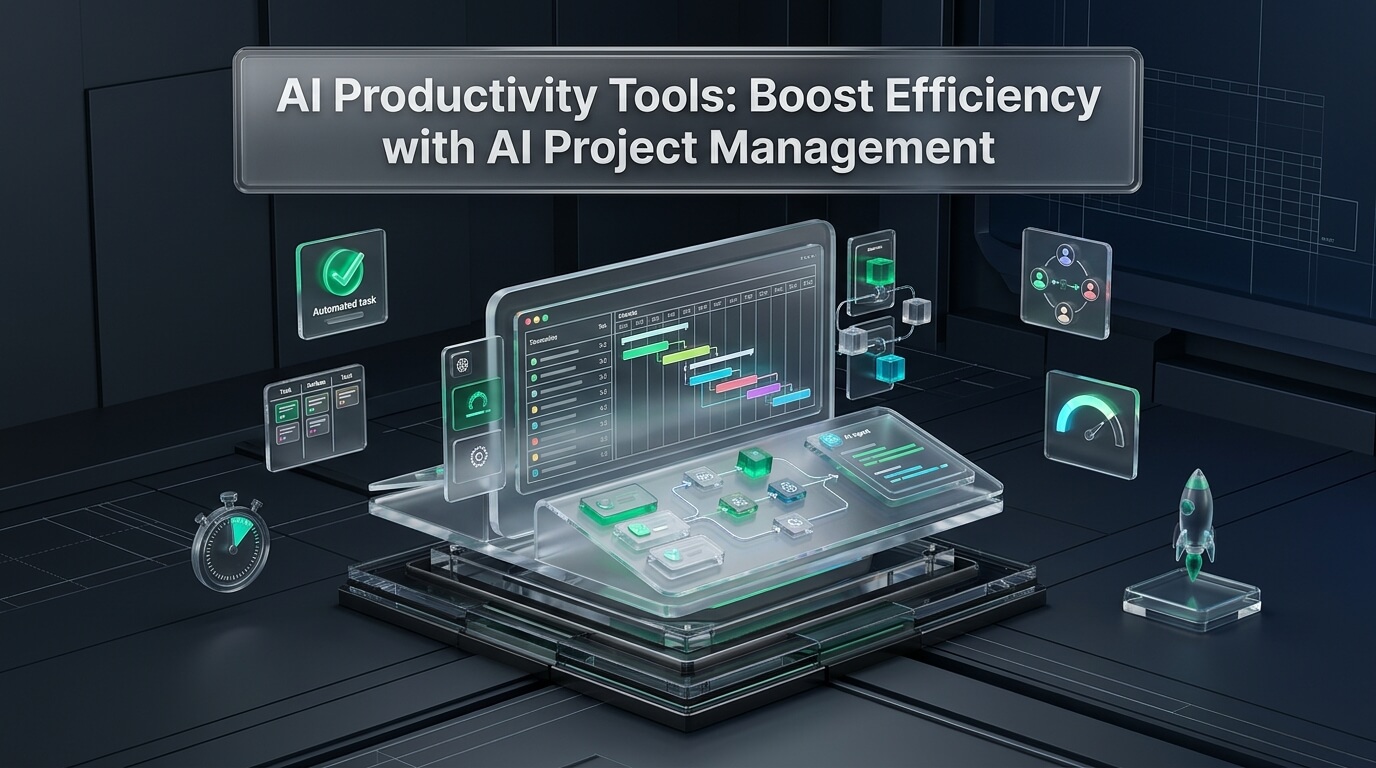
Modern workplaces run on fast-moving collaboration and continuous delivery. Cross-functional teams manage complex roadmaps, coordinate remote contributors, and track hundreds of daily deliverables. However, manual administrative chores drain valuable hours from productive work. Knowledge workers spend over half their workweek updating task boards, scheduling status check-ins, drafting summaries, and searching through messy communication channels. Adopting modern ai tools for project management eliminates this operational friction, allowing teams to deliver projects on schedule with less stress.
The enterprise productivity landscape has evolved far beyond static Kanban boards and rigid spreadsheets. Intelligent assistants now integrate directly into daily project workspaces. These systems summarize lengthy comment threads, predict project bottlenecks before deadlines slip, and assign subtasks automatically based on team capacity. Applying dedicated ai tools for productivity allows both individual contributors and leadership teams to reclaim focus on high-impact strategic initiatives.
Whether you manage complex software engineering releases, direct marketing campaigns, or run daily agency client accounts, selecting the right software stack is critical. Modern project management ai tools bring intelligent automation to routine workflows. In this comprehensive guide, you will examine the best ai tools for project management and study how top organizations use intelligent productivity platforms to drive sustainable growth.
- Deploying modern productivity ai tools reduces manual status reporting by over forty percent.
- Intelligent task schedulers optimize individual daily calendars to protect deep focus blocks.
- Automated meeting recorders transcribe discussions, extract action items, and update project boards instantly.
- Cross-functional teams use document analysis tools to extract key project risks from lengthy contracts and briefs.
- Selecting the best productivity ai tools helps organizations consolidate software subscriptions and lower operational costs.
How Modern AI Transforms Project Coordination and Task Management
Traditional project management required constant human intervention. Managers spent hours tracking down team members for status updates, compiling progress slide decks, and manually adjusting project timelines. Today, intelligent automation ai tools handle these routine logistical chores automatically. Adopting dedicated ai tools for workflow automation enables teams to connect disparate software platforms without manual scripting.
Modern platforms act as continuous project observers. They analyze activity logs, ticket transitions, code commits, and team chat messages in real time. When a critical path deliverable falls behind schedule, the system flags the delay early. This proactive visibility prevents small delays from turning into missed milestones.
In addition, smart platforms analyze historical project velocity. By reviewing past sprint cycles, machine learning models predict how long future initiatives will realistically take. This data-driven forecasting helps team leads set achievable client expectations and prevents team burnout.
Eliminating Repetitive Manual Coordination
Routine coordination consumes excessive creative energy. Team members frequently ask where files live, who owns specific action items, and what decisions were finalized during previous meetings. Deploying intelligent ai tools for task automation creates a centralized knowledge layer across your entire company.
Team members can ask questions in plain language to retrieve immediate project answers. The assistant indexes project specifications, client feedback, and past sprint reviews to deliver precise context. This instant accessibility eliminates endless back-and-forth messaging and keeps momentum moving forward.
Smart Workload Balancing and Resource Management
Assigning tasks fairly across a multidisciplinary team is a delicate balancing act. Overloading high-performing contributors leads to exhaustion and turnover, while uneven distribution delays project completion. Modern ai tools for operations management monitor individual team capacity continuously.
These platforms evaluate active task counts, estimated completion hours, and planned vacations. When a project lead assigns a new task, the software suggests the best available team member based on current availability and relevant skill sets. This automated load balancing keeps project momentum steady while protecting staff wellbeing.
Do not attempt to automate every single task simultaneously. Begin by automating routine meeting summaries and status updates. Once your team trusts automated summaries, expand into automated sprint planning, task estimation, and resource allocation.
Essential Use Cases for Project and Operations Teams
Artificial intelligence delivers concrete value across every phase of project execution. Understanding these core application areas helps managers choose tools that solve specific operational problems. Below are the most impactful use cases for modern project teams.
Intelligent Task Automation and Workflow Orchestration
Every project involves repetitive administrative steps. When a client approves a proposal, a project manager must create new workspaces, assign standard onboarding tasks, create folders, and notify internal teams. Utilizing modern ai tools for automating tasks streamlines this multi-step sequence into an instantaneous background event.
Modern workflow ai tools connect your core project board to external email, messaging, and cloud storage systems. When a status changes, the software automatically triggers appropriate downstream actions. This consistent execution prevents human error and ensures standard operating procedures are maintained across every client engagement.
Automated Meeting Notes and Action Item Tracking
Meetings represent one of the largest time investments for project teams. Taking accurate notes while actively participating in complex client discussions is difficult. Employing dedicated ai tools for meeting notes solves this challenge permanently.
Intelligent meeting recorders join video calls, transcribe conversations with high accuracy, and differentiate between speakers. Immediately following the call, the system produces structured ai tools for meeting minutes that highlight major decisions, outstanding questions, and assigned responsibilities. Many platforms can even push these action items directly to your project management board as actionable tickets.
Contextual Note Taking and Personal Knowledge Management
Managing personal ideas, research findings, and technical snippets requires organized documentation. Busy professionals leverage dedicated ai tools for note taking to maintain clarity throughout demanding workdays. These assistants automatically organize rough notes, generate outlines, and synthesize key takeaways from unstructured brainstorming sessions.
Intelligent note platforms also link related ideas across different projects. When you begin drafting a project plan, the assistant surfaces relevant notes, past retrospective insights, and related reference documents. This semantic retrieval ensures valuable team knowledge is preserved and reused effectively.
Intelligent Document Analysis and Contract Review
Complex projects generate mountains of documentation, including legal master service agreements, technical specifications, and vendor proposals. Reviewing these dense texts manually requires days of painstaking scrutiny. Utilizing specialized ai tools for document analysis speeds up this review process dramatically.
Project managers can upload multi-page documents to ask specific questions about contractual scope, delivery milestones, penalty clauses, and compliance requirements. The platform extracts exact citations and summarizes potential project risks within seconds. This rapid analysis helps teams spot scope creep and liability issues before signing contracts.
- Does the tool integrate directly with your existing communication and code repositories?
- Can the system automatically convert natural conversation into structured tasks?
- Does the platform provide flexible task views including Kanban, Gantt, and list formats?
- Does the vendor provide enterprise data encryption and contractual privacy safeguards?
- Is the user interface simple enough for non-technical team members to adopt quickly?
8 Best AI Tools for Project Management and Productivity Reviewed
Selecting the right productivity software requires evaluating team size, technical complexity, existing software integrations, and budget constraints. Below are detailed evaluations of the top eight platforms helping modern teams achieve peak operational efficiency.
1. ClickUp Brain
ClickUp has built one of the most comprehensive productivity suites on the market, and its native ClickUp Brain engine brings deep neural network capabilities to project execution. It connects tasks, documents, chat messages, and team members into a unified conversational workspace. This all-in-one architecture makes ClickUp one of the best ai tools for productivity available today.
ClickUp Brain features three distinct capabilities: AI Knowledge Manager, AI Project Manager, and AI Writer. The Knowledge Manager allows team members to ask questions about company wikis, task histories, and past decisions, receiving instant, verified answers. The AI Project Manager automates routine administrative chores, generating subtasks, writing standup summaries, and populating task status updates automatically.
The platform also includes automated table generation, voice clip transcription, and custom workflow triggers. Teams can customize custom fields and build complex automation sequences without writing any code. For cross-functional organizations seeking to consolidate multiple disconnected tools into a single platform, ClickUp Brain represents a premier solution.
2. Monday.com AI
Monday.com is renowned for its flexible visual project boards, and its native artificial intelligence capabilities elevate team coordination to new heights. The platform serves as an enterprise-grade operating system where teams can build custom business applications, track marketing campaigns, and manage software development cycles.
Monday.com AI assists teams with automatic task breakdown. When you enter a high-level goal like “Launch Q3 Webinar Campaign,” the system analyzes the objective and creates a structured list of subtasks, recommended timelines, and role assignments. It also summarizes lengthy discussion threads inside task cards, allowing busy stakeholders to catch up on updates in seconds.
The platform excels at predictive resource management. It analyzes team capacity against incoming ticket volume, alerting managers before team members reach peak bandwidth. With robust integrations across hundreds of business tools, Monday.com provides a dependable foundation for growing mid-market and enterprise organizations.
3. Asana Intelligence
Asana has long been a trusted leader in team task tracking, and Asana Intelligence introduces human-centered automation designed to eliminate project gridlock. The platform focuses on clarity, accountability, and strategic alignment, connecting daily individual tasks directly to high-level company goals.
Asana Intelligence uses machine learning to identify hidden project risks. It evaluates historical sprint data, dependency chains, and team velocity to highlight tasks at risk of missing deadlines. The smart status reporting feature drafts comprehensive executive progress summaries with a single click, saving project managers hours of manual writing each week.
In addition, smart rule builders allow users to create complex automated workflows using natural language prompts. You can instruct Asana to “assign design review tasks to the lead designer when the status changes to In Review,” and the platform configures the automation rule instantly. Its polished interface and intuitive design make Asana an ideal platform for creative and marketing teams.
4. Notion AI
Notion transformed modern documentation by blending wikis, relational databases, and task boards into a flexible workspace. With Notion AI, the platform acts as an intelligent collaborator that synthesizes team knowledge, drafts project documentation, and answers complex workspace queries.
Notion AI connects directly across your entire company workspace. You can ask the assistant to summarize previous client retrospective notes, compare feature requests across different sprint boards, or extract action items from raw meeting transcripts. Its ability to query connected databases makes finding scattered documents effortless.
The writing assistant helps project leads craft clear product specification documents, team onboarding checklists, and meeting agendas. You can change text tone, translate documents into dozens of languages, and auto-fill database properties based on document content. For startups and remote teams that rely heavily on written culture, Notion AI is an indispensable tool.
5. Linear
Linear has earned a passionate following among software engineering and product teams for its speed, keyboard-first navigation, and elegant user experience. It strips away the clutter and slowness typical of legacy issue trackers, delivering a blazing-fast project management system built for high-performance software development.
Linear incorporates intelligent capabilities that streamline engineering workflows. Its system automatically links pull requests, customer bug reports, and design assets to specific project issues. When engineers commit code or merge pull requests, Linear updates issue statuses and closes completed tickets automatically.
The platform also features automated project health updates, cycle planning assistance, and duplicate issue detection. When a customer support ticket arrives, Linear can detect similar existing bugs in the backlog to prevent duplicate work. For technology companies that demand speed and precision, Linear provides a modern standard for product execution.
6. Motion
Motion takes a revolutionary approach to personal productivity and team project management by eliminating the traditional to-do list. Instead of requiring users to manually schedule when they will complete each task, Motion uses sophisticated algorithms to build an optimal daily calendar automatically. This automated scheduling makes Motion one of the leading ai tools for time management on the market.
When you input your tasks, priorities, deadlines, and working hours, Motion plans your day around existing calendar meetings. If an urgent client emergency arises or a meeting runs over, Motion recalculates your schedule in real time, moving tasks forward without manual intervention. This dynamic rescheduling removes the constant cognitive burden of calendar Tetris.
For team environments, Motion coordinates group project schedules automatically. It schedules shared team deliverables around everyone’s individual availability, ensuring team members have dedicated focus time to complete deep work. If your team struggles with calendar clutter and competing priorities, Motion delivers transformative time savings.
7. Otter.ai
Otter.ai is an industry-leading meeting transcription and collaboration assistant that turns spoken conversations into searchable, actionable knowledge. It joins virtual meetings across Zoom, Microsoft Teams, and Google Meet to provide real-time transcription, speaker identification, and automated note-taking.
Otter’s automated meeting summaries highlight key discussion topics, decisions made, and assigned next steps. Team members who miss a meeting can review a concise three-minute summary rather than watching a full one-hour video recording. Otter’s conversational AI chat allows users to query meeting transcripts directly, asking questions like “What budget did the client approve for the fall launch?”
The platform also features automated slide capture, capturing visual presentations alongside spoken words. Teams can share annotated transcripts, comment on specific transcript timestamps, and export action items directly to their project management systems. Otter eliminates the risk of missed information during critical team calls.
8. Trello with Atlassian Intelligence
Trello pioneered visual Kanban board collaboration, making project organization accessible for millions of teams worldwide. With the introduction of Atlassian Intelligence, Trello enhances its visual boards with intelligent automation, card summarization, and natural language command processing.
Atlassian Intelligence allows Trello users to summarize long card comment threads and attached documents with a single click. When planning new projects, users can prompt the system to generate complete checklists, task descriptions, and subtasks tailored to specific deliverables. This rapid generation speeds up project setup significantly.
Trello’s automation engine, Butler, pairs with machine learning to automate routine card movements, label assignments, and due date reminders. Users can write plain-English rules to trigger complex multi-board automations. For small businesses, creative agencies, and educators seeking a visual, easy-to-learn system, Trello remains an outstanding choice.
Comparison of Top AI Tools for Project Management and Productivity
Selecting the ideal software platform requires matching your team’s specific workflow requirements to platform strengths. The comparison table below highlights primary use cases, key capabilities, free tier availability, and ideal team sizes for the top platforms.
| Platform Name | Core Specialty | Free Tier Available | Standout Feature | Target Audience |
|---|---|---|---|---|
| ClickUp Brain | All-in-one productivity | Yes (Add-on AI) | Unified knowledge retrieval across tasks and docs | Cross-functional teams and agencies |
| Monday.com AI | Visual workflow automation | Yes (Limited) | Predictive resource allocation and task breakdowns | Mid-market and enterprise businesses |
| Asana Intelligence | Goal tracking & reporting | Yes | Smart risk detection and automated status summaries | Operations and marketing departments |
| Notion AI | Connected workspace & wikis | Yes (Add-on AI) | Conversational search across company databases | Knowledge workers and startups |
| Linear | Agile software issue tracking | Yes | Keyboard shortcuts and automated git issue syncing | Software engineers and product builders |
| Motion | Algorithmic calendar scheduling | No (Free Trial) | Dynamic auto-scheduling around changing priorities | Executives and busy professionals |
| Otter.ai | Meeting transcription & notes | Yes | Automated meeting action item extraction | Remote teams and project managers |
| Trello with Atlassian AI | Visual Kanban collaboration | Yes | Natural language card generation and Butler rules | Small teams and visual thinkers |
Cross-Disciplinary Applications: Tailoring AI to Key Roles
Project coordination is not a one-size-fits-all discipline. Different departments maintain distinct operational rhythms, tracking metrics, and documentation styles. Below is how specialized roles leverage modern machine learning systems to optimize daily performance.
Product Management and Roadmap Strategy
Product managers operate at the intersection of engineering, business strategy, and user experience. They synthesize customer feedback, prioritize backlog features, and align stakeholders around strategic product goals. Deploying specialized ai tools for product management transforms how product leaders analyze market signals.
Intelligent platforms cluster thousands of user support tickets, app store reviews, and sales call notes into coherent thematic categories. Product leaders can spot emergent user frustration points within minutes rather than spending days categorizing spreadsheets manually. Modern ai tools for product managers also draft initial feature requirement documents, user stories, and acceptance criteria automatically.
Program Management Across Complex Portfolios
Program managers oversee interconnected initiatives across multiple organizational departments. Balancing cross-team dependencies, shared technical infrastructure, and competing delivery timelines requires birds-eye visibility. Utilizing advanced ai tools for program management provides continuous portfolio surveillance.
These systems identify critical path dependencies that span multiple disparate boards. If a backend database refactoring project in engineering slips by three days, the system immediately calculates how that delay impacts upcoming mobile app testing and marketing launch dates. This holistic perspective enables leaders to reallocate resources proactively.
Product Design and Creative Handoffs
Creative design teams navigate rigorous iterative cycles involving wireframes, user testing feedback, and engineering handoffs. Utilizing dedicated ai tools for product design accelerates the transition from conceptual mockups to production-ready design systems.
Machine learning assistants generate responsive layout variations, check color contrast ratios for accessibility compliance, and draft realistic placeholder copy. When handing designs over to developers, intelligent tools translate visual components into clean frontend code and design tokens. This automated translation bridges the historical communication gap between designers and software engineers.
Project Managers Leading Distributed Teams
Professional project managers coordinate diverse contributors working across different time zones. Maintaining team alignment without scheduling disruptive middle-of-the-night calls requires asynchronous efficiency. Adopting dedicated ai tools for project managers provides round-the-clock coordination support.
Asynchronous standup assistants collect daily text updates from team members as they begin their working day. The software analyzes these updates to identify emerging blockers, alerting managers to critical dependencies that require immediate resolution. This asynchronous rhythm keeps remote distributed teams productive without meeting fatigue.
Navigating Free and Cost-Effective Project Management Tools
Organizations of all sizes can benefit from artificial intelligence without incurring massive software license expenses. Many leading platforms offer robust complimentary tiers designed for individuals and small teams. Investigating dedicated ai tools for project management free options allows lean startups and bootstrapped businesses to establish solid operational discipline early.
Platforms like ClickUp, Asana, Trello, and Notion provide generous free plans that include basic task management, visual boards, and limited AI assistant interactions. These complimentary tiers enable small teams to test workflow automation without entering credit card details. As project complexity and team size expand, organizations can upgrade to premium tiers smoothly.
In addition, open-source project management platforms provide an appealing alternative for privacy-sensitive organizations. Self-hosted solutions allow technical teams to integrate local open-source language models directly into their private server infrastructure. This on-premise deployment eliminates recurring monthly seat fees while ensuring complete data confidentiality.
- Free Tiers: Ideal for freelancers and small teams testing basic task automation, but feature usage limits and restricted admin controls.
- Paid Commercial Plans: Essential for growing organizations requiring unlimited automation runs, advanced security permissions, and dedicated priority support.
- Self-Hosted Solutions: Complete data ownership and zero recurring fees, but require dedicated engineering maintenance and internal server management.
Step-by-Step Strategy to Implement AI in Team Workflows
Deploying new software tools across an organization requires thoughtful change management. Forcing unfamiliar platforms onto team members without clear guidelines leads to frustration and inconsistent adoption. Follow this disciplined four-step framework to introduce intelligent productivity tools into your organization successfully.
Audit Existing Operational Bottlenecks
Before testing new software, conduct a thorough operational audit of your team’s weekly schedule. Identify where your team spends unproductive administrative time. Are contributors losing hours transcribing client calls? Are project managers struggling to draft weekly status reports?
Quantify these friction points in terms of lost hours and delayed deliveries. Documenting specific baseline metrics establishes clear benchmarks for evaluating your software trial. Focusing on your largest operational bottleneck ensures immediate tangible benefits upon deployment.
Standardize Workspace Taxonomies and Data Hygiene
Machine learning models depend heavily on the quality and consistency of your workspace data. If your team maintains messy task titles, inconsistent status tags, and scattered documentation, automated assistants will generate confusing or incomplete recommendations.
Establish clear naming conventions, standard tag taxonomies, and required task fields across your boards. Encourage team members to write descriptive task summaries and keep due dates updated. Clean, standardized data allows algorithms to provide accurate velocity forecasts and reliable project summaries.
Establish Clear Data Security and Confidentiality Guardrails
Protecting proprietary client data, financial records, and confidential source code must remain your highest operational priority. Before introducing any cloud-based assistant, review the vendor data privacy policy and security credentials thoroughly.
Ensure the vendor contractually guarantees that internal company data is encrypted and never used to train public machine learning models. Create clear internal usage guidelines detailing what types of sensitive data team members may upload. Setting transparent boundaries protects your organization from compliance violations and reputational harm.
Run Iterative Two-Week Sprint Pilots
Avoid launching new software across your entire company simultaneously. Select a single forward-thinking department—such as marketing or product engineering—to test the platform over a two-week pilot sprint. Provide hands-on training and encourage participants to share candid feedback regarding daily usability.
Evaluate whether the tool reduced administrative overhead and improved delivery speed during the pilot window. Once the pilot team demonstrates measurable efficiency gains, use their success story to champion wider company adoption. This phased rollout ensures smooth organizational transition and sustained user engagement.
Designate an internal software champion within each department. Having an enthusiastic peer who can answer quick questions, build helpful workflow templates, and troubleshoot minor roadblocks accelerates team adoption far better than top-down executive mandates.
Future Trends in AI Project Orchestration
The project management ecosystem is advancing rapidly from passive tracking dashboards toward proactive, autonomous work orchestrators. Understanding emerging technological trends helps leadership teams build durable operational strategies that scale effectively over the next decade.
Predictive Project Health and Risk Forecasting
Traditional project dashboards display historical metrics: tasks completed, hours logged, and past milestone dates. Next-generation systems apply predictive analytics to project health, evaluating leading indicators such as pull request review velocity, team sentiment in chat channels, and scope change frequency.
These predictive models alert leadership to project risks weeks before they manifest as missed deadlines. Managers receive automated recommendations on how to adjust sprint scopes or reallocate resources to keep critical initiatives on track. This predictive foresight transforms project management from reactive firefighting into proactive stewardship.
Autonomous Multi-Agent Task Execution
Current productivity software assists human contributors with drafting text and updating task statuses. In the near future, specialized autonomous agents will execute complex subtasks independently. When a manager assigns a feature request ticket, an autonomous agent can gather user requirements, draft technical specifications, create design tickets, and set up continuous integration pipelines automatically.
Human project managers will act as strategic conductors, defining project boundaries, reviewing agent outputs, and validating final deliverables. This shift will multiply the operational output of small, agile teams, allowing lean startups to execute projects previously requiring dozens of specialized personnel.
Conversational Executive Command Centers
Navigating dozens of complex project boards to compile executive summaries will soon become obsolete. Business leaders will interact with their entire company operations through unified conversational interfaces. Executives can ask natural language questions such as “Which client projects are currently over budget?” or “What are our major engineering blockers this sprint?”
The conversational engine synthesizes live data from project boards, financial ledgers, and customer support channels into instant executive dashboards. This transparent data access empowers leadership teams to make informed decisions rapidly based on real-time organizational reality.
Frequently Asked Questions About AI Project Management Tools
What are the primary benefits of using AI tools for project management?
Intelligent project tools automate routine administrative chores like meeting note summarization, task creation, and status reporting. They balance team workloads, predict project delivery bottlenecks, and provide instant knowledge retrieval across scattered company documentation. This automation frees team members to focus on high-impact strategic work.
Can AI project management software replace human project managers?
No, artificial intelligence cannot replace human project managers. While software excels at data synthesis, task tracking, and schedule optimization, it lacks emotional intelligence, negotiation skills, and strategic judgment. Successful organizations use these tools to augment human managers, freeing them from repetitive clerical chores.
How do automated meeting tools protect sensitive client information?
Reputable meeting assistants use enterprise-grade data encryption both in transit and at rest. They comply with strict regulatory frameworks such as GDPR and SOC 2 Type II, ensuring recordings and transcripts remain confidential. Always choose enterprise platforms that contractually guarantee user data is never used to train public machine learning models.
What is the difference between task automation and workflow automation?
Task automation focuses on executing single repetitive actions, such as auto-assigning a ticket when its status changes. Workflow automation orchestrates complex multi-step sequences across different business tools, such as automatically setting up client onboarding folders, sending confirmation emails, and creating project roadmaps when a contract is signed.
How do I select the right productivity tool for my team?
Start by auditing your team’s most significant operational bottleneck, whether it is calendar overload, disorganized notes, or missed project deadlines. Evaluate candidate platforms based on user interface simplicity, integration with your existing software stack, and transparent pricing. Run a two-week pilot program with a small group before rolling out the tool organization-wide.
Final Thoughts on Transforming Team Execution
The pace of modern business requires teams to execute with clarity, speed, and precision. Relying on disconnected spreadsheets and manual status meetings wastes valuable organizational energy and increases project risk. Deploying modern ai tools for project management creates a shared operational nervous system that keeps every team member aligned and accountable.
Start small by automating your most time-consuming administrative chores, such as meeting summaries and routine status updates. Establish clean data hygiene practices, enforce strict privacy boundaries, and train your team to view machine learning as a collaborative assistant. By pairing human creativity with intelligent workflow automation, your organization can achieve sustainable productivity and deliver exceptional project outcomes.